
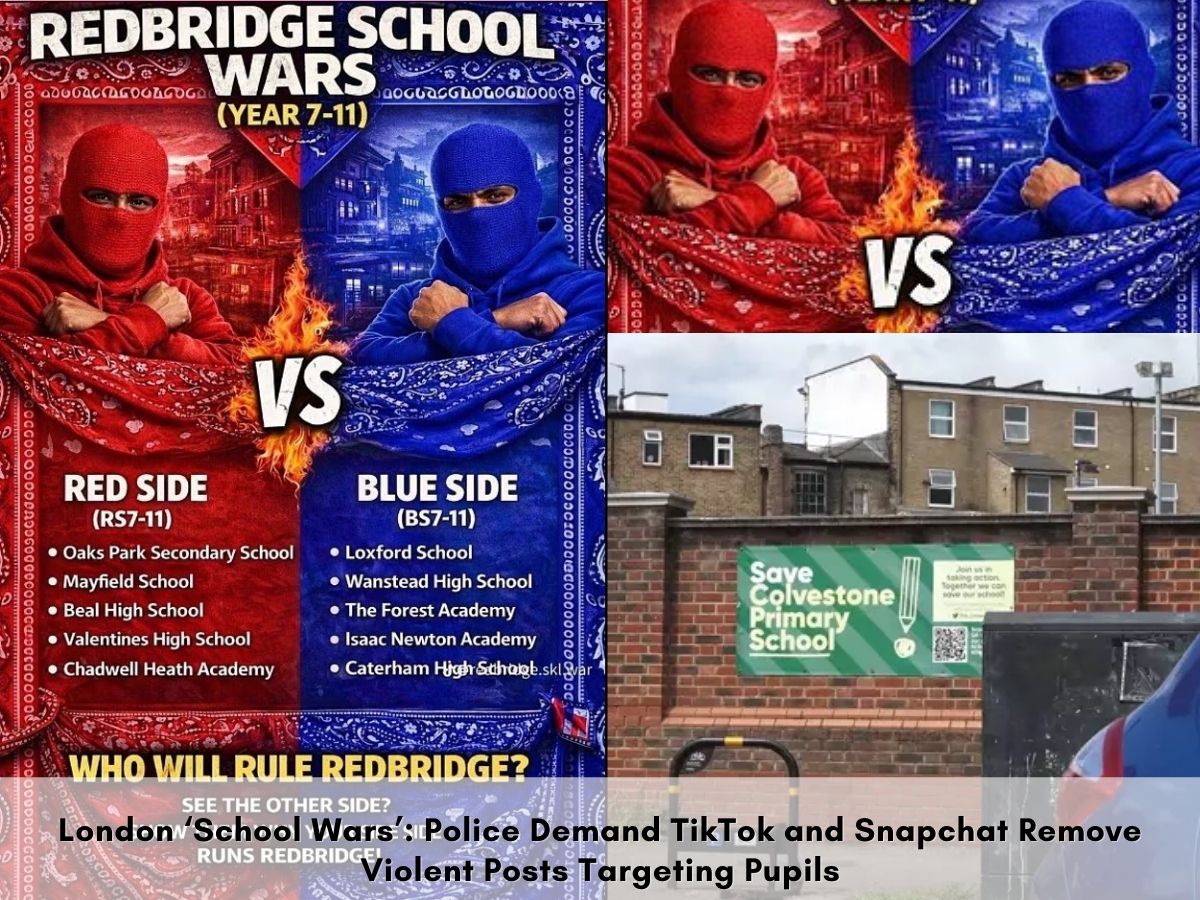
The intersection of social media and youth culture has never been more pronounced, particularly in urban settings like London, where platforms such as TikTok and Snapchat play pivotal roles in shaping teenage interactions. The recent emergence of movements labeled as ‘school wars’ represents a troubling trend in how online influences manifest offline, creating a nexus of violence, rivalry, and community engagement among school-aged youths. In this article, we seek to analyze the phenomenon of school wars through the lens of media influence, societal implications, and the responsibilities of social media platforms.
Understanding the Social Media Landscape Among Youths
As social media continues to evolve, it has become a significant conduit for communication, expression, and, regrettably, conflict among young people. The rise of applications like Snapchat and TikTok, which prioritize visual content and ephemeral messaging, has changed how students interact with each other. This shift has not been without consequence, as these platforms frequently become breeding grounds for group dynamics that can escalate into real-world confrontations.
The efficacy of these platforms in disseminating information or inciting action relies heavily on their design and user engagement mechanisms. TikTok, with its algorithm-driven content delivery, allows for rapid dissemination of viral trends. Users often employ these tools to organize, sensationalize, and even glorify confrontations, leading to a social milieu that valorizes public spats and inter-school rivalries.
Impacts on Peer Relationships
The rise of school wars can be seen as a reflection of altered peer dynamics. In recent years, studies suggest that digital communications augment traditional in-person interactions rather than replace them entirely. However, they can set the stage for misunderstanding and conflict.
Research indicates that youths are likely to interpret actions or comments made online in ways that might not align with their original intent. This textual dissonance, compounded by the often-anonymous nature of online interactions, can lead to miscommunication and the escalation of tensions between schools.
Influence of Viral Challenges and Trends
Viral challenges on platforms like TikTok not only serve as entertainment but also as a medium for expressing solidarity or opposition. These trends can escalate quickly into physical confrontations, either as a result of misinterpretation or as a direct call-to-action from influential creators.
This viral nature creates a feedback loop: popular creators influence behavior, which can subsequently inspire more confrontational content, further perpetuating the cycle of ‘school wars’. Monitoring these trends and their impacts is crucial for stakeholders in education and public policy.
Observations from Recent Events in London Schools
In 2026, instances of organized fights being promoted through social media platforms gained particular attention in London. Reports of gatherings, sometimes branded as ‘school wars’, have prompted concerns from educators, parents, and law enforcement alike.
Case Studies and Incidents
Several notable instances across different London schools illustrate the phenomenon. For example, a confrontation between two rival schools led to significant media coverage due to its association with trending TikTok content.
This incident highlights various contributing factors, including:
- The role of influencers in shaping perceptions of rivalry
- The impact of peer pressure on individuals who might otherwise not engage in violence
- The reaction of the school administrations and local authorities in addressing these occurrences
Understanding these case studies provides critical insights into how such incidents can be managed more effectively in the future.
Institutional Responses
Responses from educational and governmental institutions vary widely, reflecting a lack of coordinated strategy in tackling the issue. Some institutions have adopted stricter policies regarding mobile phone usage on campus, aiming to mitigate the risk of online interactions spilling into the physical realm. Others have initiated dialogues in classrooms designed to empower students to resolve conflicts through conversation rather than confrontation.
The effectiveness of these measures remains to be seen, but they highlight an increasing recognition of the relationship between digital behavior and real-world outcomes.
An Empirical Breakdown of Social Media’s Role
To understand how social media exacerbates the phenomenon of school wars, it is essential to quantify its role through empirical data. For this analysis, we will examine engagement metrics related to school fight content across various platforms, the demographic shifts associated with these interactions, and the estimated reach of such content.
| Platform | Engagement (likes/shares) | Demographics | Average Reach |
|---|---|---|---|
| TikTok | 250,000 / 15,000 | 13-18 years | 3 million |
| Snapchat | 180,000 / 10,000 | 12-17 years | 2 million |
| 100,000 / 5,000 | 15-20 years | 1.5 million | |
| YouTube | 300,000 / 20,000 | 14-19 years | 4 million |
The table above quantitatively assesses engagement levels on popular platforms concerning fight-related content. Observing these figures sheds light on how quickly and widely influences can spread among youths, necessitating a closer examination of how content moderation can play a role.
In examining these results, it’s crucial to acknowledge that the true impact may extend beyond what is easily quantifiable. The emotional resonance of such content can create an environment that legitimizes violence as a form of self-expression or conflict resolution.
Investigating the Causes Behind Online Engagement
Understanding why young individuals engage with content that promotes school wars requires a multi-faceted approach. Factors that drive this behavior include:
Community and Identity Formation
For many adolescents, affiliation with specific schools or groups defines their social standing, creating a fertile ground for both camaraderie and rivalry. Social media amplifies the visibility of these identities, facilitating connections that may encourage confrontational behaviors.
The Role of Anonymity and Escape from Real-World Consequences
The relative anonymity provided by social media platforms often detaches users from the consequences of their actions. This disconnection can foster a sense of invulnerability, emboldening individuals to engage in behaviors they might otherwise avoid in face-to-face settings.
Peer Validation and Influence of Popular Creators
Many youths feel pressure to conform to the behaviors depicted by popular creators on these platforms. When influencers normalize or glamorize fighting as a form of entertainment, followers are more likely to perceive aggression as acceptable, potentially leading to participation in similar acts.
Analyzing the Regulatory Environment Surrounding Social Media
As the issue of school wars continues to evolve, the regulatory landscape for social media platforms remains critical in shaping outcomes. The lack of cohesive regulation concerning how platforms manage harmful content poses significant challenges to both user safety and societal well-being.
The Current State of Regulation in the UK
The United Kingdom has been gradually enhancing its regulatory framework concerning online content, with legislation intended to hold platforms accountable for user safety. However, gaps remain, particularly relating to the rapid pace at which harmful trends can emerge.
As noted in 2026, challenges include:
- Inconsistent enforcement of existing laws
- Difficulty in defining harmful content within digital contexts
- The speed at which content can go viral, complicating immediate response measures
Sectoral actors, ranging from policymakers to social media companies themselves, need to engage in proactive discourse to develop more robust frameworks.
The Role of Social Media Companies in Content Moderation
Platform policies on managing violence-inducing content vary significantly and can often be reactive rather than proactive. Elements such as community guidelines, reporting systems, and algorithmic adjustments are critical in determining the efficacy of moderation practices.
Moving forward, it is imperative for social media companies to take a more active role in understanding context and user behavior to prevent content that promotes violence from gaining traction.
Implementing a Practical Framework for Addressing the Issue
Given the multifaceted nature of school wars, stakeholders must adopt a holistic approach to mitigating their prevalence. A practical decision framework offers a foundation for collaborative efforts among educators, parents, and social media platforms.
Education and Awareness Programs
Educators must establish programs that not only address conflict resolution but also involve digital literacy training. These programs can empower students to navigate conflicts both online and offline more judiciously.
Engagement with Influencers and Content Creators
Influencers wield significant power in shaping youth culture. Engaging them as partners in cultivating positive narratives around school pride and conflict resolution may help mitigate the allure of violent content.
Collaboration between Schools and Social Media Platforms
Establishing formal partnerships between schools and social media platforms can facilitate timely intervention regarding harmful content. Sharing insights and data can allow for more rapid identification of emerging trends and behaviors.
Understanding the Risks and Trade-Offs of Social Media Engagement
While the potential for social media to connect individuals is vast, it is also accompanied by inherent risks. The embrace of online communities comes with the peril of exposure to negative influences, particularly for impressionable youths.
Psychological Effects of Online Conflict
Engaging in violent narratives online can have lasting psychological effects on youths, including desensitization to violence, increased anxiety, and a skewed perception of norms surrounding conflict. Parents and educators must be aware of these risks when monitoring online behaviors.
Trade-Offs in Privacy and Online Safety
Balancing privacy with online safety is another critical issue. While some measures intended to protect youths can infringe upon their sense of autonomy, it is vital to prioritize frameworks that respect privacy while ensuring safety.
Building Trust and Transparency in Digital Spaces
The effectiveness of any framework for addressing the issue of school wars hinges on the establishment of trust between stakeholders. Fostering open lines of communication between youths, educators, parents, and social media platforms cultivates a transparent culture that can help mitigate issues of conflict.
Encouraging Open Dialogue from Youths
Empowering students to voice their experiences and concerns can help stakeholders better understand the nuances of their digital interactions. Implementing regular feedback mechanisms allows young individuals to feel heard and valued.
Transparency with Parents and Guardians
Educating parents about the social media landscape and encouraging them to engage in dialogues with their children can improve the overall understanding of the ramifications of online interactions.
As we navigate the complexities of social media engagement among youth, it becomes increasingly clear that a multifaceted approach is necessary. Partnerships between educational institutions, social media platforms, and communities offer the best hope for mitigating the influences driving school wars.
By focusing on education, engagement, and collaborative frameworks, stakeholders can move towards creating safer digital and physical environments for young individuals. Understanding the roots of behaviors associated with school wars is vital in determining actionable strategies moving forward.














Leave a Reply