
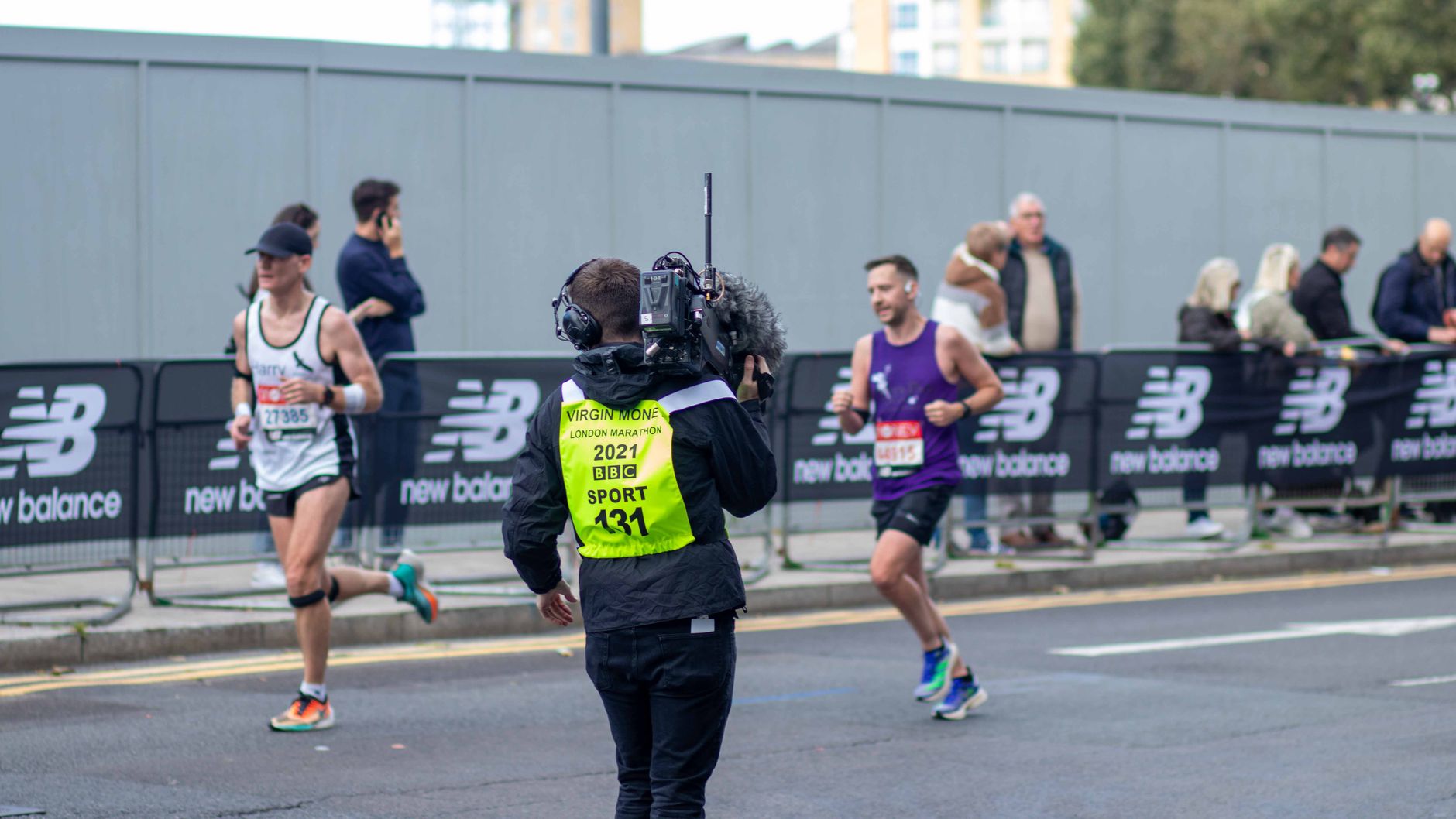
Forty-seven years after the first London Marathon transformed a grey April Sunday into one of the greatest civic spectacles on earth, the race is about to change in a way its founders could never have imagined. The London Marathon will become a two-day event in 2027 — splitting the world’s most famous 26.2-mile slog across two consecutive days for the first time in its history. This isn’t a tweak. It’s a reinvention.
For Londoners, this matters well beyond the running community. The marathon already injects an estimated £350 million into the London economy each year, shuts down swathes of the city from Greenwich to The Mall, and draws 750,000 spectators onto the streets. Doubling that footprint — even partially — has implications for transport, hospitality, local businesses, and the million-odd people who simply want to get across Tower Bridge on a weekend without being redirected through Bermondsey. So let’s get into it.
The London Marathon in Numbers: How It Became the World’s Biggest One-Day Road Race
Before we talk about what’s changing, it’s worth understanding the sheer scale of what already exists. The London Marathon isn’t just a race — it’s an annual occupation of the city. Since its inaugural run on 29 March 1981, when 6,747 runners set off from Blackheath, it has grown into something that strains the very infrastructure of the capital every spring.
| Year | Finishers | Charity Money Raised | Record Holder |
|---|---|---|---|
| 1981 | 6,255 | £46,000 | Dick Beardsley / Inge Simonsen (tie) |
| 2000 | 32,456 | £20 million | Antonio Pinto |
| 2010 | 36,549 | £47.2 million | Emmanuel Mutai |
| 2019 | 42,906 | £66.4 million | Eliud Kipchoge |
| 2024 | 53,682 | £73.2 million | Alexander Mutiso / Peres Jepchirchir |
| 2027 (projected) | 65,000+ | £90 million+ (est.) | TBC |
The demand for places has always outstripped supply — obscenely so. In 2024, over 840,000 people applied for a ballot place. The acceptance rate sits at roughly 5%. That means for every person who actually runs, seventeen others were rejected. The two-day format is, at its core, a response to that crushing imbalance between demand and capacity.
Why One Day Has Always Been the Bottleneck
The single-day model works on a tight operational window. The elite wheelchair races start at 8:55am, the elite women at 9:10am, and the mass start fires at 10:00am. By late afternoon, the course must be cleared, barriers removed, and the Embankment returned to something resembling normality. That window — roughly eight to nine hours — caps the number of runners who can safely participate. Expand the field beyond roughly 55,000 and the tail end of the race bleeds into early evening, creating logistical chaos for Transport for London, the Met Police, and the hundreds of St John Ambulance volunteers stationed across 26 miles of East and Central London.
A two-day structure breaks that ceiling entirely.
What’s Actually Changing: The Two-Day Format Explained
The specifics of how the 2027 format will work are still being finalised by London Marathon Events, but here’s what has been confirmed and what industry insiders expect based on the announcement:
- Day One (Saturday): Expected to host the elite races — men’s and women’s wheelchair, elite men’s and elite women’s — along with a smaller competitive wave of club runners and championship athletes. This preserves the sporting integrity of the elite race with a focused, broadcast-friendly day.
- Day Two (Sunday): The mass participation event — the charity runners, the fancy dress brigade, the first-timers, the people doing it for their mum — taking place on the traditional Sunday slot with a significantly expanded field.
- Total field size: Projected to exceed 65,000 runners across both days, potentially reaching 70,000 by the event’s second iteration.
- Course: The route itself — Greenwich Park to The Mall via Rotherhithe, Bermondsey, Tower Bridge, Canary Wharf, and the Embankment — is expected to remain unchanged for both days.
- Ballot structure: A revised entry system will likely separate elite/competitive ballot from the general charity ballot, with some places ringfenced for each day.
- Economic impact: London Marathon Events projects the two-day format will generate over £500 million in economic benefit to London — a 43% increase on current figures.
- Charity fundraising: The expanded field alone could push annual fundraising past the £90 million mark, which would make it the single largest annual charity fundraising event anywhere on the planet.
This is not a casual administrative reshuffle. This is the biggest structural change to the London Marathon since it switched from a single loop to the current out-and-back course design in 1982.
The Key Players Behind the 2027 Transformation
London Marathon Events (LME)
The organisation that runs the show — literally. London Marathon Events is a not-for-profit company that has operated the race since 1981, founded originally by Chris Brasher and John Disley after they were inspired by the 1979 New York City Marathon. Its current CEO, Hugh Brasher (Chris’s son), has been the driving force behind the organisation’s expansion strategy. Under Hugh’s leadership, LME has already demonstrated its appetite for innovation — it launched the virtual London Marathon during the pandemic in 2020, with 37,966 runners completing the distance remotely across the world. The two-day format is his most ambitious gambit yet.
Transport for London
No conversation about the two-day marathon is complete without acknowledging TfL’s role. Closing roads from Blackheath to Westminster across two consecutive days is a logistical undertaking that makes a single-day closure look straightforward. The DLR, Jubilee line, and numerous bus routes are already severely disrupted on marathon Sunday. Doing it twice in 48 hours will require TfL to completely rethink its weekend engineering works calendar for that April weekend in 2027. There will be negotiations. There will be complaints. There will be at least one irate letter to the Evening Standard from someone in Canary Wharf.
The City of London and Southwark Borough
The marathon cuts through multiple London boroughs — Greenwich, Lewisham, Tower Hamlets, Southwark, and the City of Westminster. Each one faces two days of road closures, increased policing requirements, and the small matter of 750,000 spectators descending on their streets. Southwark, in particular — home to the iconic Tower Bridge crossing — will feel this most acutely. The bridge itself becomes one of the great marathon moments globally: runners crossing it around mile 12-13, the city spread out below them, the roar of the crowd bouncing off its Victorian stonework. Twice.
The Abbott World Marathon Majors
London sits alongside Tokyo, Boston, Berlin, Chicago, and New York in the Abbott World Marathon Majors — the six races that define elite distance running. The six-star medal awarded for completing all six is one of running’s most coveted achievements. London’s move to a two-day format will be watched very carefully by the other five. If it works — financially, operationally, athletically — don’t be surprised if other Majors start experimenting with the same model. Boston, constrained by its point-to-point course and the notoriously difficult permitting environment in Massachusetts, probably can’t replicate it. But Chicago and Berlin? They’re watching.
Does Bigger Actually Mean Better? The Case Against the Two-Day Expansion
Here’s where we push back a little, because not everyone in the running community is punching the air about this announcement.
The London Marathon’s power has always come partly from its concentration. Half a million people lining a single course on a single day creates an atmosphere that is — and this isn’t hyperbole — unlike anything else that happens in this city. That roar as you turn onto The Mall. The wall of noise on the Highway through Tower Hamlets. The slightly drunk but deeply enthusiastic crowds outside the pubs in Bermondsey at 9am on a Sunday. Split the field across two days and you risk diluting that. Fewer spectators might come twice. The elite athletes and the charity runners share the same streets on the same day — that’s part of what makes the London Marathon emotionally resonant in a way that, say, a track race simply isn’t. Separate them onto different days and you’ve built a wall between the sporting spectacle and the human story.
There are practical concerns too:
- Spectator fatigue: Will Londoners come out twice? Or will Saturday’s elite day become a sparsely attended warm-up act to Sunday’s mass participation main event?
- Volunteer burnout: The marathon relies on over 6,000 volunteers — from water station marshals to medical staff. Asking them to give up two consecutive days rather than one is a significant ask.
- Hotel and hospitality economics: Runners travelling from outside London will need accommodation for an extra night. For some — particularly those coming from abroad — that extra cost may deter entry.
- The elite race atmosphere: Some of the great marathon moments — Mo Farah’s final London in 2018, Eliud Kipchoge’s 2019 world record run watched by tens of thousands — derived much of their power from a mass crowd. A dedicated elite day could feel clinical, more like a track meet than the people’s race that London has always prided itself on being.
- Course fatigue: Marshals, police, and emergency services on the same 26.2-mile route for two consecutive days face genuine welfare and operational challenges.
- Ballot complexity: Two separate entry systems risk confusion, perceived unfairness, and the kind of social media outrage that London Marathon ballots already generate every October when rejection emails land.
None of these are insurmountable. But they are real, and London Marathon Events will need answers to all of them before April 2027.
What This Means for London: A Practical Guide for Runners and Spectators
Let’s get specific. Whether you’re a runner trying to work out how this affects your chances of getting a ballot place, a spectator planning where to watch, or just a Londoner trying to figure out whether you can get to Ikea in Greenwich that weekend, here’s what the two-day format means for you.
For Runners
- Ballot odds will likely improve — with 65,000+ places across two days versus roughly 50,000 on one, your chances of getting in via the general ballot should improve meaningfully, though demand will also grow as awareness of the expanded event spreads.
- Choose your day carefully — elite and competitive runners will want to chase the Saturday field; charity and first-time runners will likely find Sunday the more appropriate and atmospheric choice.
- Training implications are minimal — the course, distance, and rules remain identical on both days.
- Good for cause charity places — the expanded Sunday field means more charity spots, which is genuinely significant for the sector.
For Spectators
- Saturday will be the elite day — if you want to see the world’s best marathon runners up close, Saturday is your day. Arrive early at Tower Bridge or along the Highway in E1 for the best views.
- Sunday retains the carnival feel — the fancy dress, the emotional finishes, the bloke in the rhino suit — all of that lives on Sunday.
- Plan transport early — the TfL disruption map for that weekend will be extensive. Check well in advance.
Economic Impact at a Glance
| Metric | Current (Single Day) | Projected 2027 (Two Days) | Change |
|---|---|---|---|
| Total runners | ~53,000 | ~65,000–70,000 | +23–32% |
| Spectators | ~750,000 | ~1,000,000+ | +33%+ |
| Economic impact | ~£350 million | ~£500 million | +43% |
| Charity fundraising | ~£73 million | ~£90 million+ | +23%+ |
| Volunteer hours required | ~48,000 | ~85,000+ | +77% |
| Hotel nights generated | ~120,000 | ~200,000+ | +67% |
The numbers are compelling. But numbers always look good in a press release. The real test comes when you try to marshal 6,000 volunteers across two consecutive days in April, when London’s weather can range from 8°C and drizzle to an unseasonable 22°C that turns a half-marathon into a survival exercise. Ask anyone who ran the 2018 London Marathon, when temperatures hit 24.1°C at the finish and the medical tents were overwhelmed, whether more runners across more days is always a simple win.
Part of what makes the London lifestyle unique is the city’s ability to hold contradictions — to be simultaneously global and neighbourhood-level, elite and genuinely democratic. The London Marathon has always embodied that duality. The 2027 format will test whether that balance can survive being stretched across two days and 70,000 pairs of trainers.
The Bigger Picture: Is London Losing Its ‘One Day’ Soul?
There’s a philosophical question buried in all of this that deserves saying out loud. Part of what makes the London Marathon extraordinary is that it happens to a city, not just in it. For one Sunday in April, the whole of Central and East London becomes a running track. Roads that normally carry 40,000 vehicles fall silent. The Thames path clears. The city holds its breath and then erupts.
That’s a one-day phenomenon. It works because it’s concentrated, because everyone — runners, spectators, residents, the bloke who can’t get his delivery van across London Bridge — is living the same disruption simultaneously. It creates solidarity. A shared civic experience that London, a city not always famous for its communal warmth, genuinely needs.
Split it across two days and you have two smaller disruptions instead of one enormous event. Mathematically, that might be more manageable. Emotionally, it might be less powerful.
That said, the organisers aren’t fools. Hugh Brasher and his team have run this race for decades and understand its DNA better than most critics. If they believe a two-day format can preserve — or even amplify — what makes London special, they’ve earned the benefit of the doubt.
The real verdict won’t come from a press announcement or a projection table. It’ll come on that Saturday afternoon in April 2027, when the first elite runners turn off Birdcage Walk onto The Mall, and we find out whether the crowd is ten deep or barely five. Whether the atmosphere crackles or merely hums. Whether London shows up — twice — for the race that, more than almost any other annual event, makes it feel like a city worth living in.
Mark your diary. Both days.




Leave a Reply