
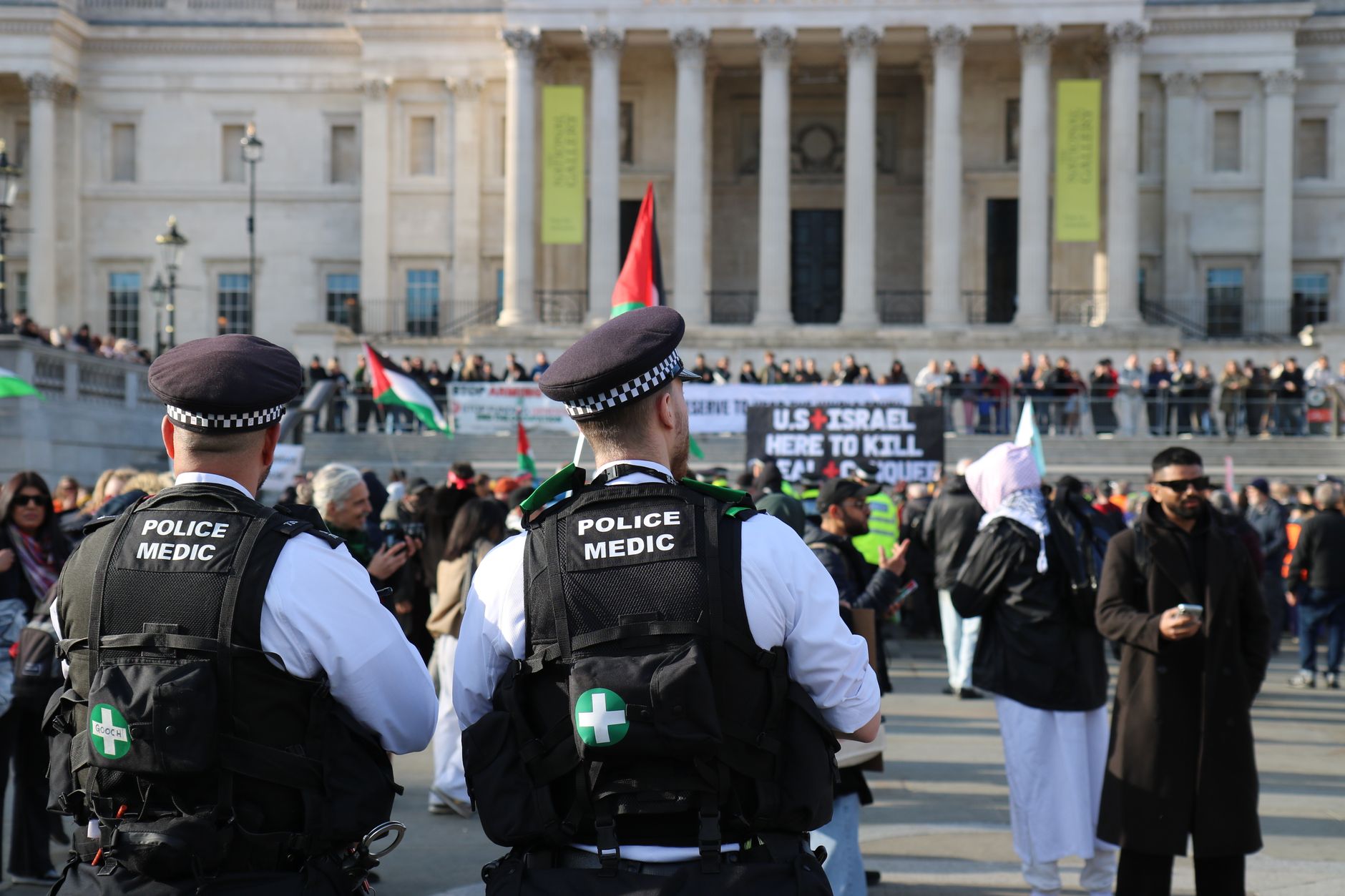
Fourteen arrests. Two opposing crowds. One property exhibition. Central London became a flashpoint again last weekend as rival protest groups descended on an Israeli real estate event, turning what would otherwise have been a niche commercial gathering into yet another chapter in the city’s ongoing struggle with how public dissent, private commerce, and political identity collide on its streets.
This is not abstract politics. This is London — a city where the right to protest is sacred, where commercial events happen daily in hotel conference rooms and exhibition centres, and where the Metropolitan Police are increasingly being asked to referee battles that go well beyond anything in their training manuals. If you live here, pay taxes here, take the Tube past these scenes, this matters to you — whether you have an opinion on the Middle East or not.
What Kind of City Holds Its Breath Over a Property Fair?
Let’s be honest about what was actually happening on the surface: a property exhibition connected to Israeli real estate developers, the kind of event that normally draws a few dozen suits and some glossy brochures. These events have been held across Europe and in London before. But since October 7, 2023, nothing involving Israeli commerce operates in a vacuum anywhere in the Western world — least of all in a city with London’s demographics, its activist culture, and its deeply held traditions of street protest.
The comparison to previous London protest flashpoints is instructive:
| Event | Year | Arrests | Nature of Dispute |
|---|---|---|---|
| Israeli property exhibition protest | 2025 | 14 | Rival protest groups, police intervention |
| Extinction Rebellion Oxford Street blockade | 2019 | 135 | Climate activists vs. commuters |
| Counter-protest at Tommy Robinson march | 2019 | 24 | Far-right vs. anti-fascist groups |
| Cenotaph protest clashes | 2023 | 145 | Rival groups, Armistice Day |
| Kill the Bill protests, Bristol | 2021 | 70+ | Protesters vs. police |
What makes the Israeli property event arrests distinctive is the specific nature of the confrontation: this wasn’t one group versus the police. It was two groups — pro-Palestinian protesters attempting to disrupt or demonstrate against the event, and counter-protesters, reportedly including pro-Israel activists — facing off against each other, with the Met caught in the middle trying to keep both sides from each other’s throats while also protecting the right of a legal commercial event to proceed.
That triangular tension — protest, counter-protest, police — is increasingly the dominant form of public disorder in post-October 7 London, and it’s one the city has not yet found a clean answer to.
What Actually Happened: The Timeline
The Metropolitan Police confirmed 14 arrests across the day. The charges and circumstances varied, but the through-line was clear: when two motivated, ideologically opposed groups occupy the same piece of London pavement, someone is going to get nicked.
Here’s what the day looked like, based on confirmed reporting:
- Pro-Palestinian demonstrators gathered to protest the Israeli property event, arguing that commercial events linked to Israeli business interests normalise what they describe as occupation and apartheid policies
- Counter-protesters, broadly pro-Israel in their framing, arrived to oppose the demonstration and show support for the right of the event to proceed without intimidation
- Metropolitan Police deployed officers to manage both groups, establish separation, and protect the venue
- Tensions escalated as the two groups came closer, with verbal confrontations reportedly turning physical in at least some instances
- 14 people were arrested on a range of offences — the Met confirmed this figure, though the precise breakdown of charges across the two groups was not immediately released in full
- The property event itself proceeded, though the atmosphere around the venue was described by witnesses as tense and heavily policed
- Social media lit up with competing footage, each side presenting their own narrative of who started what and who was the real aggressor
That last point matters. By the time you’re reading this, you’ve probably already seen a clip. The question is which clip — and whose framing came with it.
The Key Players: Who Was Actually There?
The Pro-Palestinian Protest Movement
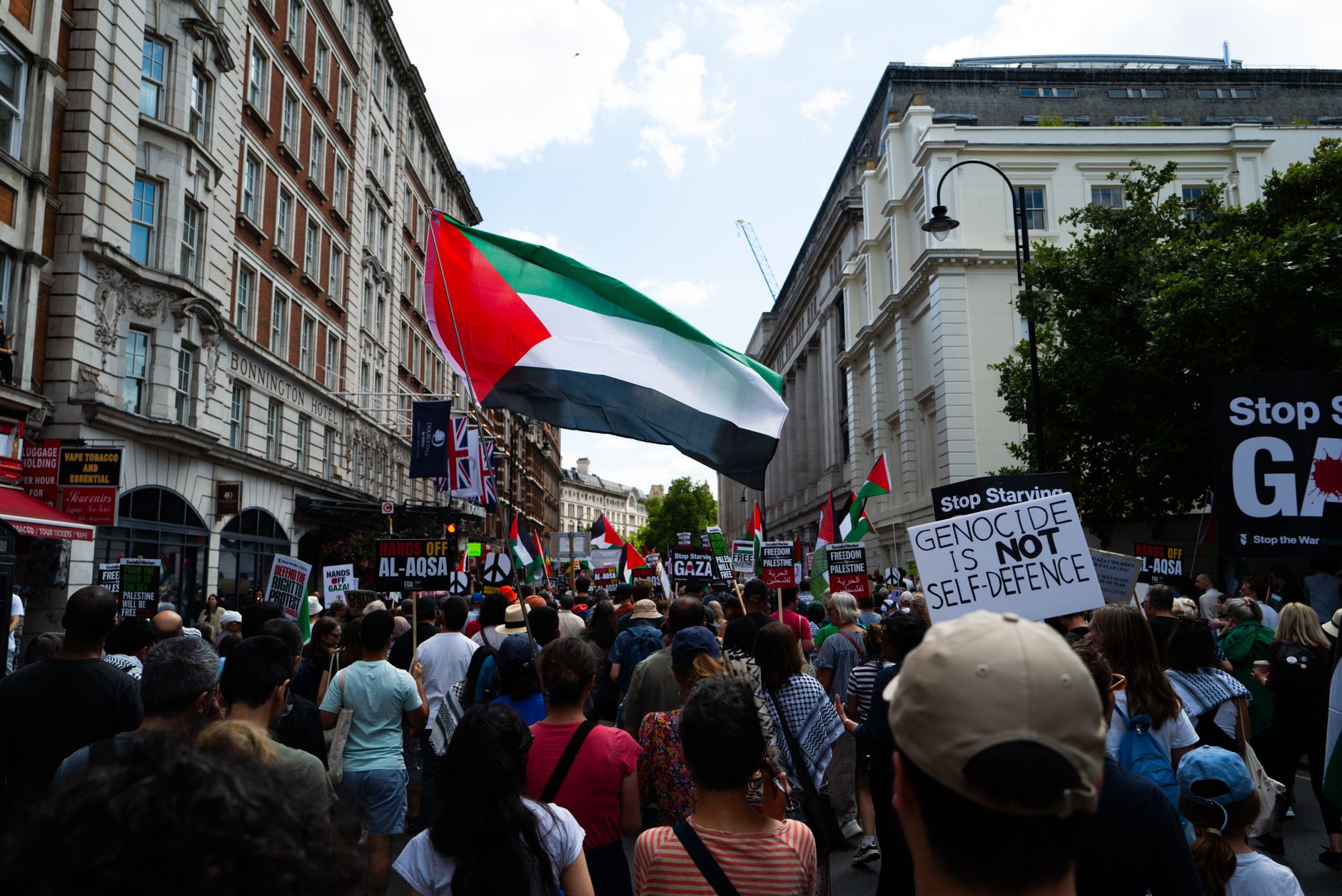
Since October 2023, London has hosted some of the largest pro-Palestinian marches in British history — the November 2023 march drew an estimated 300,000 people through central London. The movement is broad, fractious, and not monolithic. It includes trade unions, student groups, long-standing Palestine solidarity organisations like the Palestine Solidarity Campaign (founded 1982), and newer, more confrontational formations. Tactics have ranged from enormous peaceful marches to targeted disruptions of commercial events deemed to have Israeli connections. The property exhibition fell squarely into the latter category for the groups who showed up to oppose it.
The argument from this side: Israeli commercial events in London represent normalisation of policies that amount to collective punishment of Palestinians. Disrupting them is a form of legitimate political expression and economic pressure.
The Counter-Protest Groups
The counter-protest movement in London around Israel-Gaza has also grown substantially since October 2023, drawing together Jewish community groups, pro-Israel organisations, and individuals who argue that protest activity targeting Israeli commercial or cultural events crosses from legitimate dissent into harassment and antisemitism. Groups like the Campaign Against Antisemitism have been vocal in monitoring and responding to protests they consider to cross legal or ethical lines.
The argument from this side: the right of a legal business event to operate without being shut down by political intimidation is fundamental. Showing up to defend that right is itself a form of democratic expression.
The Metropolitan Police
Commissioner Sir Mark Rowley’s Met is, to put it gently, not having an easy few years. Sandwiched between the legacy of institutional failures exposed by the Casey Review, ongoing scrutiny of protest policing tactics, and now the almost weekly challenge of managing rival political crowds in central London, the force is operating under extraordinary pressure. Their approach to protest policing — particularly around Israel-Gaza demonstrations — has itself become politically contested, with accusations from both sides that the Met is either too heavy-handed or not heavy-handed enough, depending on which team you’re asking.
14 arrests sounds like a lot. It also sounds like a lot fewer than some of these confrontations have produced.
The Venue and Event Organisers
The specific venue hosting the Israeli property exhibition has not been named in all reports, but events of this nature have been held at hotel conference facilities in areas like Kensington, Mayfair, and the City — the usual geography of London’s commercial exhibition circuit. The organisers were running a legal event. That’s not a political statement — it’s just a fact. The legality of the event is not seriously contested; what is contested is whether the politics surrounding it make it an appropriate target for demonstration.
Does London Have a Protest Problem — Or a Politics Problem?
Here’s the uncomfortable question that nobody in a position of authority seems to want to answer directly: has London reached a point where certain categories of event — anything with Israeli connections, anything that one or more politically motivated groups decides to target — simply cannot happen without significant police deployment, arrests, and the kind of footage that ends up on international news feeds?
Think about what that actually means for a world city that positions itself as open for business, open to all cultures, and proud of its tradition of free expression. The logic of protest escalation creates a situation where:
- Any event with a political dimension (and in the current climate, that includes commercial events) can become a security operation
- The cost of policing rival demonstrations falls on London taxpayers regardless of which side they sympathise with
- Businesses and organisations self-censor or relocate events to avoid becoming flashpoints
- The loudest, most confrontational voices on both sides end up setting the terms of public debate by default
This is not a problem unique to London — Berlin, Amsterdam, and New York have all grappled with exactly the same dynamics since October 2023. But London’s particular combination of activist culture, large and engaged Jewish and Muslim communities, media concentration, and symbolic importance as a global city means the stakes here feel especially high.
Consider the pattern of recent protest-related arrests in London:
| Month/Year | Context | Arrests |
|---|---|---|
| November 2023 | Pro-Palestinian march, central London | 20+ |
| February 2024 | Counter-protest near Israeli embassy | 8 |
| June 2024 | Pro-Palestinian demonstration, City of London | 11 |
| November 2024 | Rival groups, Armistice weekend | 30+ |
| 2025 | Israeli property event, rival protests | 14 |
The numbers aren’t spiralling out of control. But they’re not coming down either. And every arrest is a story, a legal process, a family member posting bail, a life briefly derailed — on both sides of whatever line you’ve drawn.
What This Means for Londoners: The Practical Reality
If you’re navigating London life in 2025, the ripple effects of events like this go beyond the headlines. Here’s the actual impact on the ground:
On public space:
- Sections of central London become effectively inaccessible during major protest days
- Hotel and conference venue operators face pressure not to host certain clients
- Local residents and businesses near flashpoint areas deal with disruption regardless of their political views
On policing:
- Met resources are stretched by near-constant protest management
- Officers assigned to political demonstrations are not available for neighbourhood policing
- The political scrutiny of protest policing decisions creates risk-aversion that can make situations worse, not better
On community relations:
- Jewish Londoners report heightened anxiety about public antisemitism being dismissed as legitimate protest
- Muslim Londoners and pro-Palestinian activists report feeling that their democratic right to protest is being selectively policed
- Both sets of feelings are real, both deserve to be taken seriously, and the city is not currently doing a brilliant job of holding both simultaneously
On London’s reputation:
- 14 arrests at a property fair is not the image London’s Mayor, its business community, or its tourism sector wants circulating internationally
- The city’s claim to be a model of pluralist, tolerant urban life is being stress-tested in real time
Here’s a quick breakdown of what the opposing sides want from the city’s institutions:
| Group | Core Demand | What They Say Is Being Ignored |
|---|---|---|
| Pro-Palestinian protesters | Right to demonstrate against events with Israeli links | Freedom of assembly and conscience |
| Pro-Israel counter-protesters | Protection of legal events from political intimidation | Right of Jewish community to participate in public life without disruption |
| Event organisers | Ability to hold legal commercial events without security crises | Basic rule of law for businesses |
| Local residents/businesses | Predictability and access to their neighbourhood | Their interests in the protest calculus |
| Metropolitan Police | Clear legal framework and political support | Caught between competing demands with inadequate guidance |
None of these demands are inherently unreasonable. The problem is they’re currently in direct conflict with each other, and 14 arrests is what happens when a city doesn’t have a coherent answer.
The Free Speech Tightrope
Britain has among the most permissive protest laws in Europe. The right to demonstrate, to be loud, to make commerce uncomfortable — these are not fringe libertarian positions, they’re baked into the British legal tradition going back centuries. The Chartists marched. The Suffragettes marched. The anti-apartheid movement marched outside South Africa House for years. Protest that disrupts normal life is not an aberration in London’s history — it is London’s history.
But. There’s always a but.
The specific dynamic of rival protest groups — both claiming the mantle of defending democratic values, both genuinely convinced the other represents an existential threat — creates a scenario where the normal frameworks strain. When protest becomes counter-protest becomes confrontation becomes arrest, who is exercising democratic rights and who is suppressing them? The answer depends almost entirely on which side of the argument you started on.
What’s not in question: 14 people had a very bad day in central London, the Met spent significant resources managing a commercial property event, and footage from the confrontation is now doing circuits on social media, feeding narratives that have nothing to do with property prices in Tel Aviv or the legalities of London conference venues.
The city has been here before. It will be here again. The question — and it’s one that Sadiq Khan’s office, the Met, and London’s community leaders need to start answering with more specificity than they currently are — is whether there’s a version of managing these tensions that doesn’t just produce a fortnightly cycle of arrests, competing victim narratives, and exhausted police officers standing between two groups of people who are each, in their own mind, completely in the right.
London is a city that has always absorbed conflict and contradiction. That’s part of what makes it extraordinary. But absorbing conflict is not the same as resolving it — and right now, fourteen people being arrested at a property fair feels less like a city confidently managing its tensions and more like one that’s just about holding the line.



Leave a Reply