
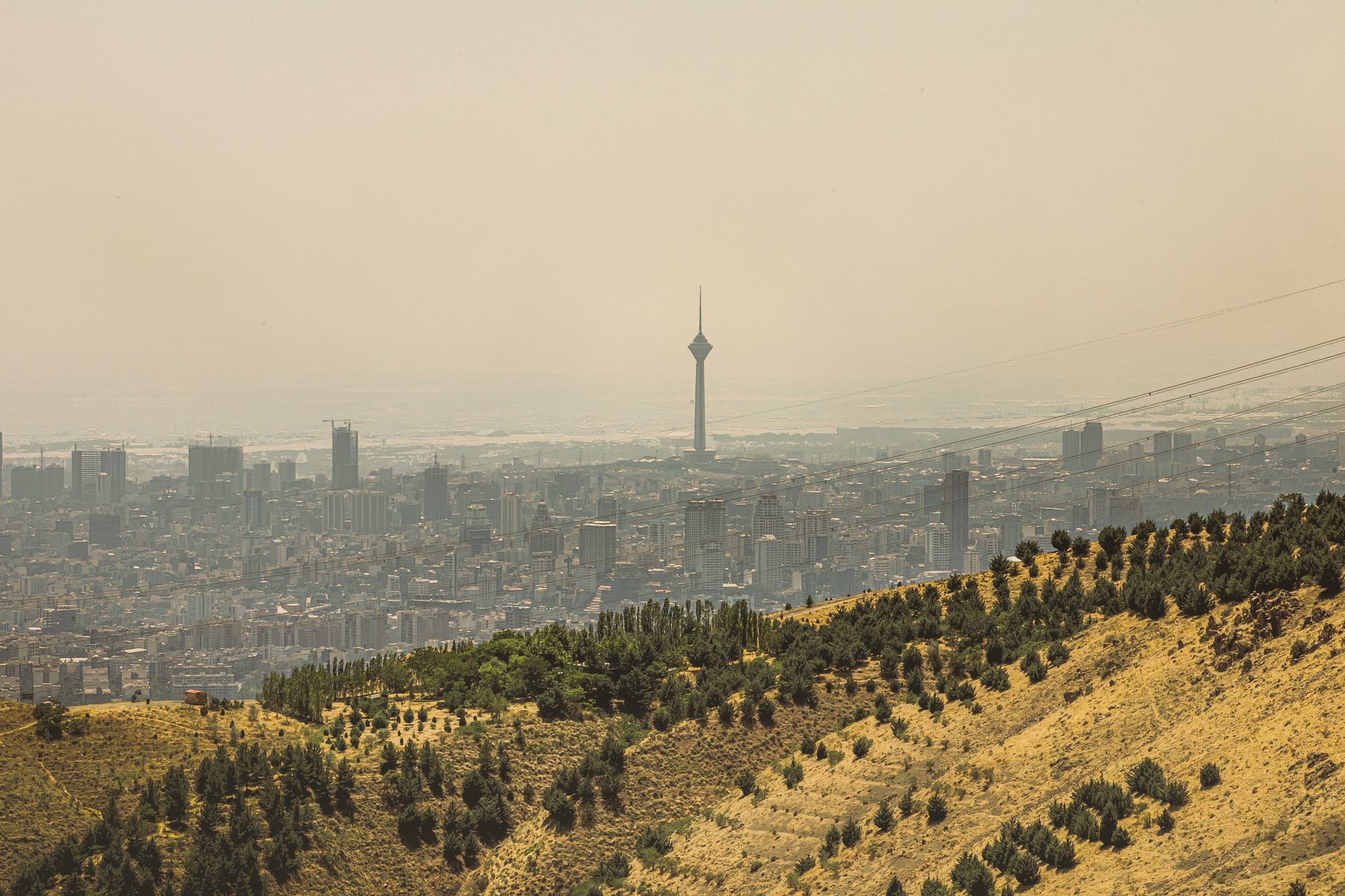
The International Monetary Fund has delivered a verdict that should make every Londoner put down their flat white and pay attention: if the conflict involving Iran escalates into something worse, the UK takes the hardest punch of any major economy on the planet. Not Germany. Not France. Not Japan. Us. Britain — already limping through anaemic growth, sticky inflation, and a cost-of-living crisis that refuses to pack its bags — is the most exposed developed nation to the economic fallout of a war in the Middle East. That’s not commentary. That’s the IMF.
For Londoners already juggling eye-watering rents, energy bills that went stratospheric and never quite came back down, and a transport system held together by prayer and engineering tape, this is not abstract geopolitics. This is fuel prices, mortgage rates, grocery bills, and the viability of that small business you’ve been quietly trying to keep afloat since 2020. The ripple effects of a Middle Eastern conflict reach London faster, deeper, and harder than almost anywhere else — and understanding why matters enormously for how we think about the months ahead.
Why the UK Is More Exposed Than Any Other G7 Nation
Let’s get into the mechanics, because this is genuinely important. The IMF’s analysis points to several interlocking vulnerabilities that leave Britain uniquely susceptible to an Iran-related economic shock. The UK imports a substantial share of its energy needs. Unlike Norway (which has North Sea reserves to spare) or France (whose nuclear fleet provides a buffer), Britain sits in an awkward middle ground — not energy-independent, not diversified enough, and heavily reliant on global oil and gas markets that would convulse in the event of a serious Iran conflict.
Iran sits astride the Strait of Hormuz, the narrow chokepoint through which roughly 20% of the world’s oil supply passes daily. Any serious military escalation — whether involving Iran directly or its proxies — threatens that corridor. Oil prices spike. Gas prices spike. And in Britain, where household energy costs are already among the highest in western Europe relative to income, that spike hits consumers with brutal efficiency.
There’s also the pound to consider. Sterling has shown a persistent tendency to weaken during global risk-off events — it’s not seen as the safe-haven currency that the dollar or even the yen enjoys. A weaker pound makes imported goods more expensive, fans inflation, and gives the Bank of England a horrible dilemma: raise rates to defend the currency and crush growth, or hold and watch prices climb.
| Country | IMF Growth Impact (Iran Conflict Scenario) | Energy Import Dependency | Currency Safe-Haven Status |
|---|---|---|---|
| United Kingdom | Highest among G7 | High | Low |
| Germany | High | Medium-High | Medium (Eurozone) |
| France | Medium | Medium (nuclear buffer) | Medium (Eurozone) |
| United States | Lower | Low (energy exporter) | Very High (reserve currency) |
| Japan | Medium | High | High (yen safe-haven) |
| Canada | Lower | Low (energy exporter) | Medium |
| Italy | Medium-High | High | Low-Medium |
The table is uncomfortable reading. Britain pairs high energy dependency with low currency safe-haven status — a combination that turns global shocks into domestic economic pain faster than almost anywhere comparable.
What Is Happening Right Now: The Economic Pressure Points
The IMF warning didn’t arrive in a vacuum. It lands at a moment when the UK economy was already being revised downward. The Fund cut its UK growth forecast to 1.1% for 2025 back in April — one of the more pessimistic assessments among its G7 projections. Now layer on top of that a potential Iran-conflict scenario, and you’re talking about growth that could fall into marginal or even negative territory.
Here’s where things stand at this precise moment:
- Oil prices have already been volatile in 2025, with Brent crude swinging between $70 and $85 per barrel as Middle East tensions have ebbed and flowed since late 2024
- UK household energy bills remain significantly elevated compared to pre-2021 levels, meaning any further price shock hits consumers who have zero buffer left
- The Bank of England cut rates to 4.25% in May 2025 but has signalled extreme caution about further cuts — a geopolitical shock could freeze that easing cycle entirely
- UK trade is disproportionately dependent on financial services and imports of physical goods, both of which are sensitive to global disruption and currency movements
- London’s property market, already stuttering under elevated mortgage rates, would face renewed pressure if rates stayed higher for longer due to inflationary energy shocks
- Small businesses — particularly hospitality and retail, which dominate London’s economy at street level — operate on margins so thin that even a 10-15% energy price rise can tip them into loss
- Supply chains for goods sold in London’s supermarkets and shops pass through the Gulf region or are priced in dollars, meaning any Hormuz disruption translates to shelf price increases within weeks
None of this is speculative doom-mongering. These are the transmission mechanisms that economists have studied for decades, and the IMF’s analysis reflects exactly how they would activate in a serious escalation scenario.
The Key Players Shaping Britain’s Exposure
Understanding who is actually in the room — and what decisions they’re making right now — matters if you want to cut through the noise.
The IMF and Its Warning Shot
The International Monetary Fund doesn’t do dramatic press releases for fun. When the Fund singles out Britain as the most exposed major economy to an Iran war scenario, that’s a calculated signal designed to push policymakers toward action. The IMF’s World Economic Outlook and subsequent analyses in 2025 have consistently flagged geopolitical risk as the primary threat to global growth — and within that framework, the UK’s specific vulnerabilities have been called out with unusual directness. This is the organisation that effectively put Britain on notice during the Truss mini-budget chaos in 2022. When they speak, markets and finance ministers listen.
The Bank of England
Governor Andrew Bailey and the Monetary Policy Committee are navigating an almost impossibly narrow path. They’ve begun cutting rates to stimulate a sluggish economy, but an energy price shock driven by Middle East conflict would reignite inflation — potentially forcing them to reverse course. The Bank has its own internal modelling on geopolitical oil shocks, and you can be certain that the scenarios on Threadneedle Street’s whiteboards right now include Iran. The decisions they make in response to any escalation will directly affect every mortgage holder, every saver, and every business borrowing to grow in this city.
HM Treasury and Rachel Reeves
Chancellor Rachel Reeves inherited a fiscal position that left precious little room for manoeuvre. The autumn 2024 budget was built on growth assumptions that are already looking optimistic. A serious geopolitical shock that cuts UK growth — already at 1.1% and fragile — would blow a hole in the public finances, force difficult choices about spending, and potentially trigger emergency interventions in energy markets similar to what the previous government had to do in 2022. Reeves has been focused on fiscal rules and investment-led growth. An Iran escalation would test both immediately.
UK Energy Companies and the Ofgem Price Cap
The energy price cap mechanism — introduced to protect consumers during the 2022 crisis — remains in place but has been gradually normalising. Energy companies including British Gas, E.ON, and Octopus Energy are already pricing forward contracts in an environment of elevated uncertainty. If oil and gas prices surge due to Hormuz disruption, the price cap would need emergency adjustment, and the question of who absorbs the cost — consumers, government, or energy companies — becomes politically explosive very quickly.
London’s Hospitality and Retail Sector
This is the part that rarely makes the IMF report but absolutely should. London’s restaurants, bars, cafes, and independent retailers are the economic and cultural tissue of the city. They were savaged by the pandemic, squeezed by the cost-of-living crisis reducing discretionary spending, hit by the employer National Insurance rise in April 2025, and are now being told they face the most exposed major economy in a potential war scenario. The lifestyle and leisure sector in London employs hundreds of thousands of people and generates enormous tax revenue — it is also the least equipped to absorb another shock.
Does This Mean Britain Is Helpless? Challenging the Assumptions
Here’s where it gets more nuanced — and where the pessimism, while warranted, needs to be stress-tested.
Britain’s vulnerability is real, but it is not fixed. There are things that policymakers could do, are doing, or should be doing that would alter the exposure profile the IMF is describing. The question is whether the political will and institutional capacity exist to move fast enough. Historically, the answer has been: sometimes, and usually too late.
Consider the counterarguments to pure doom:
- The UK is further along in energy transition than many comparable economies. Renewables now generate a significant share of British electricity — wind power in particular has had record years. This doesn’t eliminate oil dependency for heating and transport, but it does provide a partial buffer that didn’t exist in the 1970s oil shocks.
- Britain has sovereign monetary policy. Unlike Italy or Spain, which share the euro and therefore share monetary policy with economies that have different needs, the UK can calibrate interest rates and currency policy to its specific situation. That’s a genuine flexibility.
- The IMF scenario is a worst-case model. The report is modelling what would happen *if* a serious Iran conflict materialises — not predicting that it will. The probability-weighted impact is lower than the scenario impact, though no less worth preparing for.
- Strategic petroleum reserves exist. The UK and its IEA partners maintain strategic reserves that can be released to dampen oil price spikes in a crisis — as happened in 2022 following the Ukraine invasion.
- London’s financial services sector, for all its exposure to volatility, also *profits* from volatility. Trading revenues at Canary Wharf firms tend to spike during geopolitical crises. This is cold comfort for most Londoners, but it does mean the shock is not uniformly negative across the entire economy.
That said, these mitigating factors don’t cancel the fundamental vulnerabilities. They soften them. The IMF isn’t wrong — Britain *is* more exposed. The debate is about degree and policy response, not about whether the risk is real.
| Vulnerability Factor | Severity for UK | Potential Mitigation | Current Status of Mitigation |
|---|---|---|---|
| Oil price spike | Very High | Strategic reserves, renewables transition | Partial — reserves limited, transition incomplete |
| Currency depreciation | High | BoE rate response | Available but costly to growth |
| Energy bill surge | Very High | Price cap mechanism | Exists but needs funding |
| Import cost inflation | High | Trade diversification | Slow progress |
| Mortgage market stress | High | Rate cuts paused | Vulnerable if rates must rise again |
| Business energy costs | High | Business energy support schemes | Emergency powers available but unused |
What This Actually Means for Londoners: The Street-Level Reality
Forget the macroeconomics for a moment. What does the IMF’s finding mean for the person reading this on the Northern line, or over a coffee in Peckham, or between shifts in a Soho kitchen?
The honest answer is: it depends on escalation. But here’s the range of impacts worth understanding:
If the conflict remains at current levels (no major escalation):
- Energy prices stay elevated but broadly stable
- Mortgage rates continue their slow downward drift as the Bank of England cuts gradually
- Inflation stays stubborn but slowly declining
- London’s economy continues its subdued, grinding recovery
If the conflict escalates significantly — Hormuz disruption, wider regional war:
- Energy bills could spike by 20-40% within two to three months of a sustained supply disruption
- The Bank of England would likely pause or reverse rate cuts, keeping mortgages higher for longer
- Grocery prices would rise — the UK imports significant food volumes priced in dollars
- London’s already-squeezed hospitality sector would face another existential moment
- The pound could fall sharply, making holidays abroad more expensive and imports pricier
- London property transactions would stall as buyer confidence collapsed
Here’s what Londoners can actually do with this information:
- Fix your energy tariff if your supplier offers fixed deals — variable tariffs leave you completely exposed to any price spike
- Review your mortgage — if you’re on a tracker or coming off a fixed rate in the next six months, it’s worth speaking to a broker about what a rate-reversal scenario means for your payments
- Don’t over-extend on credit — a shock that raises prices and potentially costs jobs is the worst environment for high personal debt
- Support local businesses — this sounds trite but it isn’t. London’s independent sector is genuinely fragile right now, and it matters enormously to the city’s character and employment base
- Stay informed on energy policy — the government’s response to any shock will include decisions about the price cap, potential windfall taxes, and emergency support. These decisions will happen fast and affect you directly
| Impact Area | Low Escalation Scenario | High Escalation Scenario | Timeline of Impact |
|---|---|---|---|
| Household energy bills | Stable / slight rise | +20-40% | 2-4 months post-disruption |
| Mortgage rates | Gradual fall continues | Rate cuts paused or reversed | Immediate to 3 months |
| Grocery prices | Slow improvement | +8-15% on imported goods | 1-3 months |
| London property market | Cautious recovery | Sharp slowdown | 1-6 months |
| Hospitality job market | Stable | Significant risk of closures | 3-9 months |
| Petrol prices | Elevated but stable | +20-30p per litre | Weeks |
None of this means Londoners should be stocking bunkers or cancelling direct debits. But it does mean treating the IMF’s warning as something other than background noise. Britain didn’t choose to be the most exposed major economy to this particular risk — it’s a function of structural decisions made over decades about energy policy, trade patterns, and financial architecture. But we’re in it now.
London has absorbed shocks before — the financial crisis, Brexit, a once-in-a-century pandemic. The city’s resilience is genuine. But resilience isn’t immunity. And going into a potential new shock with a clear understanding of the exposure is infinitely better than being blindsided by it in six months when the price cap gets adjusted and your energy bill lands like a brick through the letterbox.
The IMF has named Britain as the most vulnerable major economy in this scenario. The least we can do is take that seriously — and ask, loudly, what exactly the government plans to do about it.






Leave a Reply