
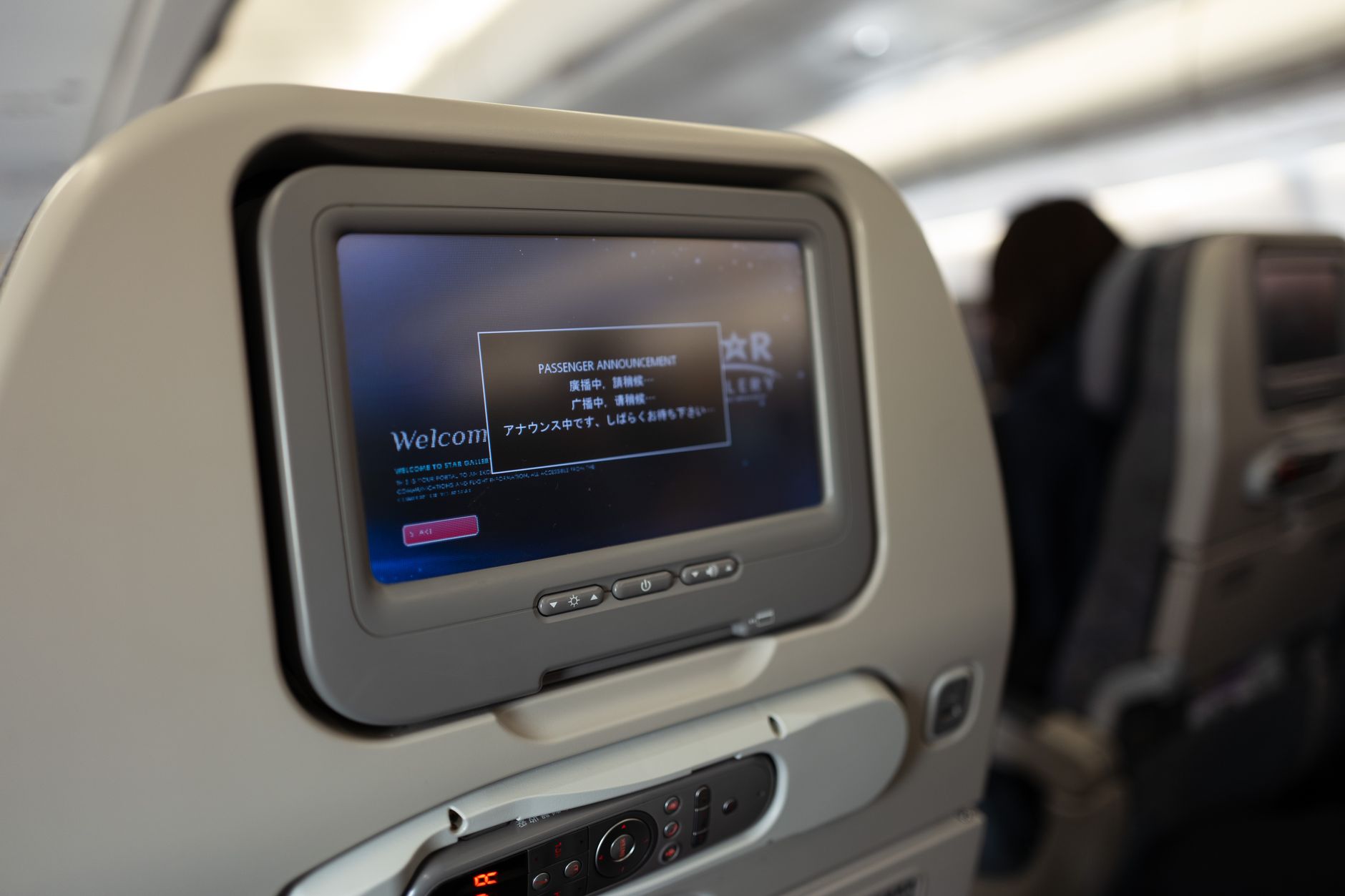
There’s a moment on any long-haul flight when you realise, with cold clarity, that economy class was a terrible idea. You’re wedged between a snoring stranger and the window, your knees are somewhere near your ears, and the seat-back screen is stuck on a Bulgarian insurance advert from 2019. Alaska Airlines, of all carriers, has decided enough is enough — and it’s coming for the premium cabin market with something genuinely worth talking about.
The Seattle-based airline — better known for Pacific Northwest charm than transatlantic ambition — has unveiled its first-ever International Business Class Suites product, and it’s not a half-measure. This is a full-throated bid for the kind of high-spending, long-haul passenger who currently defaults to British Airways, Emirates, or Singapore Airlines without a second thought. For Londoners who fly regularly between Heathrow and North America, or who connect onward from US hubs to the rest of the world, this announcement deserves serious attention.
How Alaska Airlines’ New Suites Stack Up Against the Competition
Let’s be honest: when most people think “Business Class,” they think Qatar Airways’ Qsuite, or the hushed luxury of Singapore’s A380 upper deck, or BA’s Club Suite — which, after years of being embarrassingly dated, finally got its act together. Alaska Airlines is walking into a room where the bar is genuinely high.
But here’s what’s interesting. Alaska isn’t just playing catch-up. The airline has designed its International Business Class Suites with closing doors, direct aisle access from every seat, lie-flat beds, and a suite configuration that prioritises privacy — the non-negotiables of the modern premium cabin arms race. The product has been engineered for the carrier’s long-haul routes, which have expanded considerably since its 2016 merger with Virgin America and its ongoing network growth.
| Feature | Alaska Airlines Suites | British Airways Club Suite | Qatar Airways Qsuite |
|---|---|---|---|
| Closing Door | Yes | Yes | Yes |
| Lie-Flat Bed | Yes | Yes | Yes |
| Direct Aisle Access | Yes | Yes | Yes |
| Double Bed Option | No | No | Yes (select configs) |
| Wi-Fi Standard | High-speed | High-speed | High-speed |
| Signature Dining | Yes (West Coast inspired) | Yes | Yes (à la carte) |
| UK Routes | Via US connections | Direct LHR | Direct LHR |
| Loyalty Programme | Mileage Plan | Executive Club | Privilege Club |
The honest assessment? Alaska isn’t going to dethrone Qatar’s Qsuite for sheer theatre. But it’s positioned firmly in the top tier — and at price points that, particularly for Mileage Plan redemptions, could make it genuinely compelling for London-based frequent flyers routing through Seattle, Los Angeles, or San Francisco.
What Alaska Airlines Is Actually Launching Right Now
This isn’t vaporware or a concept render gathering dust in a design studio. Alaska Airlines is rolling out its International Business Class Suites on specific aircraft and routes, with a clear vision for where the product goes next. Here’s what’s confirmed:
- Suite design: Fully enclosed suites with sliding privacy doors — the feature that separates genuine premium products from glorified recliner chairs
- Lie-flat beds: Fully flat sleeping surface, an absolute baseline requirement for anyone doing overnight transatlantic or transpacific travel
- Direct aisle access: Every single passenger can get to the aisle without climbing over a neighbour — a detail that sounds minor until it’s 3am and you need the bathroom
- West Coast-inspired dining: Alaska has leaned into its Pacific Northwest identity, with food and beverage programmes reflecting the region’s culinary reputation — think quality wine lists, fresh Pacific ingredients, and a lighter touch than the stodgy “airline food” cliché
- Elevated amenity kits: Partnered with premium lifestyle brands for the full suite experience
- Enhanced in-flight entertainment: Larger personal screens with expanded content libraries
- Mileage Plan integration: Alaska’s loyalty programme — consistently rated among the most generous in North America — will fully support suite redemptions
- Fleet deployment: Rolling out across Boeing 737 MAX variants on longer domestic and international routes, with wider international expansion planned
The timing is deliberate. Alaska has been quietly but systematically building its international credentials, and this product launch is the public statement that the airline is serious about competing at the top end of the market.
The Key Players Behind Alaska’s Premium Cabin Push
Alaska Airlines Leadership
CEO Ben Minicucci has been the architect of Alaska’s post-merger ambition. Since taking the helm, he’s steered the airline through a complex integration with Hawaiian Airlines — a deal completed in 2024 — which suddenly gave Alaska a genuine international network anchor in the Pacific. The Suites product is as much a statement about where the combined airline is heading as it is about any single cabin configuration. Minicucci’s bet is straightforward: premium passengers are where the margin lives, and Alaska has been leaving money on the table by not competing properly for them.
The Mileage Plan Factor
You cannot talk about Alaska Airlines in 2025 without talking about Mileage Plan. It is, by several independent analyses, one of the most valuable frequent flyer programmes in North America. Alaska has maintained partner agreements with a remarkable breadth of carriers — including British Airways, Cathay Pacific, Finnair, and Japan Airlines — which means London-based travellers can earn and burn Mileage Plan points across a genuinely global network. The introduction of a premium suite product that can actually be redeemed with those hard-earned miles is significant. Suddenly, Mileage Plan points aren’t just useful for hopping between Seattle and Portland. They’re a ticket to a proper flat bed.
The Hawaiian Airlines Dimension
The 2024 merger with Hawaiian Airlines is the strategic move that makes all of this cohere. Hawaiian brings transpacific routes, inter-island expertise, and a loyal customer base. Alaska brings the tech infrastructure, the loyalty programme muscle, and now, the premium product. Together, they’re building something that genuinely challenges the assumption that premium Pacific travel means United Polaris or American Flagship.
Boeing and the Fleet Question
Boeing’s role here is complicated — and worth acknowledging. Alaska has been a predominantly Boeing operator, and the 737 MAX controversies of recent years have created turbulence (literal and figurative) across the industry. Alaska was directly affected by the January 2024 door plug incident on one of its 737 MAX 9 aircraft. The airline’s decision to continue investing in premium cabin product, even amid fleet uncertainty, signals genuine confidence in its long-term direction. The wider-body question — essential for truly competitive long-haul suites deployment — remains one to watch.
Does Alaska Actually Have What It Takes to Change the Game?
Here’s the uncomfortable question that deserves an honest answer: is a West Coast American carrier with its roots in Alaskan bush flying really going to reshape what sophisticated travellers expect from Business Class? The sceptical case writes itself. Alaska doesn’t have the scale of United or American. It doesn’t have the glamour of Gulf carriers. It doesn’t have the heritage of Singapore Airlines.
But scale and glamour aren’t the whole story. Consider:
- Loyalty programme quality often beats product quality in driving repeat premium bookings — and Alaska’s Mileage Plan is genuinely excellent
- Route-specific dominance matters: on Seattle-Tokyo or LA-various Pacific routes, Alaska has a legitimate claim to be the carrier of choice
- The Hawaiian merger opened genuinely new geography: transpacific and island routes that no other carrier serves with the same network depth
- Premium cabin demand is growing faster than supply: post-pandemic, the gap between economy and business has never been wider in passenger preference terms
- The West Coast tech premium market is underserved: Silicon Valley, Seattle’s Amazon and Microsoft corridor, LA’s entertainment industry — these are high-earning frequent flyers who’ve historically defaulted to United Polaris by default rather than by genuine preference
The counterarguments are real too. Alaska’s international network, even with Hawaiian’s addition, is a fraction of the reach that United, American, or the big European carriers offer. If you’re flying London to Tokyo, you’re probably not routing through Seattle unless there’s a compelling reason. The Suites product, however good, needs routes to fly on. That network build-out is the long game, and it will take years.
What Alaska is betting on — sensibly — is that the premium market doesn’t need to be served everywhere at once. You carve out the routes where you’re genuinely competitive, you deliver an outstanding product, you let the Mileage Plan do its work, and you grow from there. It’s not a crazy strategy. It’s actually how several of the world’s best airlines got where they are.
What This Means for London Travellers and the Broader Lifestyle of Flying Well
For Londoners who take their travel seriously — and this city has more than its share of people who have strong opinions about lie-flat angles and cabin lighting — the Alaska Suites launch matters in some specific, practical ways.
First, the routing reality. Alaska’s primary UK relevance comes through its partner network and its US gateway airports. Flying Alaska International Business Class from a London perspective most likely means connecting at Seattle-Tacoma (SEA), Los Angeles (LAX), or San Francisco (SFO) — all excellent gateway airports with decent connection options. If your ultimate destination is Japan, Hawaii, or the US West Coast itself, this suddenly becomes a very live option.
Second, the Mileage Plan opportunity. British Airways Executive Club members who’ve been frustrated by Avios devaluations might find Alaska Mileage Plan a refreshing alternative. The programme has historically offered better value on partner redemptions, and the ability to now book into proper suite-class seats makes the points accumulation more purposeful. You can earn Mileage Plan points on British Airways flights, which opens an interesting arbitrage for frequent BA flyers.
Third, the lifestyle dimension of travel is something that matters to a genuinely significant number of Londoners — people for whom the journey is part of the experience, not just a necessary inconvenience. Alaska’s West Coast identity, expressed through its food and beverage programme and overall cabin aesthetic, offers something different from the slightly anonymous luxury of some competitor products. There’s a distinct personality here. Whether that personality appeals is a matter of taste, but it’s at least a personality — which is more than can be said for plenty of premium cabin offerings that blur into beige uniformity at altitude.
| Route Relevance for London Travellers | Alaska Coverage | Best Use Case |
|---|---|---|
| London → Hawaii | Via LAX/SEA connections | Holiday + Mileage Plan redemption |
| London → Japan | Via SEA (Seattle hub) | Business travel + partner points |
| London → US West Coast | Via direct BA, then Alaska onward | Domestic connections in premium |
| London → Australia/NZ | Limited, via Pacific connections | Niche routing only |
| London → Canada | Via partner connections | Occasional relevance |
Key practical considerations for London-based travellers thinking about Alaska’s new product:
- Check Mileage Plan partner earning rates — you can accumulate points on British Airways, Cathay Pacific, and other OneWorld partners
- Seattle is Alaska’s strongest hub for onward Pacific connections — if SEA works geographically for your trip, it’s worth serious consideration
- Hawaii routes are the sweet spot for UK travellers wanting to use the Suites product on a leisure trip that justifies the premium spend
- Watch for route expansion — as Alaska integrates Hawaiian and builds its network, new UK-relevant routing options will emerge
- Compare redemption rates — Alaska Mileage Plan has historically offered better partner redemption value than several European programmes on equivalent cabin classes
For anyone who considers travel a genuine part of their lifestyle rather than a logistical chore, the emergence of another serious premium cabin product is straightforwardly good news. Competition forces improvement. When Alaska raises its game, every other carrier paying attention has to respond.
The broader picture is one of a premium aviation market that is, despite everything, innovating at pace. The gap between the best business class products and the worst has never been wider — which means choosing wisely has never mattered more. A London frequent flyer who does their homework on routing, loyalty programmes, and cabin products can fly significantly better for the same money than someone who just defaults to whatever airline their corporate travel system defaults to.
Alaska Airlines’ International Business Class Suites won’t be right for every journey that originates in London. But for a meaningful subset of routes — particularly to Hawaii, Japan, and the US West Coast — it’s now a product that belongs in the conversation alongside the established names. That’s a significant shift from where Alaska was even five years ago.
The airline has spent decades being quietly excellent in its home market. The Suites launch is the moment it stops being quiet about it.
So the next time you’re booking that long-haul trip and your first instinct is to reach for the BA or Emirates booking page, it might be worth pausing. Alaska has built something worth checking. The question isn’t whether they’ve earned a seat at the premium table — it’s whether you’ve been paying enough attention to notice they’ve been sitting there, getting ready, for quite some time.










Leave a Reply