
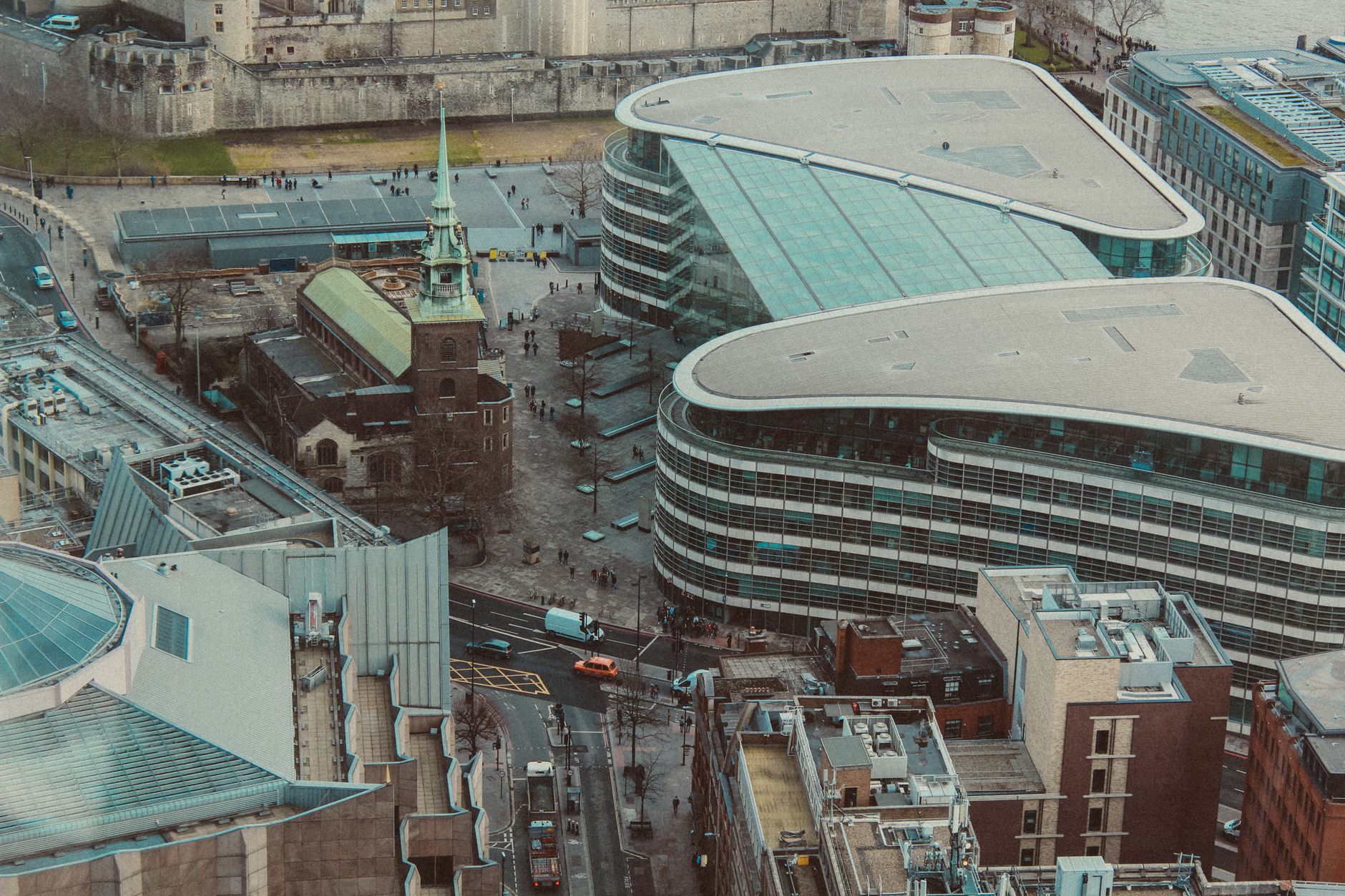
London runs on news. Not the polished, considered think-pieces published three days after the fact — but the raw, immediate, somebody-just-got-this-on-their-phone-in-a-pub kind of news that defines how 9 million people understand their city in real time. So when London’s breaking news infrastructure quietly makes a significant hire, that matters. More than most people realise.
This isn’t a celebrity appointment or a LinkedIn-friendly press release moment. It’s the kind of move that shifts editorial culture from the inside out — the sort of decision that determines whether Londoners get sharp, accountable, genuinely fast journalism, or another layer of corporate blandness dressed up with push notifications. And right now, in a city where the news cycle moves at the speed of a Jubilee line delay tweet, who sits in those seats at the breaking news hub genuinely changes what you read, watch, and believe.
London’s Breaking News Landscape: Then vs Now
Let’s be honest about what London’s news scene looked like ten years ago versus today. In 2015, you had the Evening Standard dropping through letterboxes, LBC holding court on the commute, BBC London doing its dependable thing, and a handful of digital upstarts convinced they were going to eat everyone’s lunch. Some did. Most didn’t.
The city’s breaking news infrastructure has consolidated dramatically. The hubs that matter — the ones with the journalists, the contacts books, the relationships with Met Police press officers and City Hall spin doctors — have become fewer but more powerful. And the talent flowing through those doors has never been more consequential.
| Era | Key Breaking News Players | Dominant Format | Primary Audience |
|---|---|---|---|
| 2010–2015 | Evening Standard, BBC London, Sky News | Print + Broadcast | Commuters, TV viewers |
| 2016–2020 | LBC, Vice UK, BuzzFeed News UK | Digital + Radio | Under-35 urban professionals |
| 2021–2024 | ITVX News, The Guardian Digital, BBC Verify | Video + Live Blog | Multi-platform news seekers |
| 2025–2026 | Hybrid hubs, AI-assisted desks, regional-digital hybrids | Real-time multiplatform | Everyone, simultaneously |
That table tells you something important. The centre of gravity keeps shifting. And every time it shifts, the people making editorial decisions at the top of those organisations determine whether Londoners get journalism that actually serves them — or content that serves the algorithm.
The current moment is particularly charged. With five amber health alerts issued across the UK on what’s reportedly the hottest day of the year so far, and NATO war games reportedly running inside a secret bunker beneath a London Tube station — a detail that sounds like fiction but apparently isn’t — London’s breaking news desks are being stress-tested in real time. You need experienced, sharp, well-connected people running those operations. Which is precisely why this new hire matters.
What’s Happening Right Now at London’s News Hubs
The city’s media ecosystem is in active flux. Several major editorial changes are reshaping who tells London’s story and how quickly they tell it. Here’s where things stand:
- Staffing shifts at digital desks across central London are accelerating, driven partly by AI integration forcing a rethink of what human journalists actually do — and which humans you want doing it
- Breaking news roles specifically have become more competitive, not less, despite industry-wide redundancies; the premium is on people who can work across formats simultaneously
- BBC London and ITVX are both expanding their real-time reporting capacity following audience research showing Londoners increasingly bypass national news in favour of hyperlocal, fast-turnaround content
- The Guardian’s London digital desk has been quietly bolstering its live coverage team through 2025 and into 2026, a move that’s already paying dividends with stories like the NATO Tube bunker investigation
- Independent podcast and newsletter operations based in Shoreditch and Borough are pulling talent away from traditional outlets, creating an unusual two-way flow where experienced hires move between legacy and independent media
- Editorial leadership appointments — as opposed to junior reporter hires — are now treated as strategic moves with long-term implications for editorial independence and audience trust
The new hire at London’s breaking news hub slots directly into this context. This isn’t someone being brought in to file copy. This is someone being brought in to shape how an organisation responds when something genuinely significant breaks — a terror incident in Southwark, a flooding emergency on the Thames, a political crisis emerging from Westminster at 11pm on a Tuesday.
That’s a different job than it was even five years ago. And finding the right person for it is harder than ever.
The Key Players Shaping London’s Breaking News World
The Editors Holding the Line
The people running London’s major breaking news operations right now are, almost without exception, journalists who came up through the mobile-first revolution of the early 2010s. They understand audiences who consume news in 90-second bursts on a phone screen while standing on an overcrowded Northern line carriage. They also, critically, understand when a story requires patience — when the ‘first’ is less important than the ‘right.’
The tension between speed and accuracy defines every breaking news operation in the capital. Get it wrong at scale — publish something false about an incident in Brixton or misidentify someone in connection with a City fraud investigation — and the reputational damage is severe and lasting. Get it right, consistently, and you build the kind of audience loyalty that no algorithm can manufacture.
The Talent Pipeline: Where London’s Breaking News Journalists Come From
City University’s journalism school in Clerkenwell remains the most reliable pipeline for London-focused news talent. Its graduates understand the city structurally — they’ve reported from Barking and Dagenham, from Haringey council meetings, from the Old Bailey. They know London as a complex, contradictory, endlessly surprising place rather than a postcard backdrop.
Kings College and Goldsmiths also produce sharp journalists, though with different strengths — more analytical, sometimes slower to the break but stronger on context and investigation.
What’s notable about recent senior hires across London’s news hubs is that they’re increasingly coming from unexpected directions. Former local newspaper journalists who survived the regional press collapse of the late 2010s bring something invaluable: the ability to work with almost no resources and still produce accurate, community-rooted journalism. That skillset is being recognised at a senior level in ways it wasn’t a decade ago.
The Organisations in Competition
When we talk about London’s ‘breaking news hub,’ we’re talking about a small ecosystem of organisations that genuinely compete for the same stories, the same sources, and the same talent:
| Organisation | Breaking News Strength | Primary Platform | London Focus |
|---|---|---|---|
| BBC London | Institutional trust, Met Police access | TV + Digital | Strong |
| ITVX News | Speed, video-first operation | Streaming + Social | Moderate-Strong |
| The Guardian | Investigation depth, live blog quality | Digital | Variable |
| LBC | Audio immediacy, political access | Radio + Podcast | Strong |
| Evening Standard | Print legacy, digital rebuilding | Print + Digital | Very Strong |
| Sky News | National reach, London bureau | TV + Digital | Moderate |
Every single one of these organisations is, right now, thinking carefully about who sits in their senior editorial chairs. The new hire that prompted this piece is part of that broader competitive churn — and it’s a sign that at least one of these operations is serious about upgrading its breaking news capability rather than just maintaining it.
Does London Actually Need Another Breaking News Voice? Challenge the Assumption
Here’s a question worth sitting with: in a city already saturated with news output, does a new hire at a breaking news hub represent genuine progress, or just more noise?
The cynical answer — and London is a city that rewards cynicism — is that most breaking news coverage is essentially identical. Different logos, same Press Association wire copy, same vaguely anxious presenter looking into camera. If the new hire simply slots into that pattern, it changes nothing.
But that’s not the whole story. Consider what actually distinguishes breaking news coverage that Londoners trust and return to:
- Source relationships built over years, not weeks — knowing which Met press officer actually picks up at 2am, which Whitehall contact will confirm something on background
- Neighbourhood-level knowledge that lets a journalist immediately contextualise a story — understanding that an incident in Peckham has completely different community implications than the same incident in Mayfair
- Editorial courage to hold a story until it’s right, even when competitors are running with something that turns out to be wrong
- Platform fluency across written, audio, video and social formats simultaneously — not as a technical skill but as genuine editorial judgement about where a story lands hardest
- Institutional memory of how London’s power structures actually work — the relationships between City Hall, the Met, the various regulatory bodies, the property developers who effectively shape half the city’s political decisions
A senior hire who brings those qualities isn’t adding noise. They’re adding something London’s information ecosystem genuinely needs: a reliable, intelligent, experienced voice in the room when decisions get made under pressure.
The alternative — cutting those roles, replacing human editorial judgement with automated systems, treating breaking news as a commodity — produces exactly the kind of journalism Londoners are learning to distrust. And the data on that distrust is not encouraging. Reuters Institute research from 2025 shows UK news avoidance at historically high levels, concentrated particularly among 25-44 year olds in urban areas. That’s the exact demographic sitting on the tube reading nothing, or reading something other than traditional news. The solution isn’t more content. It’s better, more trusted content, made by people who actually know what they’re doing.
What This Means for Londoners: The Real-World Impact
All of this might sound abstract. It isn’t. The quality of London’s breaking news infrastructure has direct, practical consequences for how the city functions and how its residents navigate it.
Think about the last time a major incident disrupted London. Whether it was a flooding event, a significant crime, a transport crisis, or a political emergency — the speed, accuracy, and contextual quality of the initial news coverage shaped public response. People made decisions about where to go, whether to travel, whether to be alarmed, based on what they read and heard in the first two hours. That’s not trivial. That’s infrastructure.
What improves with better breaking news editorial leadership:
- Faster, more accurate initial reporting that reduces dangerous speculation and social media misinformation
- More nuanced coverage of communities across all 33 boroughs, not just the zones nearest to central London newsrooms
- Greater accountability journalism that follows stories beyond the breaking moment into the longer-term consequences
- Stronger relationships with local authorities, emergency services, and civil society organisations that make crisis communication more effective
- Editorial standards that hold even under commercial pressure to chase traffic at the expense of accuracy
The broader lifestyle implications for Londoners are real too. How you understand your city — whether you feel informed, anxious, empowered, or misled — is shaped by the quality of journalism you consume. A new senior hire who brings genuine expertise to a breaking news operation isn’t just an internal media industry story. It’s part of the infrastructure of city life.
| Impact Area | Without Strong Editorial Leadership | With Strong Editorial Leadership |
|---|---|---|
| Breaking incident coverage | Confused, contradictory, often wrong | Fast, contextualised, corrected quickly |
| Community stories | Ignored or patronising | Reported with genuine local knowledge |
| Political accountability | Press release journalism | Original, source-based reporting |
| Crisis communication | Amplifies panic | Provides clarity under pressure |
| Audience trust | Erodes consistently | Builds over time |
None of that happens automatically. It happens because someone in a senior editorial chair makes decisions — daily, hourly, under enormous pressure — that either uphold or undermine the standards that make journalism worth consuming.
The new hire at London’s breaking news hub is, at its core, one person in one role. But in the interconnected, fast-moving, relentlessly demanding world of London’s media ecosystem, one person in the right role at the right moment can shift the culture of an entire organisation. And shifting the culture of an organisation that serves millions of Londoners isn’t a small thing.
London’s news landscape is in one of its periodic moments of genuine reinvention — driven by technology, by changing audience habits, by the slow collapse of old business models and the tentative emergence of new ones. This hire is a signal about how at least one major operation is choosing to navigate that reinvention: by betting on experienced human judgement rather than retreating from it.
Whether that bet pays off depends, as it always does in this industry, on the work. On the stories that get broken, the ones that get held until they’re right, the corrections made quickly and honestly, the voices given space that wouldn’t otherwise be heard. London’s too interesting, too complicated, and too important a city to be covered badly.
So: is your go-to breaking news source actually good enough for a city this complex? That might be the question worth sitting with the next time something major breaks and you’re reaching for your phone at midnight.





Leave a Reply