
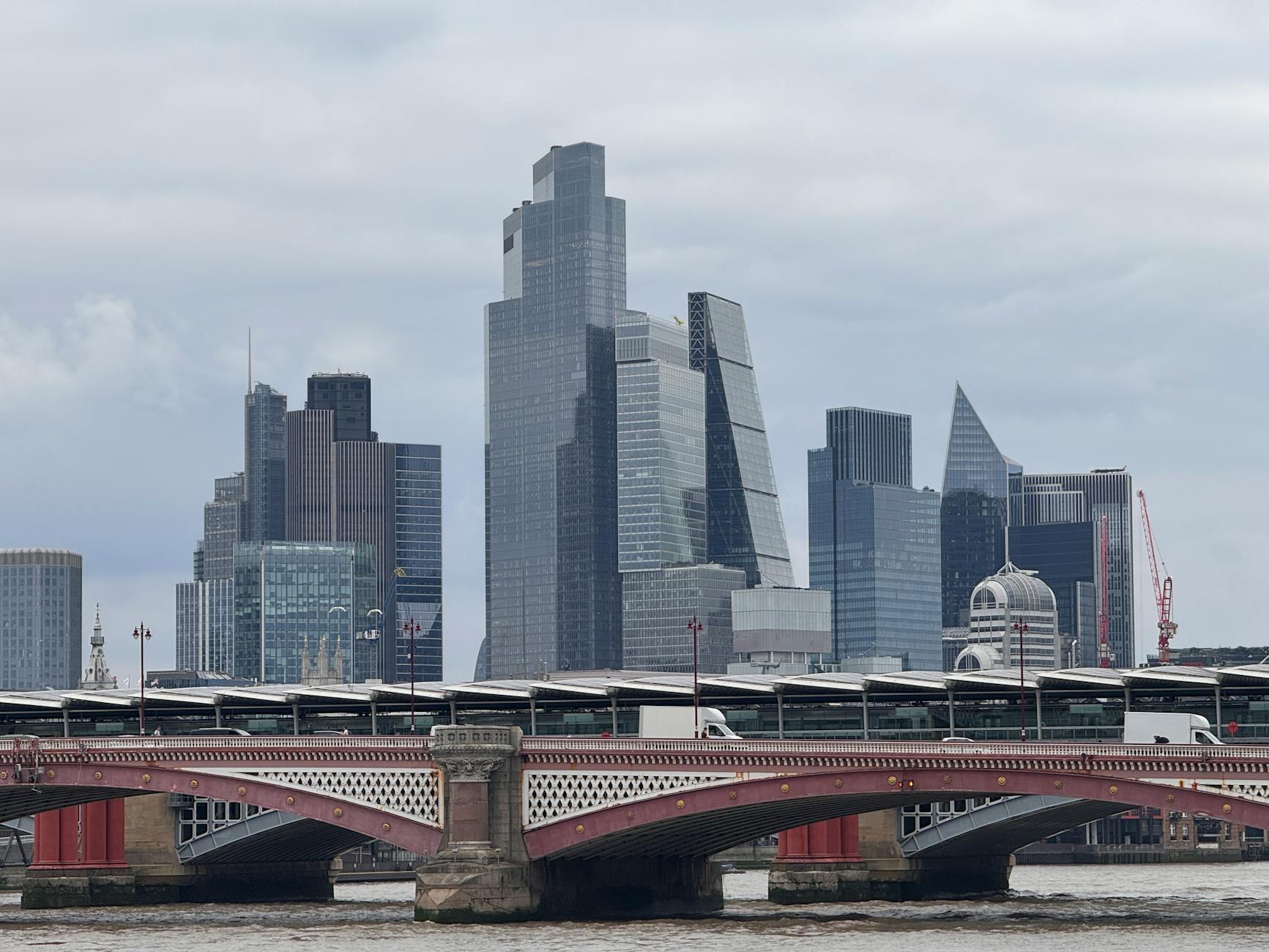
The Square Mile doesn’t do quiet surrenders. It does glass towers, billion-pound deals, and planning applications that arrive with the force of a freight train. So when the City of London Corporation — the ancient, powerful, deeply establishment body that governs the financial district and its immediate surroundings — plants itself firmly on the side of local residents fighting a high-rise proposition, that’s not a footnote. That’s a seismic shift in how one of the world’s most contested patches of urban land is being governed.
What’s at stake here goes well beyond bricks, steel, and floor-to-area ratios. This is a story about who gets to decide what London looks like — and whether ordinary people living in the shadow of cranes and ambition can still have a credible voice when developers come knocking. For anyone who’s watched their neighbourhood slowly vanish behind a wall of scaffolding and hoarding, this decision matters enormously.
London’s Skyline Wars: A City Constantly Fighting Itself
London has been arguing about tall buildings since the 1960s, when the first post-war towers began scarring views of St Paul’s Cathedral and the Palace of Westminster. The arguments have never really stopped. They’ve just got more expensive, more lawyered-up, and more politically loaded with each passing decade.
The tension is structural. The City of London is simultaneously one of the world’s great financial centres — where height signals power, prosperity, and competitive intent — and a place where people actually live, work at street level, and care desperately about light, air quality, and the character of their streets. These two realities have been on a collision course for years.
| Year | Proposal | Location | Outcome | Who Won |
|---|---|---|---|---|
| 2013 | The Tulip viewing tower | City of London | Rejected by government after years of legal battles | Residents / heritage groups |
| 2017 | 1 Undershaft (“Trellis”) | EC3, City | Approved, construction ongoing | Developer |
| 2019 | Liberté Tower, Southwark | SE1 | Approved after residents’ objections overruled | Developer |
| 2022 | Various Canary Wharf expansion proposals | E14 | Mixed — some approved, some scaled back | Partial community victory |
| 2024 | Current high-rise proposition | City of London fringe | City Corporation sides with residents | Residents |
What makes the current situation so striking is the historical weight of the City Corporation itself. This is an institution dating back to the Norman Conquest — it predates Parliament, it has its own police force, its own Lord Mayor, its own peculiar electoral system in which businesses as well as residents get a vote. When an entity that ancient and that embedded in the establishment sides with grassroots opposition rather than development capital, you sit up and take notice.
And yet here we are. The City Corporation has reviewed the high-rise proposition, listened carefully to what the surrounding neighbourhood’s residents have been saying, and decided — in plain, unambiguous terms — that the community’s concerns carry more weight than the developer’s ambitions. It’s the kind of decision that sends ripples well beyond the EC postcode.
What Is Actually Happening Right Now
Let’s be precise about the current state of play, because planning stories have a habit of getting muddier as they develop. Here’s the sequence of events as they currently stand:
- The proposition: A developer brought forward plans for a significant high-rise development on the fringe of the City of London — a scheme that would dramatically alter sight lines, increase pedestrian and traffic pressure on surrounding streets, and fundamentally change the character of the immediate neighbourhood.
- The resident response: Local residents — not a fringe group of NIMBYs, but a broad coalition of people who live and work in the shadow of the proposed development — organised, submitted formal objections, attended planning hearings, and made a coherent, evidence-based case against the scheme.
- The City Corporation’s assessment: Planning officers and elected members within the Corporation reviewed the full body of evidence — heritage impact assessments, transport studies, daylight and sunlight reports, and the residents’ objections — and concluded that the balance of concerns favoured refusal.
- The decision: The City Corporation formally sided with neighbourhood residents, rejecting or fundamentally challenging the high-rise proposition in its current form.
- The developer’s position: As of now, no confirmed statement has been issued about whether the developer intends to appeal, revise the scheme, or withdraw entirely.
- The broader context: This decision lands at a moment when London’s planning framework is under intense scrutiny, with the Mayor of London’s office, the government’s housing targets, and local communities all pulling in different directions simultaneously.
The timing is particularly pointed. London is in the middle of a genuine housing and development crisis — the government is demanding more homes, more density, more tall buildings to absorb a growing population. Against that backdrop, a decision to back residents over a high-rise proposition isn’t just locally significant. It’s a political statement.
The Key Players: Who Actually Has Skin in This Game
The City of London Corporation
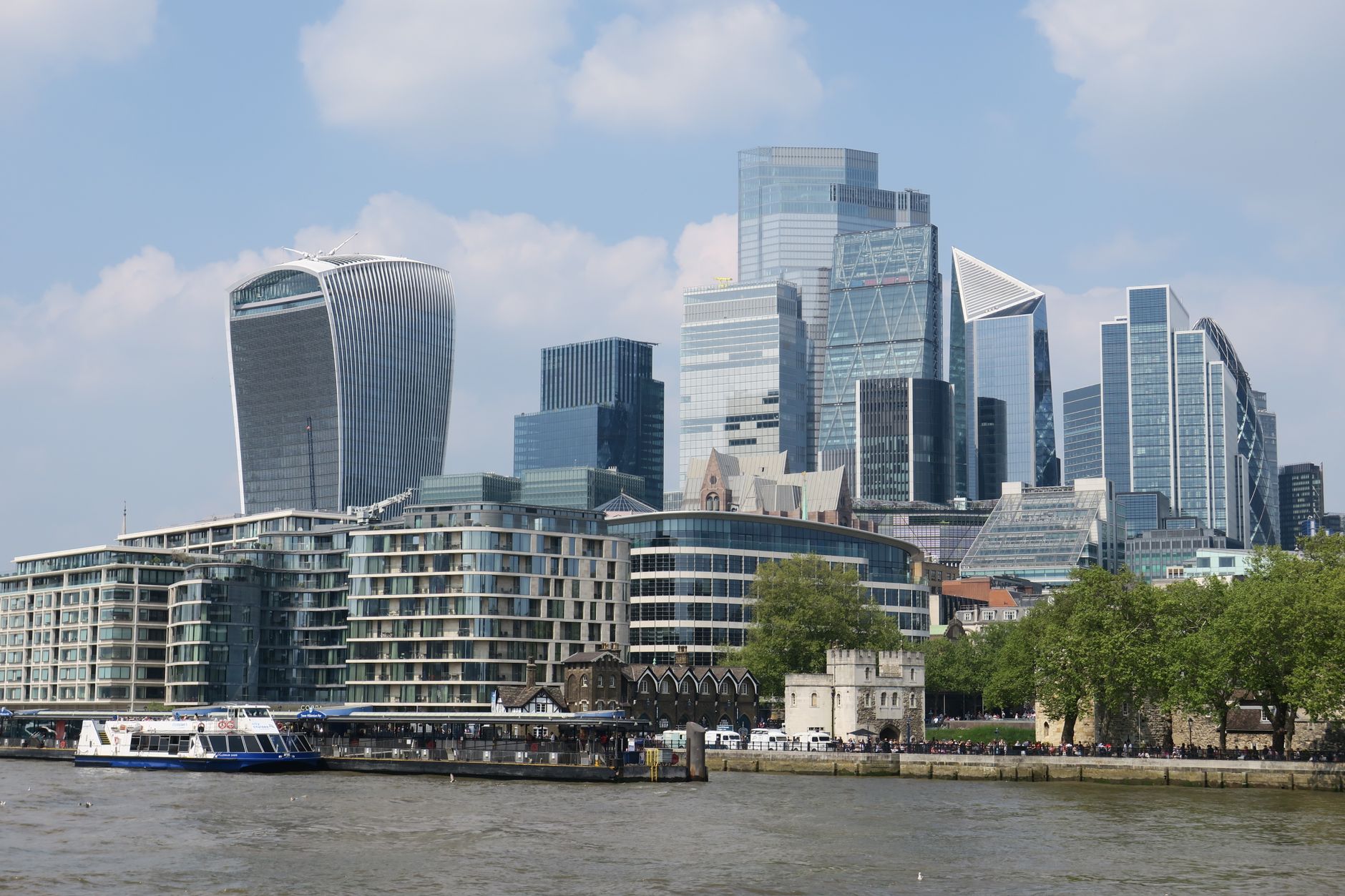
The Corporation is playing a more nuanced game here than simple anti-development sentiment. This is an institution that has approved some of London’s most audacious tall buildings — the Gherkin, the Cheesegrater, the Walkie-Talkie, all given life under the Corporation’s watch. It understands development. It understands capital. That makes its decision to side with residents all the more significant. This wasn’t a reflexive rejection of change. This was a considered, deliberate choice about where a specific development crosses a line.
The Neighbourhood Residents
The people who organised against this proposition represent exactly the kind of community that planning policy frequently talks about protecting but rarely actually protects. Living near the City’s boundaries means permanent exposure to development pressure — your streets, your views, your morning light, your pub, your local park, all perpetually at risk. These residents did what they were supposed to do: they engaged with the process, they made their case through proper channels, and — for once — it worked. The significance of that cannot be overstated. When the system actually functions as it should, it matters enormously for public trust in planning as a whole.
The Developer
The proposing developer hasn’t yet made a definitive public move following the Corporation’s stance. That silence is itself informative. Developers operating at this scale in Central London don’t walk away from sites easily — land values in and around the Square Mile make even a contested site enormously valuable. The question now is whether they revise the scheme significantly enough to address the core objections, or whether they pursue an appeal through the Planning Inspectorate, potentially drawing in the Secretary of State and making this a national story.
The Mayor of London’s Office
City Hall is watching this carefully. The Mayor has been pushing for greater housing density across London, and tall buildings near transport hubs — which the City fringe certainly qualifies as — are central to that strategy. A Corporation decision that flatly contradicts the density-first logic of Sadiq Khan’s London Plan creates an interesting constitutional tension. The Mayor’s office has powers of direction in planning matters, and whether City Hall chooses to exercise those powers here will tell us a great deal about how seriously the Mayor takes community opposition when it conflicts with his broader housing agenda.
Historic England and Heritage Groups
Any tall building near the City inevitably pulls in Historic England, the Twentieth Century Society, and assorted heritage bodies whose job is to protect London’s protected views and heritage assets. St Paul’s Cathedral sits at the centre of an elaborate web of protected sight lines — the Strategic Views framework — and any building that threatens those views faces an almost automatic heritage objection. Whether heritage concerns were central to this particular decision or whether it was primarily driven by neighbourhood quality-of-life objections is a distinction that matters for how the ruling gets interpreted going forward.
Does “Community Wins” Actually Mean What We Think It Means?
Here’s where we need to resist the easy narrative. Because “residents beat the developers” makes for a satisfying headline, but the reality of London’s planning system is considerably messier — and residents should be cautious about what this victory actually represents.
- Planning refusals are not permanent: A refused application can be appealed. A revised application can be resubmitted. Developers with deep enough pockets and patient enough backers can keep coming back until either the political wind shifts or the residents run out of energy and money to keep fighting.
- The democratic deficit in London planning is real: National planning policy, the Mayor’s London Plan, and government housing targets all create enormous pressure on local authorities to approve density. A local community winning one battle doesn’t change those structural forces.
- Not all NIMBYism is equal: London desperately needs more homes. Some high-rise opposition — particularly in outer London, near major transport infrastructure — is straightforwardly against the broader public interest. The City fringe case needs to be assessed on its specific merits, not used as a template for blanket opposition to tall buildings everywhere.
- Corporate votes complicate the City’s democracy: The City Corporation’s unique electoral system — where businesses as well as residents vote — means that its decision-making doesn’t map neatly onto conventional democratic legitimacy. Business interests and resident interests don’t always align.
- The “community” in planning battles is rarely monolithic: Even in neighbourhoods that organise strongly against development, there are usually residents who want more housing, more regeneration, more change. The loudest voices in planning consultations are rarely representative of everyone who lives there.
None of this undermines the significance of what happened here. But it’s worth being clear-eyed about what a single planning decision can and cannot achieve in a city where the pressure to build upward is structural, financial, and political all at once. If you’re exploring how these kinds of decisions shape the day-to-day London lifestyle — the quality of streets, the character of neighbourhoods, the feel of the city at human scale — you’ll know that individual victories matter, but systemic change matters more.
What This Actually Means for Londoners
Step back from the specifics of this particular site and ask the bigger question: what does it mean when one of London’s most powerful institutions decides that neighbourhood character and resident wellbeing should outweigh a high-rise development proposition? The implications are significant and reach well beyond the City’s ancient boundaries.
- It signals that community engagement works: When residents organise properly, attend hearings, commission independent expert reports, and engage with the formal planning process — rather than just posting angry comments online — they can change outcomes. That’s genuinely important for civic confidence.
- It raises the bar for future City-fringe applications: Any developer now looking at sites near the City’s boundaries has to factor in the possibility that the Corporation will take resident concerns seriously. That changes the risk calculus for speculative high-rise proposals.
- It puts City Hall on notice: If the Mayor’s housing density agenda is going to work long-term, it needs public trust. Decisions like this one — where residents feel heard and validated — can actually build that trust, rather than destroying it through a series of imposed, resented developments.
- It doesn’t solve the housing crisis: Let’s be honest about this. London needs somewhere between 66,000 and 90,000 new homes per year. Blocking high-rise propositions in expensive central locations doesn’t build a single one of those homes elsewhere. The housing crisis doesn’t pause while planning battles are won and lost.
| Factor | Potential Impact of High-Rise | Residents’ Core Concern | Mitigation Possible? |
|---|---|---|---|
| Daylight and sunlight | Significant reduction in neighbouring properties | Loss of natural light, garden use, wellbeing | Partially — design changes can reduce but not eliminate |
| Street-level wind | Increased wind tunnelling at ground level | Uncomfortable, dangerous street conditions | Yes — specialist wind modelling and design response |
| Views and heritage | Blocked protected views, altered skyline | Loss of historic character, protected sight lines | Limited — once a view is gone, it’s gone |
| Transport pressure | Increased footfall, traffic, demand on Tube | Overcrowded streets and stations | Partially — transport contributions help but don’t resolve |
| Community infrastructure | More residents, more demand on schools, GPs, parks | Overwhelmed local services | Yes — Section 106 and CIL payments fund some provision |
| Property values | Mixed — can rise near regeneration or fall due to overshadowing | Uncertainty, potential devaluation | No direct planning remedy |
| Neighbourhood character | Fundamental change to area’s identity | Loss of the neighbourhood they chose to live in | Design codes and local plans can guide but not freeze character |
There’s also a question about precedent that deserves serious attention. The City of London covers just over one square mile — the famous “Square Mile” — but its influence on planning decisions in adjacent boroughs like Tower Hamlets, Hackney, Islington, and Southwark is enormous. When the Corporation signals that it will take a harder line on high-rise propositions that damage neighbourhood quality, it emboldens residents and councillors in those neighbouring boroughs to do the same. A decision made within ancient City walls can have a very long shadow indeed.
The communities living on the City’s fringes — Aldgate, Clerkenwell, Barbican, Shoreditch, the edges of Bermondsey — have watched the skyline transform around them for thirty years. Some of that transformation has been extraordinary, genuinely enriching London’s architectural identity and cementing its status as a global city. Some of it has been brutal, thoughtless, and purely extractive — glass boxes built to maximise return per square foot with no meaningful engagement with the streets below or the people who live on them. The difference between those two categories isn’t height. It’s quality, it’s process, and it’s whether the people affected feel that anyone in authority actually listened to them.
That, more than anything, is what this decision represents. Not a war on tall buildings. Not a victory for preservation over progress. A demonstration that listening — genuinely listening, and then acting on what you hear — is still possible in London’s planning system, even when the financial stakes are enormous.
Whether the developer accepts this outcome, revises the scheme, or takes it to appeal will tell us everything about how serious the industry is about genuine community engagement rather than the performative consultation that Londoners have grown so weary of. Watch this space — because this particular planning story is almost certainly not over yet. And if you live anywhere near the City’s ancient boundaries, you should be paying very close attention to what happens next.






Leave a Reply