

London has added more than 50,000 net new businesses in the past three years. Not despite the chaos — rent hikes, energy bills, National Insurance increases, and a post-pandemic hangover that never quite went away — but somehow alongside it. That’s either the most impressive act of collective stubbornness in British economic history, or evidence that this city operates by entirely different rules to the rest of the country. Possibly both.
For Londoners watching their favourite neighbourhood café stick a third price increase on the menu board, or noticing that the independent bookshop on the high street has quietly been replaced by another luxury nail salon, the idea of “resilient growth” can feel abstract at best, insulting at worst. But the numbers are real, the businesses are real, and the pressures they’re navigating are very real too. What’s less clear is who exactly is growing, who is surviving by the skin of their teeth, and who is already gone.
London’s Business Landscape in 2024: How Does It Compare?
To understand where London sits right now, you need context. The capital accounts for roughly 22% of the UK’s entire GDP despite covering less than 0.1% of its land area. That density — of talent, capital, consumers, and ideas — is why London businesses keep launching even when the conditions look punishing. But the texture of that growth has shifted considerably since 2019.
Pre-pandemic, London’s business ecosystem was dominated by a surge in hospitality, retail, and creative industries filling the gaps left by receding high-street chains. Post-2020, the picture is messier. Tech and professional services have dominated new incorporations. Hospitality has fought back — heroically, in some cases — but with far fewer safety nets. The cost-of-living crisis hasn’t just squeezed consumers; it has fundamentally changed the risk calculus for anyone thinking of launching something new in the capital.
| Indicator | 2019 (Pre-Pandemic) | 2022 | 2024 (Current) |
|---|---|---|---|
| New business registrations (London, annual) | ~87,000 | ~94,000 | ~91,000 |
| Business survival rate at 3 years | 58% | 54% | 51% |
| Average commercial rent increase (Zone 1-2) | +3.2% YoY | +8.7% YoY | +6.1% YoY |
| Hospitality sector employment (London) | 380,000 | 340,000 | 362,000 |
| Tech startup investment (London, £bn) | £9.7bn | £11.2bn | £10.4bn |
| SME confidence index (London vs UK) | +12pts above UK avg | +6pts above UK avg | +9pts above UK avg |
The survival rate drop is the figure that doesn’t get enough attention. Fewer than half of London businesses started today will still be trading in three years. That’s not pessimism — it’s the baseline reality of operating in one of the most expensive cities on the planet. The resilience narrative is true. It’s just not evenly distributed.
What Is Happening Right Now Across London’s Economy
The current moment is defined by contradictions. Walk down Shoreditch High Street or along Columbia Road on a Tuesday afternoon and it feels like the boom never ended — new openings, packed terraces, planning permission boards on every third building. Walk down the same street’s side roads and count the empty units.
Here’s what the data and ground-level reporting are showing right now:
- National Insurance contributions rose in April 2024, adding an estimated £800–£2,400 per year in additional costs for every full-time employee for small London businesses — a hit that landed before many had finished absorbing the energy price increases of 2022–23
- Commercial rents in central London have risen 6.1% year-on-year, with particular pressure in EC1, SE1, and the W1 postcode areas, where demand from financial and professional services firms continues to outpace supply
- The London Living Wage reached £13.15 per hour in November 2023, up from £11.95 the previous year — a 10% increase that most ethical employers wanted to honour but that compressed margins brutally in hospitality and retail
- Consumer spending in London is holding up better than the rest of England, with TfL passenger numbers back to 85% of pre-pandemic levels and West End footfall consistently above 90% of 2019 benchmarks, according to New West End Company data
- Business rates relief for hospitality was extended through 2024, giving qualifying premises a 75% discount up to a £110,000 cap — meaningful for some, irrelevant for larger operators whose full liability returned unchanged
- London’s tech sector continues to attract roughly a third of all UK venture capital investment, with fintech, healthtech, and AI-adjacent companies accounting for the majority of new Series A and B rounds
- Food and beverage business failures in London rose 18% in the first half of 2024 compared to the same period in 2022, even as new openings in the same sector remained buoyant — suggesting a churn rate that masks genuine structural fragility
The picture, then, is of an economy growing at the top, churning in the middle, and quietly losing ground at the bottom.
The Key Players: Who Is Actually Driving London’s Resilience
Resilience doesn’t happen in the abstract. It happens because specific businesses, sectors, and individuals are making it work — often in ways that deserve more credit than the headline growth figures give them.
The Tech and Finance Cluster
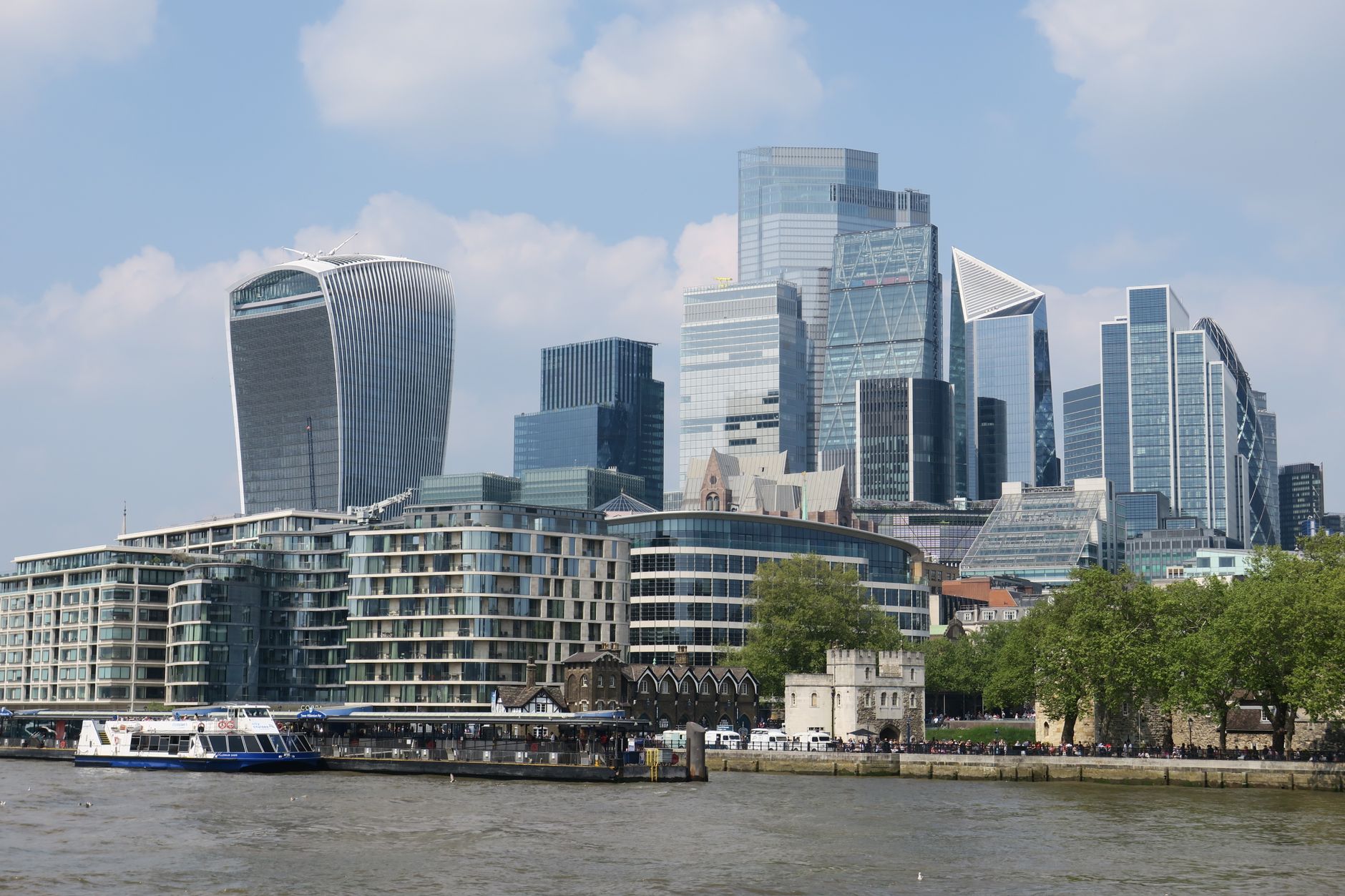
London remains Europe’s undisputed financial capital and its most significant tech hub, and the two sectors have increasingly merged at the edges. Canary Wharf’s transformation — away from pure banking monoculture toward a mixed-use campus that now includes tech firms, startups, and even a university presence — is symbolic of how the capital’s business elite has diversified its bets. Firms like Revolut (headquartered in London, 45 million customers globally), Wise, and Monzo have built genuinely global businesses from London bases, proving that the city can still produce category-defining companies even in a difficult funding environment.
Hospitality’s Stubborn Survivors
The London restaurant and bar scene has taken more punishment than almost any other sector. Two rounds of pandemic closure, staffing crises driven by post-Brexit labour market changes, energy bills that doubled overnight, and a cost-of-living squeeze that made Londoners think twice before booking the £85-a-head tasting menu. And yet. Restaurants like Brat in Shoreditch, Rochelle Canteen in Arnold Circus, and the ever-expanding Hawksmoor group have not just survived but built national and international reputations. The independents who made it through have, in many cases, emerged leaner, sharper, and more precisely targeted at the customers who will genuinely support them.
The Creative Industries
London’s creative economy — advertising, design, architecture, film and TV production, music — contributes over £50 billion annually to the capital’s economy and employs more than 700,000 people. Soho remains the beating heart of advertising and post-production, even as studio space pressures and streaming-driven production shifts reshape the industry. The growth of the TV and film production cluster around the Olympia, Brentford, and Shepperton corridors has added significant employment in outer London zones that don’t always feature in discussions about the capital’s economic geography.
Market Traders and Micro-Businesses
London’s 170-plus markets — from Borough to Ridley Road, Broadway to Portobello — represent a category of business that rarely makes the economic analysis but absorbs enormous numbers of entrepreneurs who couldn’t afford shop leases. Market trading has seen a genuine revival post-pandemic, with Maltby Street, Deptford Market Yard, and the expanded Mercato Metropolitano at the Elephant and Castle all demonstrating that the appetite for independent, community-rooted retail is alive and growing among London consumers who are increasingly suspicious of chains.
Professional Services and Consultancy
Perhaps the most reliable engine of London business growth is the least romantic: lawyers, accountants, management consultants, and HR professionals who have consistently expanded their client bases as businesses navigating post-Brexit compliance, new employment legislation, and AI integration discover they need expert help. The number of sole-trader and micro-consultancy registrations in London has increased every year since 2020.
Is the “Resilience” Story Hiding Some Uncomfortable Truths?
Here’s the question that the bullish press releases and the Mayor’s Office growth statistics don’t fully answer: resilient for whom?
The London lifestyle economy — the cafés, independent shops, grassroots music venues, and community-facing businesses that make individual neighbourhoods feel like places rather than postcodes — operates in a fundamentally different risk environment to the tech firms and professional services companies that dominate the headline growth figures. When we talk about London business growth remaining resilient, we are largely talking about the top quartile of the business ecosystem.
Consider the following:
- The Music Venue Trust estimates that London has lost over 35% of its grassroots music venues since 2007, with the pace of closures accelerating in 2022–24 as business rates, licensing costs, and lease renewals at inflated rents have proved insurmountable
- Independent retail in Zone 2 and 3 high streets — Tooting, Peckham, Walthamstow, Stoke Newington — faces a particular squeeze: rising rents driven by gentrification pressure, without the footfall volumes of Zone 1 to absorb them
- The racial and gender gap in business survival remains stark. Research from the British Business Bank consistently shows that Black and Asian entrepreneurs in London face higher borrowing costs, lower approval rates for business loans, and lower average turnover at comparable business ages than white British entrepreneurs — a structural inequity that aggregate growth figures don’t capture
- The gig economy’s shadow businesses — the Deliveroo couriers, the Airbnb hosts, the TaskRabbit fixers — represent hundreds of thousands of Londoners engaged in quasi-entrepreneurial activity without the legal protections or financial buffers of formal business structures. Their “growth” doesn’t show up in Companies House data, but their vulnerability shows up in food bank queues
- Planning and licensing delays at London’s 32 borough councils continue to add months and tens of thousands of pounds in costs to new business openings, a friction that disproportionately affects small operators without the legal and financial resources to navigate the system
The resilience is real. The growth is real. But treating the aggregate numbers as evidence that the city’s business ecosystem is fundamentally healthy would be a mistake.
What This Actually Means for Londoners Day to Day
If you’re a Londoner — whether you run a business, work for one, or simply live in a city where the economic health of local businesses determines the quality of your streets — here’s what the current picture translates to in practical terms:
If you run a business in London:
- Expect energy cost volatility to continue into 2025, with no return to pre-2021 baseline pricing. Building a 15–20% energy cost buffer into your financial modelling is now standard practice, not pessimism
- The NI contribution increase is a permanent feature of your cost base. Businesses that have already absorbed it are adapting through a combination of reduced hours, menu/product price increases, and in some cases, genuinely difficult staffing decisions
- London’s talent pool remains a competitive advantage — but retaining that talent at London Living Wage levels while managing other cost pressures is the central operational challenge of the moment
- Access to finance remains unevenly distributed. If you’re a founder from an underrepresented background, organisations like Foundervine, the Black Business Network, and Fredericks Foundation exist specifically to bridge the funding gap
If you’re a consumer and Londoner who cares about the city’s economic texture:
- The independent businesses you value are navigating margins that have compressed significantly. Paying the slightly higher price, showing up on a Tuesday rather than a Saturday, and actually leaving the Google review you’ve been meaning to write for six months — these things genuinely matter
- The hollowing out of inner-London high streets by chain retail and short-term lettings is not inevitable. It’s a planning and political choice, and the upcoming London Assembly discussions on commercial rent reform deserve more public attention than they get
| Area of Business | Current Pressure Level | Outlook (12 months) | Key Risk Factor |
|---|---|---|---|
| Hospitality (independent) | Very High | Cautiously Stable | Wage costs + rent renewals |
| Hospitality (group/chain) | High | Stable-Positive | Consumer spending confidence |
| Tech/Fintech | Moderate | Positive | Funding environment + AI disruption |
| Independent Retail (Zone 1-2) | High | Mixed | Footfall vs. online competition |
| Independent Retail (Zone 3+) | Very High | Fragile | Gentrification rent pressure |
| Professional Services | Low-Moderate | Positive | Regulatory demand driving growth |
| Creative Industries | Moderate | Stable | Streaming economics + AI |
| Construction/Property | High | Uncertain | Interest rate sensitivity |
| Markets/Micro-businesses | Moderate | Positive | Consumer appetite for independent |
| Grassroots Culture/Venues | Very High | Fragile | Costs + licensing + development pressure |
London’s business resilience in 2024 is not a myth — but it’s also not a triumph. It’s more like the city’s founding character: bloody-minded, adaptive, unimpressed by obstacles, and occasionally brilliant precisely because the conditions are so demanding. The businesses that are growing are genuinely earning it. The ones that are failing are often doing so for reasons that go beyond individual management decisions and into structural failures of policy, access, and inequality that the growth headlines conveniently obscure.
So yes — London business growth remains resilient despite persistent cost pressures. The question worth asking is whether the city is doing enough to make sure that resilience is shared across every postcode, every sector, and every founder, rather than concentrated in the places and people who already had the most resources to begin with. That’s not a rhetorical question. It’s the economic question of the next five years for this city.






Leave a Reply