
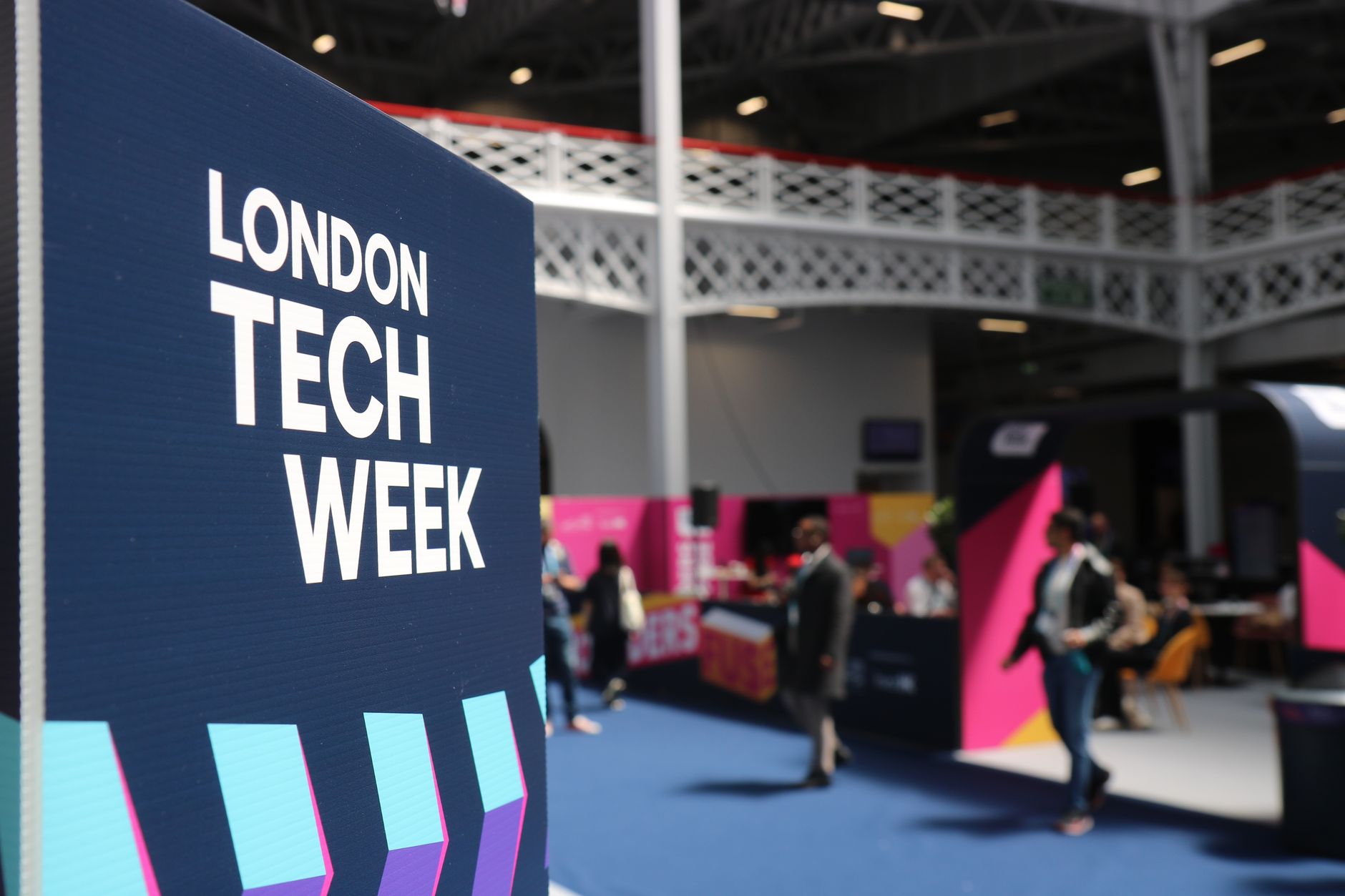
London has always had a genius for absorbing ambitious outsiders and making them part of the furniture. From the Huguenots of Spitalfields to the Bangladeshi restaurateurs who reinvented Brick Lane, the city’s best trick is turning arrivals into assets. London Tech Week 2026 is doing it again — this time, the energy is coming from North Africa, and specifically from a country that most London tech insiders couldn’t have pointed to on a map three years ago. Algeria is here. And it isn’t whispering.
For Londoners who track the startup scene seriously — who know the difference between a Series A and a seed round, who’ve watched the rise of Estonian fintech and Nigerian e-commerce with genuine interest — the arrival of a coordinated Algerian delegation at London Tech Week 2026 is one of the most genuinely surprising stories of the summer. This isn’t a government PR exercise or a vanity trade mission. These are founders, engineers, and investors who’ve built real products for real markets, and they’ve chosen London — ExCeL in Royal Docks, to be precise — as the place to announce themselves to the world.
Algeria’s Tech Scene: From Invisible to Impossible to Ignore
Let’s be honest. Until very recently, Algeria barely registered on the radar of London’s venture capital community. The country’s tech ecosystem was overshadowed by the louder narratives coming out of Cairo, Lagos, Nairobi, and Cape Town — cities that got the TechCrunch coverage, the Silicon Valley pilgrimages, the Andreessen Horowitz blog posts. Algeria sat quietly, building.
The numbers, when you actually look at them, are striking. Algeria has a population of 46 million, a median age of around 28, and a mobile internet penetration rate that has grown from under 30% in 2018 to over 70% by 2025. The country produced roughly 20,000 engineering and computer science graduates in 2024 alone. Startup activity in Algiers, Oran, and Constantine has accelerated sharply since 2022, driven partly by a regulatory environment that — after years of bureaucratic stagnation — began actively courting entrepreneurship through the Startup Act introduced in 2020.
| Metric | Algeria (2025) | Egypt (2025) | Nigeria (2025) |
|---|---|---|---|
| Population | 46 million | 107 million | 223 million |
| Median Age | 28 years | 24 years | 18 years |
| Mobile Internet Penetration | ~72% | ~68% | ~55% |
| Annual CS/Engineering Graduates | ~20,000 | ~45,000 | ~30,000 |
| Startup Act / Regulatory Framework | Yes (2020) | Partial | Partial |
| VC Investment (2024, USD) | ~$120M | ~$650M | ~$1.1B |
The investment gap is real and obvious. But gaps like that don’t signal weakness in a market — they signal opportunity. London’s smartest VCs know this. It’s the same logic that made East Africa look like a bargain in 2012 and now makes M-Pesa a case study in every business school from Cass to Harvard.
What’s Actually Happening at ExCeL This Week
London Tech Week 2026 runs across multiple venues but its centre of gravity, as always, is ExCeL London in the Royal Docks — a venue that manages to feel simultaneously like the future and like a very large airport terminal. The Algerian presence this year is organised through a combination of government backing via the Algerian Ministry of Knowledge Economy and Startups, private sector coordination from the Algerian Startup Fund, and partnerships with several London-based accelerators who spotted the opportunity early.
Here’s what the Algerian contingent is actually doing at the event:
- Dedicated Algeria Pavilion: A purpose-built space within the main exhibition hall showcasing over 30 Algerian startups across fintech, agritech, healthtech, edtech, and logistics
- Pitch Competitions: Six Algerian companies have qualified for the London Tech Week Global Startup Competition, competing against founders from 78 countries
- Investor Speed Dating: Structured one-on-one sessions connecting Algerian founders with London-based angels and institutional investors from funds including Octopus Ventures and LocalGlobe
- Panel Representation: Algerian founders and ecosystem builders on three main-stage panels covering emerging market fintech, AI in healthcare delivery, and scaling from high-growth economies
- Side Events in Shoreditch: Informal networking evenings at venues in Shoreditch and Clerkenwell, which is where the real deals at London Tech Week always get done anyway
- Partnership Announcements: At least four Algerian startups are expected to announce formal partnerships with UK companies before the week ends
- Media Engagements: Interviews with Tech.eu, Sifted, and Wired UK — publications that the London VC community actually reads
The coordination here is deliberate and professional. This isn’t a group of founders who bought individual tickets and hoped for the best. It’s a strategic deployment.
The Startups You Need to Know
Temtem One
If any single Algerian startup has already broken through to international name recognition, it’s Temtem One. Originally launched as a ride-hailing app in 2019 — an audacious move in a market where informal transport had centuries of entrenched habit — Temtem has since expanded into delivery, logistics, and fintech. By 2025 it was operating across five Algerian cities with over 2 million registered users. At London Tech Week, the company is presenting its expansion roadmap into francophone West Africa, a market of 180 million people that Western tech has consistently underestimated. The pitch to London investors is straightforward: this is the Grab of North Africa, and you missed Grab.
Yassir
Yassir is the other name that London investors are already Googling. Founded in 2017 and headquartered in Algiers with a second base in San Francisco, Yassir raised $150 million in a Series B round in 2022 — making it one of the largest funding rounds ever for a North African tech company at that time. The super-app model it pioneered — combining transport, food delivery, and financial services — is now being refined for export. At London Tech Week 2026, Yassir is using the platform to announce European payment infrastructure partnerships that would enable its diaspora financial services product to reach Algerian communities in France, the UK, and Belgium. The London-based North African diaspora alone numbers in the hundreds of thousands. That’s not a niche market. That’s a city within a city.
TemTech Agriculture
Agritech doesn’t get the glamour of fintech, but it arguably gets the impact. Algeria is Africa’s largest country by land area, with enormous agricultural potential that has historically been constrained by water scarcity, inefficient land management, and poor supply chain infrastructure. TemTech Agriculture — a startup out of Oran — uses satellite imaging, soil sensor networks, and machine learning to give smallholder farmers precision irrigation guidance that has demonstrably increased crop yields by 23% in pilot programmes across western Algeria. They’re at London Tech Week specifically to meet climate tech investors and UK government representatives involved in the Global Clean Tech Innovation Programme. They’re also genuinely impressive in a way that doesn’t require any charitable lowering of standards.
Nexgen Health
Healthtech in emerging markets is having a proper moment globally, and Algeria is part of it. Nexgen Health has built a telemedicine and diagnostic platform that connects patients in Algeria’s rural south — communities that can be 500 kilometres from the nearest specialist hospital — with doctors in Algiers and, via partnership, with specialists in France. The platform logged 400,000 consultations in 2025. At London Tech Week, the founders are in conversation with NHS Digital about potential knowledge-sharing frameworks and with UK health AI companies about diagnostic integration. The irony of an Algerian startup potentially helping solve rural healthcare access problems that the NHS itself struggles with in places like rural Wales or Cumbria is not lost on anyone paying attention.
Algérie FinConnect
Banking the unbanked is a phrase that gets thrown around so often it’s nearly lost meaning. Algérie FinConnect is trying to actually do it. Algeria has one of the lowest rates of formal financial inclusion in the Mediterranean region — estimates suggest fewer than 35% of Algerian adults hold a traditional bank account. FinConnect’s mobile wallet and micro-lending platform has signed up 600,000 users since 2023 without a single physical branch. They’re in London to raise a Series A and to make the case — compellingly, based on their retention numbers — that the informal economy of 65 million transactions annually that currently flows through cash and social trust networks can be captured digitally. London’s fintech VCs are listening.
Does London Actually Know What It’s Got Here?
Here’s the uncomfortable question. London Tech Week is enormous — 55,000 attendees, 800 speakers, events from Canary Wharf to King’s Cross — and the sheer scale means important things get missed. The Nigerian fintech boom was happening for three years before London investors really started paying attention. East African climate tech is still, in 2026, being chronically underfunded relative to its actual performance data.
Is London at risk of doing the same thing to Algeria? Possibly. Some structural issues are worth being honest about:
- Language barrier perception: Algeria is predominantly Arabic and French-speaking. Many London investors default to Anglophone markets. This is their loss, not Algeria’s problem, but it’s a real friction point.
- Regulatory complexity: UK-Algeria financial regulations are not harmonised, and cross-border investment remains more administratively complex than UK-EU or UK-US flows.
- Due diligence desert: Most London VC associates couldn’t name an Algerian startup six months ago. The groundwork for rapid investment decisions — the shared context, the trusted referral networks, the warm intros — doesn’t fully exist yet.
- Risk perception vs risk reality: Political risk in Algeria is often cited by London investors. It exists. But the country has had a stable government since 2019, inflation is lower than the UK’s was in 2023, and GDP growth hit 4.1% in 2024. The perception of risk is running significantly ahead of the actual risk profile.
- Visibility gap: Despite the quality of the cohort at London Tech Week 2026, Algerian startups remain underrepresented in European tech media relative to their output.
The founders who are in London this week know all of this. They’re not naive about the barriers. They’re here precisely because they’ve decided that engaging directly with the London ecosystem — showing up, presenting data, doing the relationship work in person — is the fastest way to change the narrative. As one founder from the Yassir team put it in a pre-event interview with Sifted: *”We don’t need anyone to believe in Algeria as a concept. We need them to look at our monthly active users and our unit economics. The numbers do the believing.”*
What This Actually Means for Londoners Who Pay Attention
Let’s bring this home. London’s tech ecosystem — which you can read about extensively across London lifestyle and culture coverage — runs on new energy. The city’s ability to remain a global tech hub depends on constantly finding the next wave before everyone else does. Silicon Valley still has deeper pockets. Berlin has cheaper rents. Tallinn has better e-governance infrastructure. What London has is network density, capital access, a genuinely international talent pool, and a cultural metabolism for absorbing ambitious outsiders fast.
Algerian founders bringing their products to London Tech Week 2026 is both a validation of that London advantage and a test of whether the ecosystem is still agile enough to act on genuine opportunity when it shows up without a Silicon Valley cosign.
Here’s what the Algerian tech wave means concretely for different groups of Londoners:
For London investors:
- Early-mover advantage in a market where valuations are not yet inflated by Western VC competition
- Exposure to the North African and francophone African market (combined population: 300+ million) via founders who actually understand those markets
- Diaspora market plays — the Algerian community in London is a natural customer base for several of these products right now
- Portfolio diversification away from the overcrowded UK and US seed markets
For London’s tech talent:
- Partnership and collaboration opportunities with high-growth teams building in genuinely difficult market conditions (which tends to produce very good engineers)
- Potential for secondments and exchange programmes as Algerian startups scale into European markets
- Fresh perspectives on product design for low-bandwidth, mobile-first, cash-heavy economies — skills that are increasingly relevant globally
For London’s startup founders:
- Potential channel partners for reaching North African and Middle Eastern markets
- B2B SaaS opportunities — Algerian startups at scale will need the same stack of tools that every scaling startup needs
- Supply chain and logistics technology partnerships, particularly for companies working in Africa-Europe trade flows
| Who in London | The Algerian Opportunity | Time Horizon |
|---|---|---|
| Early-stage VCs | Series A/B plays in fintech, agritech, healthtech | 2–4 years |
| Corporate VCs | Strategic partnerships in logistics, AI, mobile payments | 1–3 years |
| Tech talent / Engineers | Collaboration, hiring networks, secondments | Immediate |
| Startup Founders | B2B sales, channel partnerships, co-development | 6–18 months |
| Policy / Government | Trade mission follow-through, regulatory dialogue | 2–5 years |
| London Diaspora Communities | Direct product users, brand ambassadors, angel investors | Immediate |
The diaspora angle is underrated. An estimated 60,000 to 80,000 Algerians live in London, predominantly in outer north and east London boroughs including Waltham Forest, Enfield, and Barnet. That community is already using informal financial transfer systems, paying remittance fees that would make any fintech founder wince, and navigating health and logistics needs that several of these Algerian startups are literally built to serve. The market isn’t just abstract — it’s on the Northern line.
The Longer Game
London Tech Week has hosted plenty of delegations over the years that arrived with fanfare and departed without follow-through. The Indian government pavilion. Various Southeast Asian trade missions. The well-intentioned but ultimately performative African tech showcases that generated press releases and then went quiet. The question hanging over the Algerian presence in 2026 isn’t whether these startups are impressive — most of them genuinely are. The question is whether London’s ecosystem will do the actual work to build lasting connections.
That means investors following up after the conference. It means accelerators creating proper pathways for Algerian founders, not just diversity-box-ticking mentorship sessions. It means the London VC community building actual relationships with Algerian counterpart funds so that deal flow can develop properly over time. And it means the UK government — which has been loudly committed to positioning post-Brexit Britain as a global trade partner for emerging markets — actually moving on the regulatory harmonisation and bilateral investment treaty work that would make UK-Algeria capital flows easier.
The founders standing in that exhibition hall at ExCeL this week have already done their part. They’ve built real companies, crossed the bureaucratic and financial obstacles that would have stopped most people, learned to pitch in a second or third language to rooms full of people who’ve never visited their country, and shown up anyway. The question now is whether London is still the city that meets that kind of ambition with something more than polite applause.
Algeria’s startups have stepped onto the global stage. Whether London is actually watching — and whether it’s smart enough to move fast when it is — that’s the real story of London Tech Week 2026.






Leave a Reply