
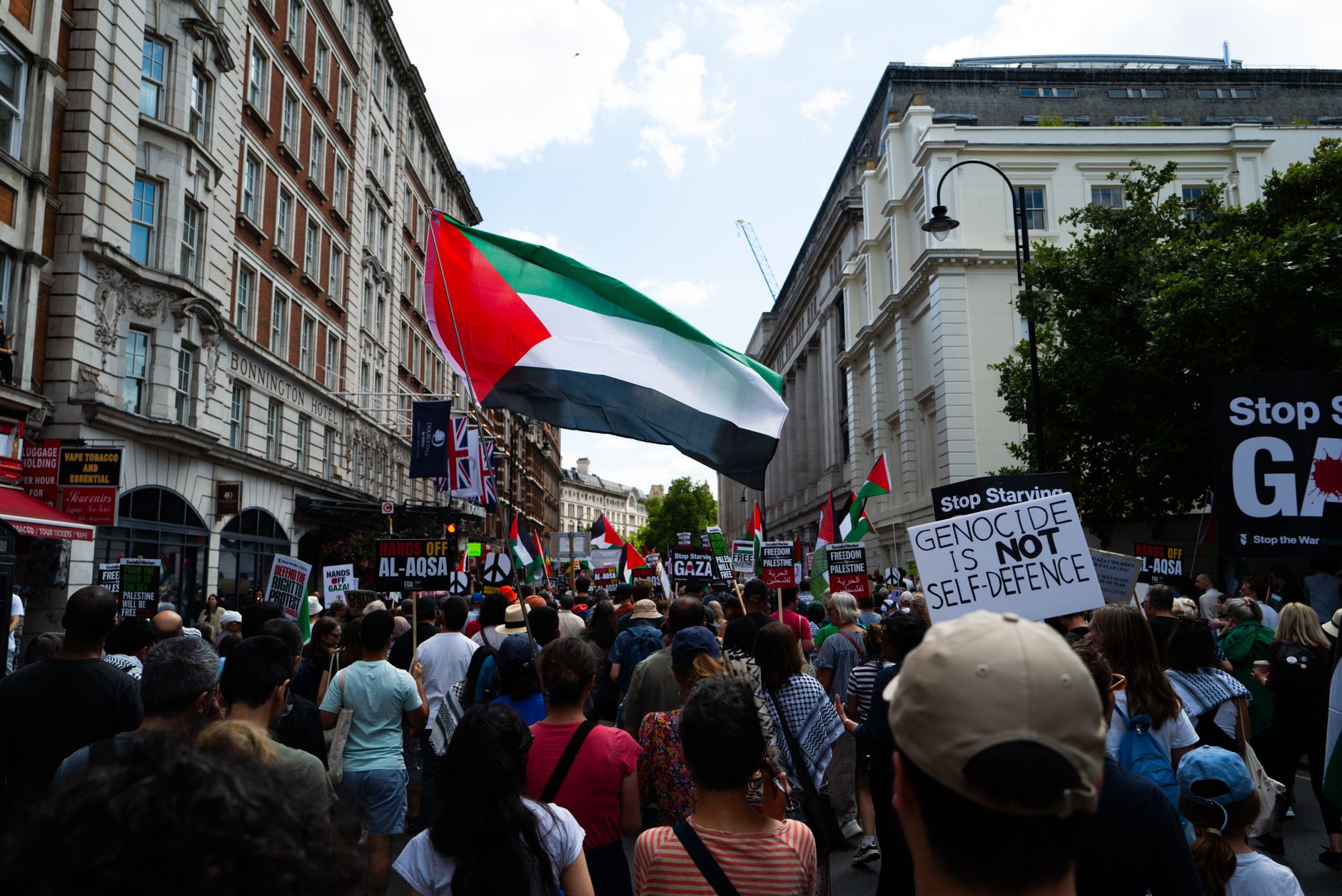
The last time Tommy Robinson — real name Stephen Yaxley-Lennon — brought his supporters to central London in significant numbers, the Metropolitan Police made over 100 arrests and Parliament Square looked like a battlefield. So when word spread that he was planning another mass mobilisation, the question on every Londoner’s lips wasn’t whether it would happen. It was: how bad would it get?
The ‘Unite the Kingdom’ march drew thousands of supporters into the capital, clogging streets around Whitehall and Parliament Square in a demonstration that organisers billed as a patriotic rallying cry and critics immediately condemned as a far-right spectacle dressed up in flag-waving rhetoric. Whatever your read on the politics, there’s no ignoring what this means for London — a city that has seen these confrontations before and knows exactly how quickly they can turn.
What ‘Unite the Kingdom’ Actually Is — And Why London Was the Target
Let’s be clear about the framing here. Robinson and his supporters have been calling ‘Unite the Kingdom’ a grassroots patriotic movement, a push to reclaim British identity from what they describe as a political establishment that has abandoned ordinary people. Critics — including most major UK political parties, anti-racism organisations, and a significant chunk of law enforcement — characterise it as a far-right mobilisation with a long track record of stoking racial and religious tension.
Robinson himself has a history that makes the ‘patriot’ branding hard to swallow uncritically. He’s the founder of the English Defence League, has multiple criminal convictions, served time in prison for contempt of court related to his conduct around a grooming gang trial, and was permanently banned from Twitter before Elon Musk reinstated him. His return to social media coincided with a significant uptick in his following and fundraising capacity — a detail that matters when you’re trying to understand how an event of this scale gets organised and financed.
London is always the target because London is the symbol. You don’t march on Swindon if you want the cameras rolling.
| Key Background Facts | Detail |
|---|---|
| Tommy Robinson’s real name | Stephen Yaxley-Lennon |
| Organisation founded | English Defence League (EDL), 2009 |
| Previous major London march | July 2023 — over 100 arrests |
| Social media status | Reinstated on X (Twitter) by Elon Musk |
| Criminal history | Multiple convictions including contempt of court |
| ‘Unite the Kingdom’ framing | Billed as patriotic movement; widely classified as far-right |
The choice of Whitehall and Parliament Square as the route is deliberate and provocative. These aren’t just streets — they’re the symbolic heart of British democracy. Marching through them sends a message, and Robinson knows exactly what message that is.
What Happened on the Day: The March Itself
Here’s what unfolded on the ground when the ‘Unite the Kingdom’ march moved through central London:
- Thousands of supporters gathered at the designated assembly point, with estimates ranging from several thousand to tens of thousands depending on who was counting and which end of the political spectrum they stood on
- Counter-protesters from groups including Stand Up To Racism and various community organisations staged their own demonstrations nearby, separated from the main march by significant Metropolitan Police cordons
- Metropolitan Police deployed in large numbers, with officers on horseback, riot-ready units, and aerial surveillance — a resource commitment that costs the taxpayer millions
- Multiple arrests were made throughout the day, though the scale was being assessed in real time as the march progressed
- The route took demonstrators past Whitehall, with Parliament Square serving as a focal point — an intentional choice that put the march directly in front of the cameras of every major broadcast outlet
- Speeches from Robinson and associated figures drew loud responses from the crowd, with rhetoric focused on immigration, Islam, and what speakers described as the failure of political elites
- Transport disruptions rippled across central London, with TfL implementing diversions on multiple bus routes and tube stations near the route experiencing crowd-related pressure
- Businesses in the area that had been forewarned by the Met chose to close or restrict access, a pattern that’s become grimly routine when major far-right demonstrations come to town
The atmosphere, by multiple accounts, was tense but not immediately explosive — though that can change with a single flashpoint, and anyone who’s reported from these events knows that the difference between a ‘peaceful demonstration’ headline and a ‘riots in central London’ headline can be less than ten minutes.
The Key Players: Who’s Behind This and Who Stood Against It
Tommy Robinson
Yaxley-Lennon remains the gravitational centre of this movement whether you think that’s terrifying or legitimate. Now in his early forties, he has spent the better part of fifteen years building a following among people who feel left behind, unheard, and angry — and he is genuinely skilled at translating that anger into mobilisation. His ability to draw thousands onto the streets of London, despite (or perhaps because of) his criminal record and media notoriety, is a political fact that cannot simply be waved away. His online presence, particularly since his Twitter reinstatement, reaches millions. The ‘Unite the Kingdom’ march is the real-world manifestation of that digital reach.
The Metropolitan Police
Commissioner Sir Mark Rowley has had a complicated relationship with policing far-right demonstrations. The Met committed significant resources to the day — sources suggest thousands of officers were on duty — but faces the perpetual challenge of balancing freedom of assembly against public safety. Decisions about arrest thresholds, cordon placement, and engagement with counter-protesters are all made under intense public scrutiny. The Met’s record on these events is mixed, and every march generates an independent review.
Counter-Protest Organisations
Stand Up To Racism, Hope Not Hate, and various local community groups have been vocal in their opposition to the march and organised their own counter-presence. Hope Not Hate’s research into Robinson’s funding networks and international far-right connections has been extensively cited in media coverage. Their street-level counter-mobilisation on the day was significant — thousands of counter-protesters turned out, a fact that tends to get buried beneath coverage of the main march.
Local London Communities
The communities most directly targeted by Robinson’s rhetoric — Muslim Londoners, migrant communities, people of colour across the capital — experience these events not as abstract political theatre but as genuinely threatening. Mosque security was heightened. Community organisations put out safety guidance. This is the part of the story that deserves more column inches than it typically gets.
Politicians and the Political Response
The Home Office, Labour MPs, Conservative backbenchers, and the Mayor of London’s office all issued statements. Most condemned the march’s rhetoric while carefully avoiding anything that might be read as suppressing lawful protest. It’s a political tightrope that everyone walks badly. Sadiq Khan’s office emphasised London’s diversity and resilience. The Home Secretary’s response was measured to the point of being almost invisible.
Does This Actually Change Anything? The Uncomfortable Questions
Here’s where it gets genuinely complicated. Far-right marches in London have a history. They come, they generate outrage, they generate counter-outrage, and then — does anything actually shift? Let’s interrogate the assumptions.
The ‘just ignore it’ argument doesn’t hold. The idea that marches like this only gain power from attention is demonstrably false. Robinson’s movement has grown despite — or alongside — years of intense media coverage. Ignoring it hasn’t worked, and pretending it will is wishful thinking from people who don’t live in the communities being targeted.
But the amplification problem is real. Every camera crew outside Parliament Square is doing Robinson a favour in terms of reach. The challenge for journalists, politicians, and platform companies is how to cover and respond without feeding the cycle. Nobody has solved this yet.
The political vacuum argument. One of the most uncomfortable things about Robinson’s support base is that it includes people with genuinely grievous experiences of being ignored by mainstream politics — communities that feel the impact of policy failures on housing, public services, and economic precarity. Dismissing every supporter as simply a fascist is both analytically wrong and politically counterproductive. This doesn’t mean legitimising Robinson’s politics. It means understanding why they find purchase.
London’s experience isn’t universal. The march looks very different from inside a multicultural London borough than it does from a post-industrial town that sent its votes elsewhere. That gap in perception is itself politically significant.
- The EDL’s founding in 2009 was followed by years of similar marches — none of them ultimately strengthened the far right’s electoral position
- Robinson’s 2019 European Parliament candidacy saw him lose his deposit
- But online radicalisation and real-world violence connected to far-right ideology has increased in the same period
- The relationship between march culture and actual political power is not straightforward — but street presence does affect community safety in concrete ways
- London has seen this before: Oswald Mosley’s Blackshirts were stopped at Cable Street in 1936 — a moment the city’s anti-fascist community still references
What This Means for Londoners: The Real Impact on the City
Beyond the politics, there are practical realities that affect anyone living and working in London when a demonstration of this scale hits the streets.
The policing bill. Major demonstrations of this kind cost millions. The 2023 Robinson-adjacent protests cost the Metropolitan Police an estimated £2 million in operational costs alone. That’s money pulled from an already stretched budget — fewer officers available elsewhere, overtime costs that hit an organisation already dealing with recruitment and retention crises.
The economic hit to central London businesses. Restaurants, shops, and hospitality venues near the route lose a day’s trade. For small businesses in Westminster and the surrounding areas, that’s significant. Several businesses near Parliament Square reported that forewarning from police led them to close entirely rather than risk damage or confrontation.
The safety calculus for Londoners from targeted communities. For Muslim Londoners, for people from immigrant backgrounds, for anyone who might be read as the wrong demographic by a crowd already primed for confrontation — the march isn’t a political spectacle. It’s a risk assessment. That reality shapes how people move through the city, where they choose to be, and whether they feel safe in their own capital.
Transport chaos. TfL diversions, bus cancellations, and tube crowding around Westminster are the city-wide version of the disruption. Not everyone affected has any political stake in the march — they’re just trying to get home from work.
| Impact Area | Estimated Effect |
|---|---|
| Metropolitan Police operational cost | Millions of pounds per major event |
| Bus routes affected | Multiple routes diverted or suspended |
| Businesses closing near route | Dozens in Westminster/Whitehall area |
| Counter-protest mobilisation | Thousands of counter-demonstrators |
| Community safety measures | Heightened mosque and community centre security |
| Media coverage reach | National and international broadcast coverage |
What Londoners can actually do:
- Know your rights if you encounter a demonstration — you are not obliged to engage, and you can leave any area where you feel unsafe without it being a political statement
- Support community organisations doing the unglamorous work of supporting targeted communities — Hope Not Hate, local mosque and community centre security initiatives, and grassroots groups operating year-round, not just on march days
- Push for political accountability on the underlying issues — policing costs, community safety, and the policy failures that far-right movements exploit should all be on your local councillor’s agenda
- Read beyond the headline number — ‘thousands at a march’ tells you almost nothing without context about who they are, what they want, and what actually happens next
- Check on your neighbours — the most effective response to political intimidation is often the most local one
Thinking about how London’s lifestyle and community fabric gets reshaped by events like this is worth more than the average news cycle gives it. The march is one day. The aftermath — in terms of community relations, political discourse, and the next mobilisation — runs much longer.
The Bigger Picture: London’s Relationship With Its Own Divisions
London has always been a city in argument with itself. That’s not a weakness — it’s arguably the source of its vitality. But there’s a difference between productive tension and the kind of division that leaves people afraid on their own streets.
The ‘Unite the Kingdom’ march sits in a lineage of demonstrations that stretch back through the EDL’s high-water mark in the early 2010s, through the Brexit referendum’s aftermath, through the anger that boiled over following the Islamist attacks of 2017 and — more recently — the 2024 riots that followed the Southport stabbings. Robinson was a central figure in stoking that latter wave of violence, something that led to his arrest and imprisonment before his release.
Each of these moments reveals the same fault lines: between communities that feel heard and communities that feel abandoned; between a London that genuinely is one of the world’s most successfully diverse cities and a wider England where that diversity is experienced as threat rather than resource; between legitimate political grievance and its manipulation by figures who profit from division.
Robinson is skilled at the manipulation. But the grievances he exploits are real, and a political establishment that treats them as simply the province of racists will keep producing the conditions for marches like this one.
| Timeline: Major Robinson-Adjacent Events in London | Outcome | |
|---|---|---|
| 2009 | EDL founded; first London demonstrations | Growing membership, increasing counter-mobilisation |
| 2013 | Robinson leaves EDL | Brief period of lower street activity |
| 2018 | Contempt of court arrest outside Leeds Crown Court | Imprisonment; massive online solidarity campaign |
| 2023 | Major London demonstration | 100+ arrests; significant policing operation |
| 2024 | Southport stabbings aftermath riots | Robinson arrested; widespread disorder across UK cities |
| 2025 | ‘Unite the Kingdom’ march | Thousands on streets; major counter-protest; ongoing |
The Cable Street comparison gets made every time. In 1936, the people of East London physically blocked Mosley’s Blackshirts from marching through Jewish neighbourhoods, and it’s remembered as a moment of genuine community resistance. Whether that model translates to modern London — with its different geography, different policing frameworks, and different media environment — is a genuine question. The spirit might be the same. The tactics have to be different.
So here we are. Thousands of people marched through the symbolic heart of Britain’s capital under a banner that says ‘Unite the Kingdom’ — led by a man whose track record suggests division is rather more his stock in trade. London absorbed it, as London absorbs most things, with a mixture of organised resistance, exhausted pragmatism, and the quiet defiance of communities who have been here long enough to know that the city doesn’t belong to any single march.
The question that matters now isn’t what happened on the day. It’s what happens next — in Parliament, in communities, and in the political spaces where the anger Robinson channels either gets addressed or gets handed back to him on a plate.




Leave a Reply