
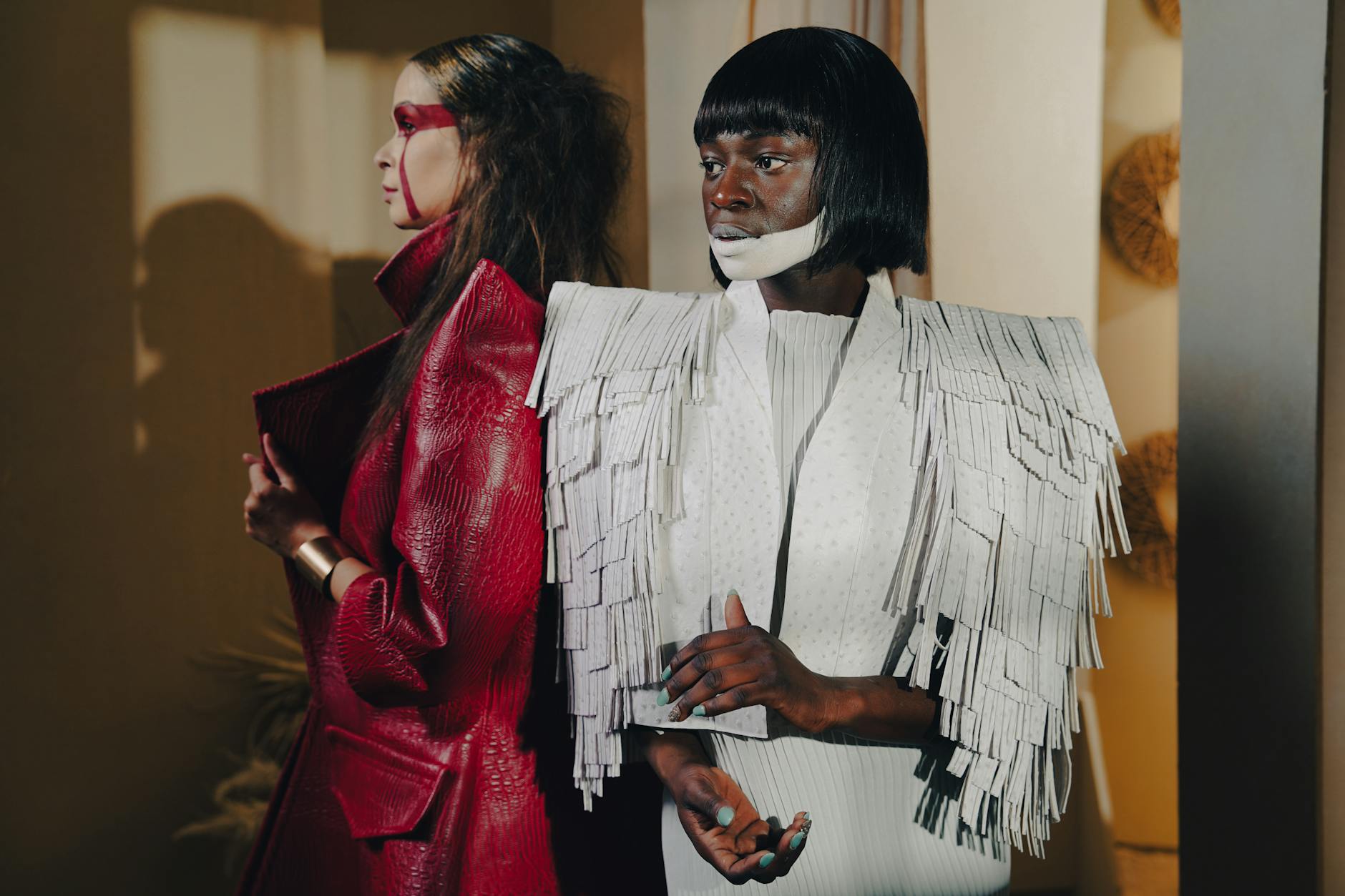
London did what London always does. While Milan served polished perfection and Paris leaned into heritage, the shows that ran across Strand, Shoreditch, and the brutalist corridors of the Barbican between February 21 and 25 were scrappier, sharper, and — frankly — more interesting. London Fashion Week A/W 2026 didn’t play it safe. It rarely does.
But this season felt different in a specific way. The city’s designers weren’t just reacting to trends bubbling up from social media or mood-boarding off each other. They were responding to something heavier — economic anxiety, a post-pandemic wardrobe reckoning, and a genuine exhaustion with disposable fast fashion. The clothes that came down the runways at venues from the BFC’s official Truman Brewery hub to scrappy east London warehouses felt intentional in a way that’s been missing. You could feel the argument behind every silhouette.
Here’s what you actually need to know — not the watered-down trend report, but the real story of what A/W 2026 means for London style.
How A/W 2026 Compares to Recent London Fashion Weeks
To understand why this season landed the way it did, it helps to track where London has been. The pandemic era pushed designers toward comfort and introspection. Then came the post-lockdown maximalism of 2022 and early 2023 — sequins, excess, euphoric dressing. By S/S 2025, there were signs of a correction, a quieter mood threading through even the loudest shows. A/W 2026 is where that correction becomes a full creative statement.
| Season | Dominant Mood | Key Silhouette | Standout Theme |
|---|---|---|---|
| A/W 2022 | Post-lockdown euphoria | Voluminous skirts, puff sleeves | Maximalism returns |
| S/S 2023 | Optimistic excess | Cut-out bodycon, sheer layers | Body confidence |
| A/W 2024 | Considered luxury | Oversized tailoring | Investment dressing |
| S/S 2025 | Quiet recalibration | Fluid, minimal lines | Anti-trend fatigue |
| A/W 2026 | Purposeful tension | Structured meets deconstructed | Craft, longevity, identity |
The shift is real and it’s not subtle. Editors who’ve been attending LFW for decades noted the absence of the usual Instagram-bait moments — those deliberately chaotic, viral-ready looks designed more for a TikTok thumbnail than an actual wardrobe. In their place: clothes with arguments. Clothes that reward a second look.
Attendance at the BFC-supported shows was up roughly 12 percent on A/W 2025 figures, with international buyers from Selfridges, Dover Street Market, and a clutch of major Japanese and Korean retailers reportedly placing serious orders. London’s commercial credibility, long questioned, feels like it’s quietly solidifying.
What’s Happening Right Now: The A/W 2026 Trends Dominating the Conversation
Forget the trend forecasting jargon. Here’s what actually walked the London runways in February — and why each of these is worth paying attention to.
The Trends Making Noise
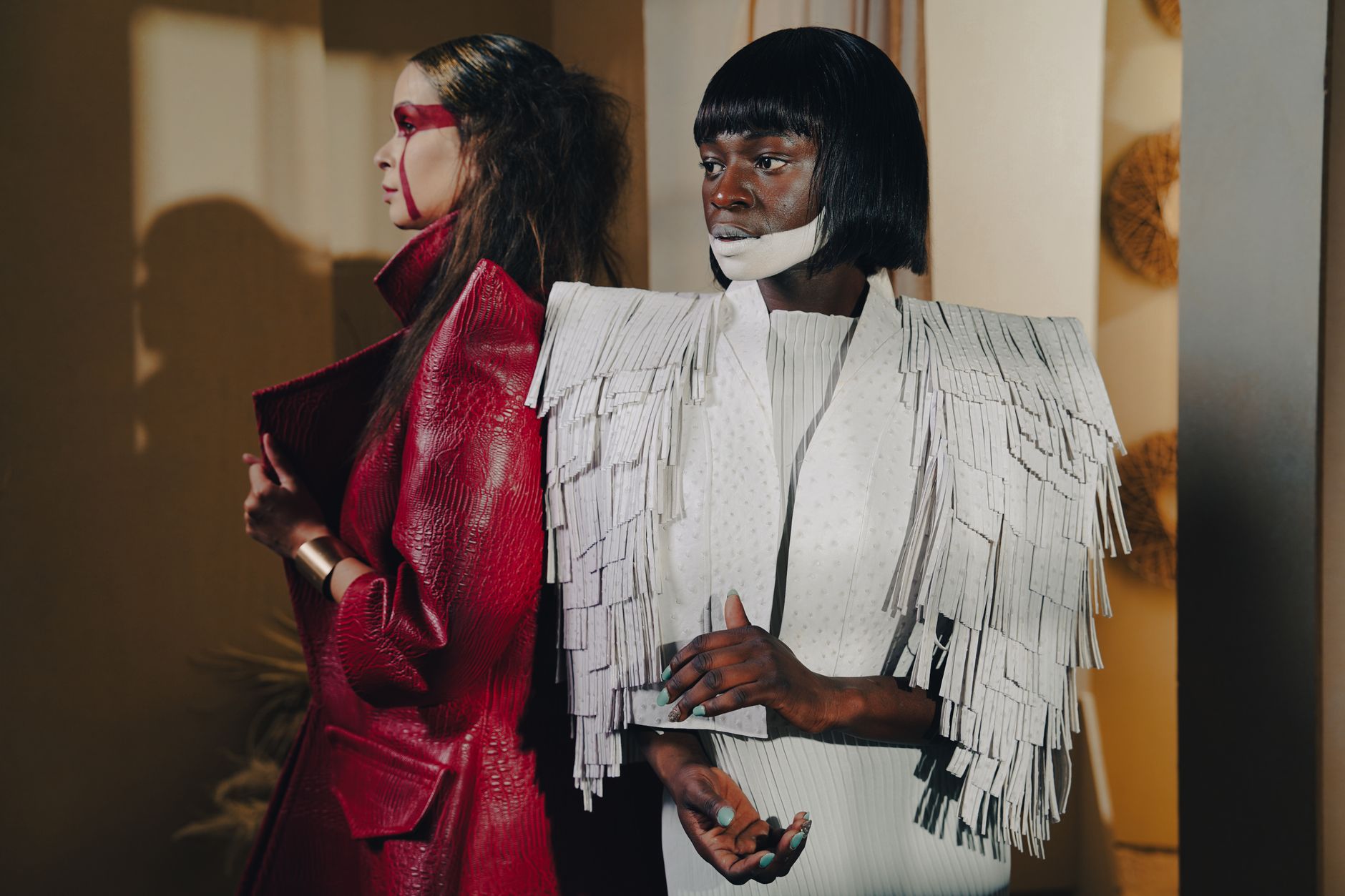
- Brutal tailoring — sharp shoulders are back, but this time they’re not power-dressing nostalgia. They’re architectural. Think less 1980s boardroom, more contemporary sculpture. Boxy, precise, uncompromising.
- Deconstructed knitwear — not the undone-as-aesthetic nonsense we’ve seen before, but genuinely considered construction: knits that reveal their own making, visible structure, textures that reference craft traditions from the Shetland Islands to Aran without cosplaying them.
- Utilitarian outerwear reloaded — the humble work coat, reimagined in exceptional fabrics. Waxed cottons, boiled wools, technical materials that feel earned rather than performative.
- Tonal dressing in unexpected palettes — deep forest greens layered against mossy olives. Midnight blues stacked with slate. The palette is uncompromisingly autumnal but sophisticated, miles from the burnt orange and mustard clichés of previous years.
- The return of the statement boot — mid-calf, heavy-soled, built to last. Not a trend boot. A boot you buy once and wear for a decade.
- Handcraft as protest — embroidery, hand-stitching, visible repair. Several designers explicitly cited the Kala Cotton movement and traditional British textile heritage as reference points. In a season defined by anti-fast-fashion sentiment, the handmade detail felt genuinely radical.
- Drama in volume — but only from the waist down — tops pulled tight and controlled, skirts and trousers exploding into generous, swooping shapes. The proportional inversion is deliberate and surprisingly wearable.
None of these trends exist in isolation. Together they form a coherent argument: buy less, buy better, wear longer. It’s not a new message, but A/W 2026 is the first season in a while where London’s designers seem to mean it collectively rather than as individual brand positioning.
The Key Players, Brands, and Designers Who Defined the Season
London has always had a complicated relationship with its own talent. We produce some of the world’s most original designers at Central Saint Martins and the RCA, then watch half of them get poached by Paris and Milan houses within five years. But A/W 2026 felt like a season where several London-rooted names made a genuinely compelling case for staying put.
Simone Rocha
Rocha’s show at the Roundhouse in Chalk Farm was the kind of event that makes you remember why fashion can be genuinely moving. The collection leaned into her ongoing obsession with femininity as a complex, sometimes contradictory force — structured bodices that referenced Victorian mourning dress, sheer layers over heavy knits, her signature pearl and floral embellishment used with more restraint than usual. The effect was devastating in the best way. The tailored coats alone justified the entire exercise. If you can get near one before the waiting list swallows them, do it.
Nensi Dojaka
Dojaka’s minimal, body-conscious aesthetic might seem at odds with a season favouring structure and craft, but her A/W 2026 collection was a masterclass in doing one thing with absolute precision. She introduced weight to her signature sheer fabrics — heavier silk organza, velvet inserts — that made her pieces feel genuinely winter-appropriate without betraying her design language. The result was grown-up, covetable, and sold out at Browns within hours of going live online.
Roksanda
For anyone who thinks Roksanda Ilinčić is purely a special-occasion designer, the A/W 2026 collection at the Barbican was a pointed rebuttal. The Barbican setting was no accident — the brutalist architecture played directly against the softness of her signature palette, now deepened into plum, aubergine, and near-black. Extraordinary volume in skirt shapes, balanced against razor-precise tops. This is London lifestyle dressing at its most intelligent.
Ahluwalia
Priya Ahluwalia continues to be one of the most important voices in British fashion, full stop. Her show in Dalston — naturally — was about inheritance and materials: upcycled fabrics treated with such care they looked more precious than anything bought new off the roll. The knitwear was outstanding. Chunky, warm, genuinely original colourwork that referenced her British-Indian-Nigerian heritage without being reductive about any of it. She’s building something that matters.
Standing on Ceremony (Emerging Watch)
One of the season’s most talked-about debut collections came from Standing on Ceremony, a label founded by two Central Saint Martins graduates showing their first full LFW collection in a Bermondsey railway arch. Utilitarian silhouettes in extraordinary fabrics, with a pricing strategy that reflected a genuine commitment to making considered fashion accessible. Watch this space with genuine attention.
S.S. Daley
Steven Stokey-Daley’s show was, as always, a piece of theatre. The Britishness here is never parody — it’s archaeology. A/W 2026 dug into the visual culture of 1970s Britain: working men’s club carpets, school uniform nostalgia, the particular melancholy of seaside towns in winter. On paper that sounds grim. In practice, it produced some of the most beautiful tailored separates of the season.
The Bigger Picture: What A/W 2026 Says About Fashion Right Now
Here’s the uncomfortable question London’s fashion community needs to sit with: is the industry’s newfound commitment to longevity and craft genuine, or is it just the latest aesthetic — sustainability as a vibe rather than a practice?
Because there’s a tension at the heart of A/W 2026’s dominant narrative. Designers are telling us to buy less and buy better. Several are pricing their pieces in ways that make that genuinely possible. But the show system itself — the international flights, the production budgets, the waste of runway staging — remains structurally incompatible with the values being expressed in the clothes.
That’s not a reason to dismiss the trend message. But it’s worth naming.
What the evidence actually suggests about A/W 2026’s broader significance:
- The BFC reported that 34 percent of this season’s official schedule shows included explicit sustainability credentials verified by third-party auditors — up from 19 percent in A/W 2024
- Resale platform searches for LFW designer pieces spiked 67 percent during show week, suggesting consumers are already thinking about longevity and secondary market value when engaging with trends
- Three of the season’s most-discussed collections used zero virgin synthetic fibres — a number that would have been unthinkable five years ago
- Graduate-led brands made up 28 percent of the official schedule, the highest proportion since the BFC began tracking in 2018
- Independent retailers on Carnaby Street and in Marylebone reported a 23 percent increase in footfall during show week, suggesting London Fashion Week’s economic ripple effect is widening beyond its usual Shoreditch-and-Mayfair axis
The tension between the medium and the message is real. But the direction of travel — toward fewer, better, more considered pieces — is consistent enough across enough different voices that it deserves to be taken seriously.
There’s also a political reading available. Britain in 2026 is not a country in an easy relationship with itself or its place in the world. The designers who made the most noise this season were the ones engaging honestly with that complexity — with British identity as something argued over and worked through rather than costumed. S.S. Daley’s melancholy Britishness. Ahluwalia’s plural inheritance. Rocha’s Irish-British femininity. These aren’t trend colours or hemline heights. These are positions.
What London Fashion Week A/W 2026 Actually Means for Your Wardrobe
Right. Let’s get practical. Because trends are only interesting if they translate into decisions you might actually make. Here’s how A/W 2026’s biggest ideas filter down to what Londoners might want to think about this autumn and winter.
The wearable takeaways:
- Invest in one exceptional coat — the utilitarian outerwear story means coats are where the season’s best design thinking is concentrated. Budget accordingly. A mid-length, structured coat in a quality wool or waxed cotton will look current now and correct in five years.
- Revisit your knitwear drawer — the deconstructed knit trend is partly a reaction against synthetic fast-fashion knitwear. If your jumpers bobble after three washes, they’re not the move this season. Wool, alpaca, cotton blends. Buy from brands that tell you where the yarn comes from.
- Commit to a tonal palette — stop trying to make prints work if they’re not working. Deep greens, rich navies, complex neutrals worn head to toe is both the runway story and genuinely flattering across a huge range of skin tones.
- Boot investment is justified — seriously, the statement boot moment is real and it’s not passing. A well-made mid-calf boot resolves about thirty percent of all winter outfit decisions.
- Volume below, control above — if you’re going to try one structural silhouette this season, this proportion is the most wearable version of it. A fitted turtleneck, a generous midi skirt. Done.
| Trend | Investment Level | Best London Stockist | Longevity |
|---|---|---|---|
| Brutal tailoring | High (£££) | Dover Street Market, Selfridges | 5–10 years |
| Deconstructed knitwear | Medium (££) | Ahluwalia, Browns, Matches | 4–6 years |
| Statement mid-calf boot | High (£££) | Selfridges shoe hall, Office on Oxford Street | 7–10 years |
| Tonal palette dressing | Low–Medium (£–££) | & Other Stories, COS, Arket | Indefinite |
| Utilitarian outerwear | High (£££) | Rohan, Barbour Heritage, Margaret Howell | 10+ years |
| Volume skirt/trouser | Medium (££) | Roksanda, Anthropologie Marylebone | 3–5 years |
Where to shop the A/W 2026 London trends right now:
- Dover Street Market Haymarket — the edit is always impeccable and they buy London designers with genuine conviction
- Selfridges Oxford Street — the designer floor is well-stocked with Rocha, Dojaka, and the emerging names from the official schedule
- Browns Mayfair — still the gold standard for London designer retail, and their buyers clearly paid attention to the shows
- LN-CC in Dalston — for the more conceptual end of the season’s offerings, this is essential
- MatchesFashion — their physical presence may have shifted but the online edit remains London’s most thoughtful curatorial voice
A final note on the economics, because it matters: several of the brands making the most interesting work this season are pricing at a level that reflects the actual cost of making clothes properly. That is not the same as gouging. A Simone Rocha coat at £1,800 is not the same moral object as a £1,800 logo-print fast luxury piece. The difference is in the materials, the making, the lifespan, and the relationship between the object and the person who designed it. London designers, more than almost anyone, are currently making that case with the rigour it deserves.
London Fashion Week A/W 2026 won’t be remembered for a single image or a single viral moment. It’ll be remembered — if the industry has any collective memory at all — as the season London stopped performing and started arguing. The clothes are better for it. Your wardrobe could be too.


Leave a Reply