
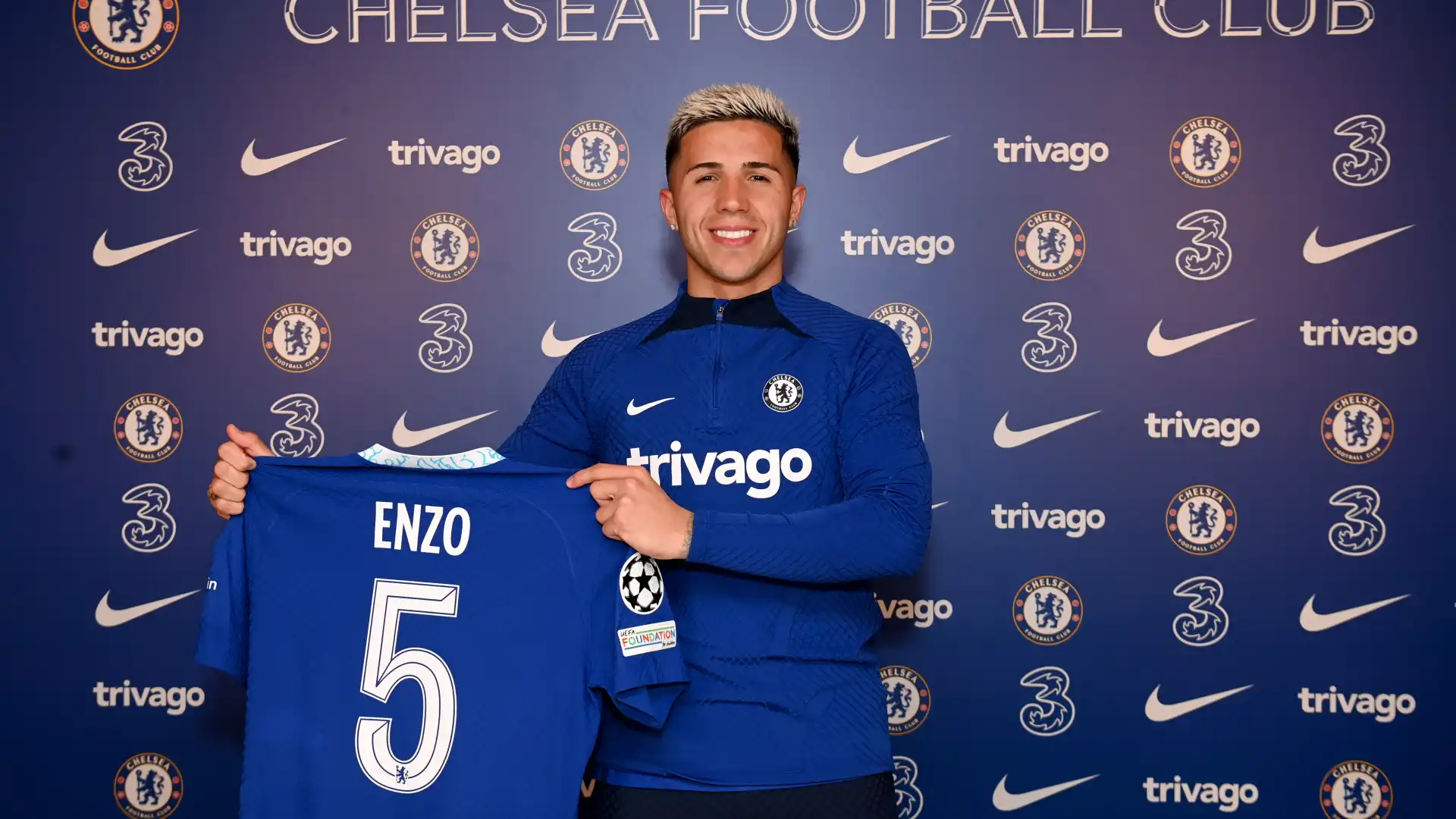
Enzo Fernández, a 25-year-old Argentine midfielder currently playing for Chelsea FC, is making headlines for his potential transfer during the summer of 2026. Speculation is rife regarding his interest in what he describes as a “dream move” to Real Madrid, while uncertainties about his future at Chelsea have arisen following the departure of former manager Enzo Maresca. Although he has ruled out a move to teams in Saudi Arabia such as Al Ittihad, the allure of LaLiga or Paris Saint-Germain remains strong.
Recent reports indicate a significant uptick in interest from Real Madrid. Fernández, who previously articulated his admiration for the Spanish giants, has openly acknowledged that his future appears “uncertain this summer.” Chelsea, on the other hand, has shown a firm stance regarding his commitment to the club, with head coach Liam Rosenior asserting that Fernández is “completely committed.” However, the coach recently sidelined him from two matches after comments suggesting he wanted to live in Madrid, which were deemed to have “crossed a line.”
The ongoing transfer saga includes revelations about Chelsea’s demands. Although specific figures have not been detailed in the media, the club’s valuation of Fernández is reportedly set at a “brutal” £107 million. This suggests a clear strategy for Chelsea as they actively seek replacements, with Bundesliga’s Angelo Stiller being one possible target from the category of Business in London & the UK.
In recent times, Fernández has publicly discussed his desire to leave Chelsea on two occasions, much to the disappointment of club leadership. However, despite the ongoing chatter, no formal bids for the midfielder have been confirmed.
Legal Framework for Football Player Transfers in the UK
Understanding the legal framework surrounding football player transfers in the UK is essential to grasp the complexities of cases like that of Enzo Fernández. The regulatory landscape is a combination of domestic contract laws, employment regulations, and international FIFA rules, all of which play a crucial role in the transfer process.
Contractual Obligations
Once a player signs with a club, they enter into a legally binding employment contract subject to English law. Under the Employment Rights Act 1996, players are expected to fulfil their contractual obligations. Any unilateral breaches, such as refusing to play for the club, can result in significant consequences including fines, withholding wages, or even termination for cause. However, any transfer or exit from the club requires mutual agreement between the concerned parties or payment of a transfer fee.
Transfer Windows
Transfer activities are strictly regulated by the Premier League, following a schedule defined by FIFA. The transfer windows for the Premier League are set between June 1 to July 15 and January 1 to 31, with specific provisions for emergency deals outside these windows. This structure is intended to maintain the integrity and fairness of the competition.
FIFA Regulations
FIFA governs international transfers through the “Regulations on the Status and Transfer of Players” (RSTP), the latest edition of which was released in 2025. Key components of these regulations include Training Compensation which rewards clubs that develop players, Solidarity Mechanisms which entitle previous clubs to a share in the player’s transfer fee, and the prohibition of any inducement of breach of contract, which means clubs cannot approach players without their current club’s consent.
Responsible Authorities
Several bodies oversee the compliance and enforcement of these rules, each playing distinct but often interrelated roles:
- Premier League: The Premier League governs domestic transfers, approving deals and enforcing Financial Fair Play regulations.
- Football Association (FA): The FA is responsible for registering transfers and resolving disputes through disciplinary panels.
- FIFA Dispute Resolution Chamber (DRC) and Court of Arbitration for Sport (CAS): These bodies deal with international disputes, particularly those involving contract breaches.
- Professional Footballers’ Association (PFA): The PFA represents players on issues related to employment rights.
Current Rules (2026)
In light of the evolving landscape of football transfers, the rules for the summer of 2026 encompass several noteworthy aspects:
-
Buy-Out Clauses: It is likely that Fernández’s contract, which he signed with Chelsea in 2023 and is purportedly valid until 2031, includes a buy-out or release clause. Activating this clause would typically require the full transfer fee to be paid by the interested club.
-
Agent Involvement: The latest FIFA Football Agent Regulations, effective from 2026, stipulate that agents’ commissions are capped at 10% of the transfer fee for selling club representation. This is crucial for clubs seeking to maintain financial prudence while securing player moves.
-
Financial Regulations: As per Premier League profit and sustainability regulations, clubs are permitted to incur losses of up to £105 million over three years. Given Chelsea’s reported valuation of £107 million for Fernández, the club would need to be cautious about its long-term financial viability if they are to consider selling him.
Recent Changes
Recent amendments to the FIFA RSTP in 2025 have clarified various aspects of player transfers. Notably, there are new stipulations regarding multi-club ownership and limits on loans between clubs. Although the transfer windows for men’s football have remained unchanged, slight adjustments have been made for women’s football to enhance parity.
Moreover, the Premier League has introduced more stringent financial regulations. The recent seasons have highlighted multiple instances where clubs faced points deductions for financial breaches, setting serious precedents that signal a new era of accountability.
Risks Associated with Transfers
The transfer landscape is rife with various risks, affecting players, clubs, and agents alike. Below is a summary of the primary risks involved in football player transfers:
| Risk Category | Description | Examples/Implications |
|—————|————-|———————–|
| Contract Breach | Public comments or actions that suggest a desire to leave the club can lead to fines, suspensions, or even forced sales at discounted prices. | Fernández was dropped from two matches; potential for a grievance filed with the PFA. |
| Financial | The high transfer fee (£107 million) could deter prospective buyers if Chelsea’s financial position is precarious. | Although Chelsea is open to selling, they are demanding a premium price, requiring proactive marketing for a suitable replacement. |
| Regulatory | FIFA’s Article 17.1 aims to protect a player’s contractual stability; an untimely termination of a contract could lead to challenges in claiming transfer fees through the DRC or CAS. | The case of Webster v. QPR illustrates that compensation will be calculated based on market value minus potential earnings that can be mitigated. |
| Reputational | A player perceived as disloyal can damage their own reputation while undermining the club’s stability. | Negative perceptions can hinder future negotiations and affect fan relations, creating a challenging environment for all stakeholders involved. |
Practical Implications
As speculations surrounding Fernández’s transfer build, the implications for him and Chelsea are significant:
-
For Fernández: Should a move to Real Madrid materialise during the summer of 2026, it could spell an end to his Chelsea tenure. His refusal to entertain a move to Saudi Arabia demonstrates a focused intent on competing at the highest levels in Europe.
-
For Chelsea: The potential sale of Fernández would provide much-needed funds for a squad rebuild, with players like Angelo Stiller identified as possible replacements as outlined in London & UK Finance. Head coach Liam Rosenior has emphasised the need for stability after the departure of Maresca, which could play a pivotal role in shaping the squad’s future.
-
Market Dynamics: The demand for midfielders across Europe could enhance Chelsea’s negotiating leverage. While no formal bids have yet been delivered, the interconnected nature of transfer rumours involving clubs like Barcelona and Juventus suggests a larger market interest at play.
-
Timeline: The landscape of player transfers often intensifies towards the end of the season. Movement concerning Fernández is expected to accelerate after the conclusion of the 2025/26 season, with ongoing discussions between his representatives and potential suitors already observed.
Reports and coverage predominantly detail the ongoing saga of Enzo Fernández’s transfer up to early April 2026. As of now, no confirmed bids or completed transfers have been disclosed.
Navigating the intricacies of football transfers requires keen awareness not only of contractual obligations but also of the emotional and reputational stakes involved. For players like Enzo Fernández, careful consideration of their career aspirations alongside club dynamics is crucial in making decisions that could shape their future.















Leave a Reply