
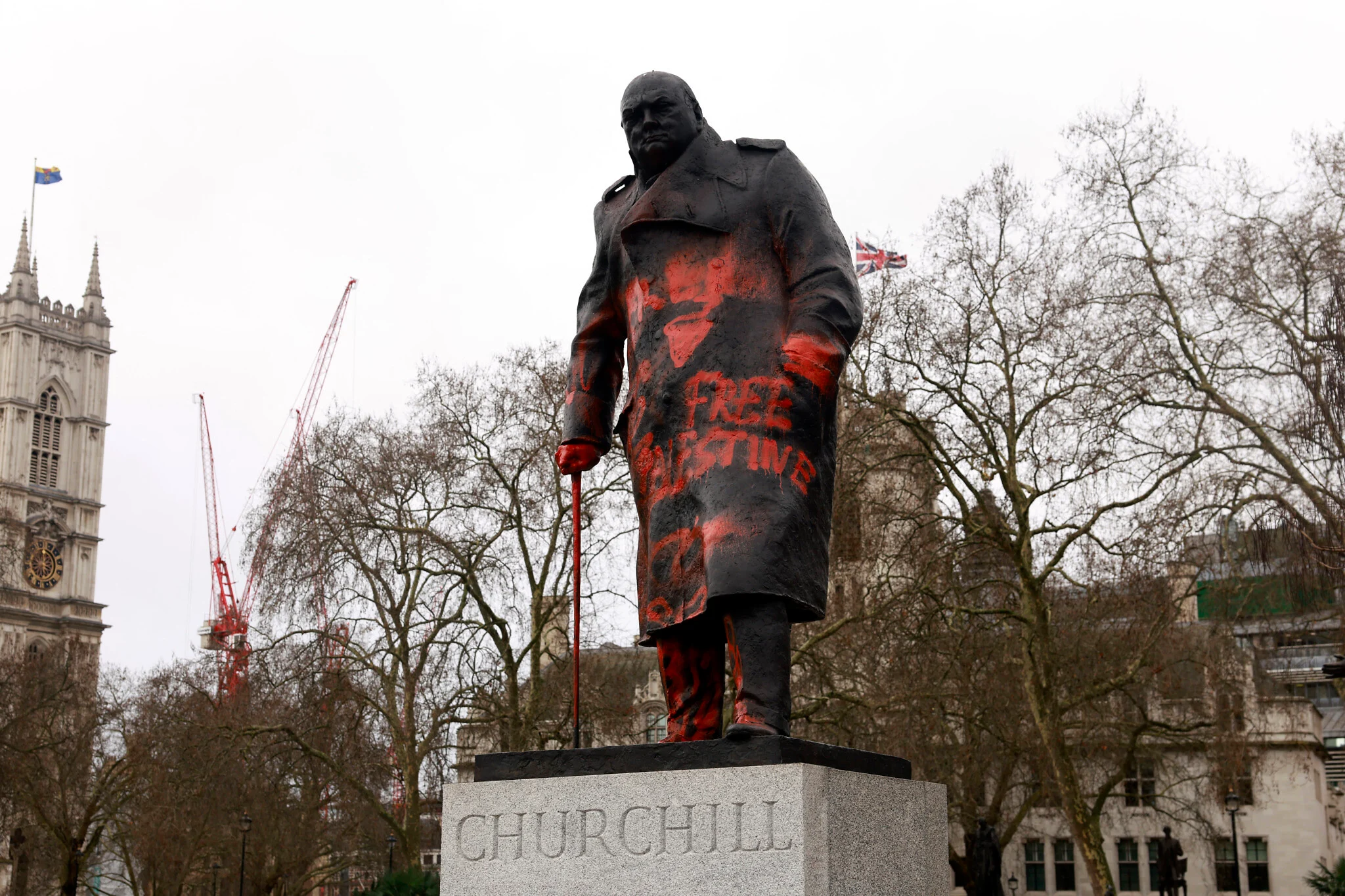
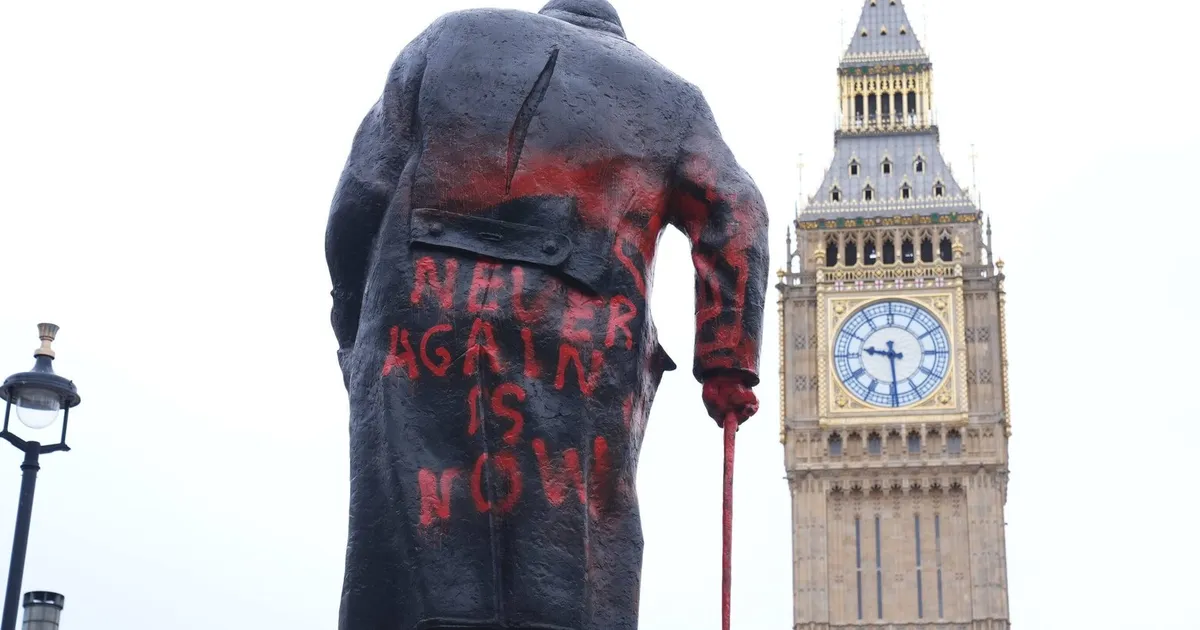
The recent defacement of a statue in London ignited heated discussions about historical legacies, activism, and perceptions of national and international figures. A protestor, identifying as an anti-Israel activist, vandalized a statue of Winston Churchill, declaring him a “Zionist war criminal.” This incident not only raises questions about the motivations and implications of such actions but also sheds light on the complex tapestry of historical narratives, memory, and contemporary global politics, particularly focusing on the Israel-Palestine conflict.
The Historical and Political Landscape Surrounding the Vandalism Incident
To grasp the significance of the vandalism, it is essential to situate the incident within a broader historical and sociopolitical context. Winston Churchill, as the Prime Minister of the United Kingdom during World War II, is celebrated for his leadership against Nazi Germany. However, his imperialist policies, particularly regarding colonial territories, have drawn criticism. Understanding Churchill’s role requires a nuanced examination of his complex legacy, which integrates both commendable and condemnable aspects.
Churchill’s position on Zionism and the Jewish migration to Palestine during the early 20th century is often debated. While his support facilitated significant Jewish migration, critics argue it laid groundwork for profound conflict with Palestinian communities. This duality can contribute to strong sentiments, depending on one’s perspective towards colonial histories and their legacies.
Overview of the Incident and Its Implications
The act of vandalizing the Churchill statue carries weight beyond mere aesthetics or damage to property. The incident reflects rising tensions surrounding identity, memory, and historical accountability. What happens when public figures are invoked in contemporary activism? In defacing a statue that symbolizes British imperialism and leadership during the war, the activist aimed to challenge established narratives. This act incited discussions about whether defacement serves as a legitimate form of protest or if it undermines the gravity of historical figures.
A Detailed Comparison of Activism and Symbolism
To understand the implications of the incident, a structured comparative breakdown seems necessary. This section provides insights into similar acts of vandalism around historical figures and monuments across various contexts. Below is a table that outlines notable instances of defacement, their targets, motives, and the resulting societal implications.
| Incident | Target | Motivation | Societal Implications |
|---|---|---|---|
| Defacement of Robert E. Lee Statue | Robert E. Lee, Confederate General | Criticism of slavery and racism | Debate over heritage vs. hate |
| Destruction of Confederate Monuments | Various Confederate leaders | Protest against systemic racism | Calls for historical revisionism |
| Removal of Mahatma Gandhi Statue | Mahatma Gandhi | Critique of colonialism | Reassessment of anti-colonial figures |
| Vandalism of Columbus Statues | Christopher Columbus | Indigenous rights and colonial legacy | Polarization around national identity |
The analysis of these instances illustrates that acts of vandalism or defacement are often undertaken as an expression of dissent. However, they also spark polarized debates regarding the interpretation of history and cultural memory. Each of these cases, including the vandalism of the Churchill statue, highlights the tension between maintaining historical symbols and addressing contemporary social justice concerns.
A Closer Look at Analytical Assessments
Diving deeper into the motivations behind actions like vandalism often uncovers layers of sentiment and societal frustrations. Activists today are increasingly willing to capture public attention through radical methods. The motivations behind vandalism are manifold:
- Political Statements: Activists may look to spotlight particular grievances via historical symbolism, signaling a broader discontent with the status quo.
- Emotional Expression: The emotional weight behind defacement can reflect deep-seated frustrations regarding social injustices, particularly in reference to marginalized communities.
- Cultural Reclamation: By targeting figures seen as embodying colonialism or oppression, activists claim cultural space and assert their narratives against dominant historical accounts.
These motivations interlace with the complexity of social movements, wherein the drive for visibility can pressure communities to confront uncomfortable truths about their historical symbols.
Evaluating the Research Approach Behind Historical Legacies
This article’s perspective rests on a combination of historical analysis, public sentiment surveys, and sociopolitical discourse. A discernible methodology guides this exploration:
- Historical Context: Evaluating both immediate and extended historical contexts to understand the motivations behind various acts and the underlying implications.
- Public Perception Analysis: Utilizing surveys and opinion polls that reflect community sentiments towards figures like Churchill, and how these sentiments have evolved over time.
- Impact Assessment: Analyzing the outcomes of other acts of vandalism to understand potential repercussions, both positive and negative, on subsequent political discourse and community relations.
Through this multipronged approach, one can reveal intricate connections between historical significance and contemporary activism, offering a clearer picture of public sentiment.
Regulatory and Market Considerations
While the defacing of different statues incites public debate, it also calls into question broader regulatory frameworks in terms of public monuments and preservation laws. How societies approach protest actions reflects growing awareness of social injustices and historical legacy, but also poses critical questions about freedom of expression and public space.
The preservation of artifacts related to contentious history can evoke stark divisions. While certain voices advocate for their removal, others argue for contextualizing these monuments with educational information about their legacies. This debate straddles legal, cultural, and ethical realms, invoking discussions about state regulations, funding for public art, and community input in historical decisions.
Strategic Framework for Activist Movements
Activism can often benefit from strategic decision-making frameworks that balance visibility and respect for historical legacies. The following guidelines can help activists align their protests with both immediate objectives and broader societal visions:
- Engaged Dialogue: Foster conversations around issues rather than relying solely on demonstration tactics.
- Historical Research: Encourage thorough research into the figures being protested to ensure well-rounded arguments are made.
- Community Involvement: Integrate local communities in discussions about cultural symbols; this inclusion can enrich movements and enhance legitimacy.
Such frameworks can help activists maintain focus on their goals while acknowledging the complexities of engaging with history.
Considerations of Risks and Trade-Offs in Activism
Despite the potential benefits of radical actions, there are inherent risks and limitations to consider. Activist movements often grapple with emotional responses and polarization, which can lead to significant backlash:
- Alienation of Public Support: While defacement may attract attention, it may simultaneously alienate individuals who feel that it disrespects history.
- Legal Consequences: Engaging in vandalism can result in legal ramifications, impacting activist credibility and public safety.
- Overshadowing Core Messages: The sensational nature of such acts can divert attention away from the critical discussions activists aim to promote.
In contemplation of these risks, movements must assess how actions align with their long-term objectives versus immediate expressions of dissent.
Building Trust and Transparency in the Context of Activism
In the realm of activism, establishing trust and transparency is critical in gaining public support. When protests are framed within a context of honesty and clarity, communities are more likely to engage in constructive dialogue:
- Clear Objectives: Define and communicate specific goals to avoid misunderstandings.
- Consistent Messaging: Use consistent messaging to better resonate with broader public sentiments.
- Post-Protest Assessments: Engage in reflective practices post-action to reconsider methodologies and impacts.
Such practices can enhance the legitimacy of protest actions and foster a sense of community collaboration around shared grievances.
Final Thoughts on the Intersection of Memory and Activism
The defacement of the Churchill statue opens a discourse regarding the intersection of memory, history, and activism. The act reflects contemporary tensions around how societies remember and engage with their pasts. As the dynamics between activism and public perception continue to evolve, the implications for historical memorials and figures may present both opportunities and challenges.
Understanding such events requires a commitment to a deeper exploration of historical narratives and their contemporary resonances. Engaging with history not only influences present-day political discourses but can also pave the way for more inclusive futures. Balancing activism with respectful acknowledgment of the past may be key in fostering constructive dialogues—one that embraces complexity rather than shying away from it.










Leave a Reply