
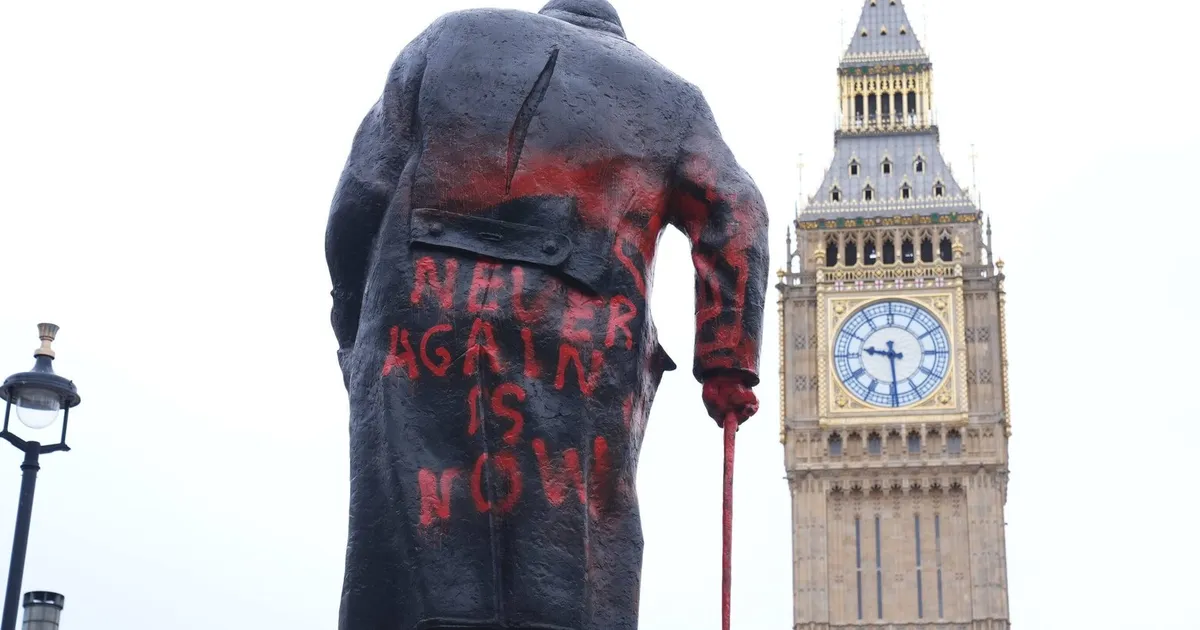
The recent defacement of the statue of Winston Churchill in London has drawn widespread attention, following the arrest of a suspect linked to pro-Palestinian graffiti. This incident not only highlights the ongoing tensions surrounding political expressions but also the broader implications for public memorialization in contemporary society. To contextualize this event, it is essential to delve into the background of the Churchill statue, its historical significance, and the socio-political climate that prompted such an outcry.
The Historical Significance of the Churchill Statue
Winston Churchill, the British Prime Minister renowned for his leadership during World War II, remains a polarizing figure in history. The statue, located in Parliament Square, serves not just as a tribute to his wartime legacy but also as a focal point for discussions on national identity. For a deeper understanding of urban narratives, refer to London Unravelled.
The Context of the Statue’s Erection
The decision to erect the statue in 1973 was a reflection of Britain’s desire to commemorate a leader viewed by many as a symbol of resilience. Yet, historical assessments of Churchill’s legacy have evolved, calling into question aspects of his leadership that contradict current values of equity and inclusion. This reflects a broader discourse on London & UK Politics.
Churchill’s Legacy and Modern Reinterpretations
Over the years, Churchill’s legacy has incited debates around race and imperialism. Critics argue that his views on colonialism and race were deeply problematic, reflecting a chapter of British history that many prefer to be left unexamined. This dichotomy in perception raises essential questions about whose history is celebrated and whose is marginalized, much like ongoing discussions in London & UK Lifestyle.
Evaluating the Recent Incident: A Societal Reflection
The defacement of the statue is more than an act of vandalism; it reflects a societal shift towards vocal activism, particularly among youth who feel compelled to express their stances on pressing global issues.
Public Response to the Defacement
Public response indicated a polarizing effect, with some viewing it as an important form of protest against perceived injustices, while others condemned it as disrespectful to a historical icon. This division underscores the tension between free speech and the sanctity of public monuments, a theme seen in various London Events.
The Arrest and Its Implications
The arrest of a suspect associated with the graffiti marks the legal implications of public dissent. It raises questions about who gets to determine the boundaries of acceptable expression in public spaces.
A Comparative Analysis of Global Perspectives on Public Monuments
As similar events occur globally, it is worth examining how other nations navigate the complexities of historical remembrance.
Cultural Comparisons: Statues Across the World
Different countries have taken varied approaches to public monuments, ranging from dismantling statues associated with colonialism to erecting new ones that honor marginalized voices. The adaptation of monuments often serves as a barometer for societal change, a topic also discussed in broader frameworks of London & UK Finance.
| Country | Response to Controversial Monuments | Current Trends |
|---|---|---|
| United States | Removal of Confederate statues across several states | Increased focus on inclusive narratives in public spaces |
| South Africa | Protests against apartheid-era statues | New installations reflecting a diverse history |
| Australia | Re-evaluation of Captain Cook’s statues | Calls for Indigenous representation in historical narratives |
The table highlights that globally, stakeholders are grappling with how to perceive and memorialize figures whose actions may be interpreted variously across different eras and communities.
Lessons from International Approaches
The global approach to contentious monuments demonstrates the importance of engaging all stakeholders in discussions about public historical narratives. These lessons could guide actions by local authorities regarding controversial statues, including the Churchill statue, aligning with trends in London Walks & Local Places.
Methodological Considerations for Analyzing Public Sentiment
In examining the public’s reaction to the defacement of the Churchill statue, it is vital to employ a rigorous analytical framework. A multi-method approach could best capture the complexity of sentiments involved.
Qualitative and Quantitative Insights
Surveys and interviews can provide qualitative insights, while social media analysis may yield quantitative data reflecting public sentiment before and after the incident. Such a comprehensive approach ensures a well-rounded understanding of public opinion.
Framework for Understanding Public Reactions
Engaging with historical context, as well as contemporary socio-political environments, can significantly enrich interpretations of public behavior. Focusing on demographic variables, such as age and socioeconomic status, can also identify potential predictors of sentiment.
The Legal and Regulatory Landscape Surrounding Public Statues
Legislative frameworks play a crucial role in how communities address controversial monuments, often centered on issues of free speech versus public order.
Regulatory Measures in the UK
The UK has specific laws governing the protection and alteration of public monuments. Any actions taken by authorities regarding statues typically invoke legal considerations, balancing public sentiment with the need for order.
Comparative Legal Frameworks
Legal frameworks vary internationally regarding the vandalism of public property and the implications for free speech. Understanding these differences is essential for developing a nuanced perspective on the implications of the Churchill statue incident.
A Framework for Informed Decision-Making on Public Monuments
In light of the recent incident, it might be beneficial for policymakers and community leaders to establish a framework governing the future of public monuments.
Establishing Stakeholder Engagement Processes
Creating platforms for community discussions regarding public statues can enable diverse viewpoints to be heard. Such discussions could lead to more equitable outcomes that reflect the values of the community as a whole.
Weighing Public Sentiment Against Historical Context
Decisions regarding public monuments must consider both contemporary public sentiment and historical context. Striking a balance may lead to informed actions that acknowledge both the past and an inclusive future.
Assessing Risks and Trade-Offs in Public Memorialization
While addressing controversial public monuments, stakeholders must also appreciate the associated risks and trade-offs, particularly regarding reputational and community cohesion aspects.
Potential Risks of Ignoring Public Sentiment
Ignoring expressions of public sentiment, such as that seen through the defacement of the Churchill statue, may lead to heightened tensions within the community. Failing to engage may foster feelings of alienation and discontent.
Trade-Offs in Monument Reevaluation
Modifying or removing statues is a sensitive business; while it may appease some groups, it could further alienate others. Thoughtful consideration must be given to address these nuances.
Fostering Trust and Transparency in Public Discourse
The importance of trust and transparency in discussing public monuments cannot be overstated. Dialogue must include an open exchange of viewpoints, ensuring that decisions are rooted in community values.
Building Community Trust Through Dialogue
Facilitating town hall meetings or public forums can promote transparent discussions, fostering a sense of ownership among community members about their shared history.
Ensuring Transparency in Decision-Making Processes
Decision-making regarding public monuments should be transparent, allowing for scrutiny and input from various community stakeholders. This transparency can prevent mistrust and promote a more cohesive approach to public memorialization.
The recent incident involving the Churchill statue exemplifies the complex interplay between history, activism, and public sentiment. As society grapples with these themes, it is crucial for stakeholders to engage meaningfully with the narratives that shape our public spaces, ensuring a balanced and inclusive approach to how history is memorialized in the contemporary landscape. Each community will navigate this landscape differently, but the underlying principles remain vital: the acknowledgment of diverse perspectives and the promotion of dialogue will ultimately shape the future of public heritage.











Leave a Reply