
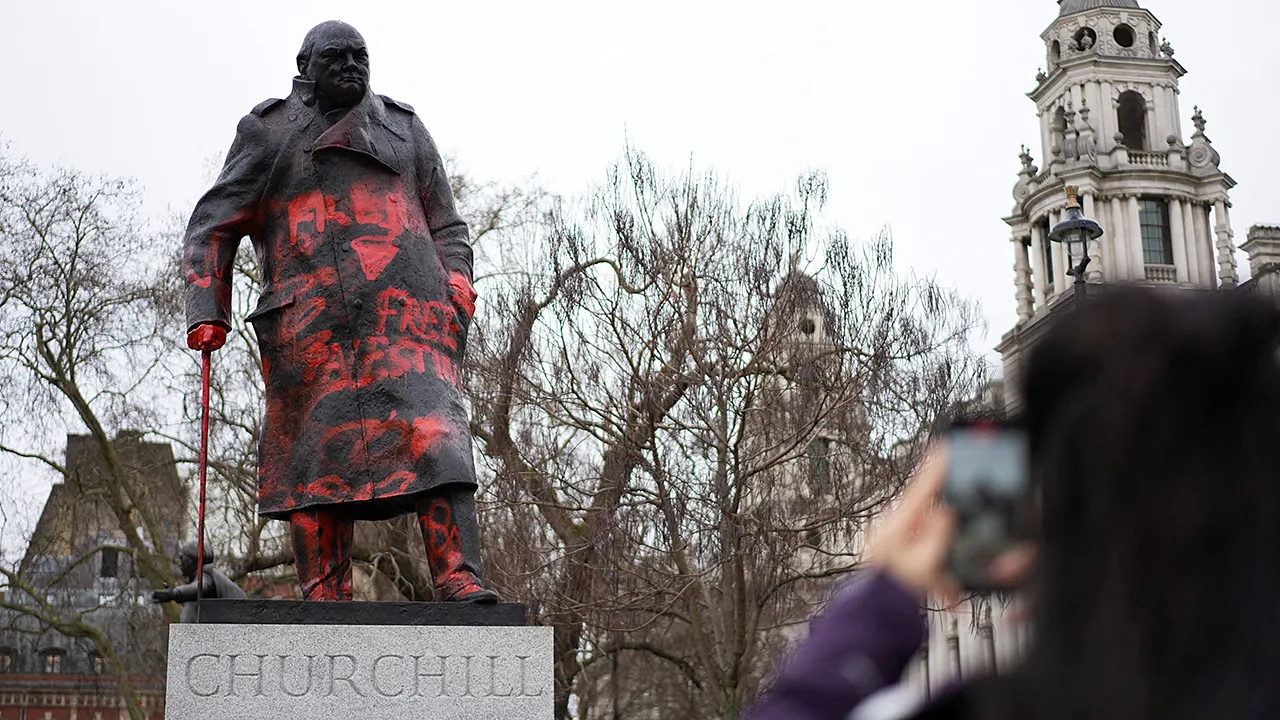
The recent defacement of a statue of Winston Churchill in London with anti-Israel messages has ignited debates ranging from historical iconography to socio-political sentiments. As a prominent figure of the 20th century, Churchill’s legacy is often invoked in discussions surrounding leadership, war, and colonialism. However, the act of vandalism highlights a complex interplay of contemporary issues that blend history, identity, and political ideology. To gain a comprehensive understanding of the events surrounding the defacement and its implications, it is essential to explore the broader context, evaluate the societal responses, and assess the ramifications of such actions.
The Historical Significance of Churchill and Iconography in London
Winston Churchill’s stature in British history is well-established, symbolizing a defense of democracy against totalitarian regimes during World War II. However, the reverence afforded to historic figures like Churchill is not without contention. Emerging discussions about imperialism, racism, and the legacy of colonialism force a reevaluation of public memorials, as discussed in the article on London & UK Politics.
Churchill: A Dual Legacy
Typically celebrated for his leadership during a critical period in history, Churchill is also scrutinized for his views on empire and race. Understanding this dual legacy is essential when analyzing why certain factions might choose to express dissent through acts of vandalism, a subject that resonates in broader conversations about activism.
Public Monuments and Contemporary Values
Public monuments often serve as reflections of a society’s values at a particular moment. In recent years, there has been a growing movement to challenge the appropriateness of statues that honor figures with contentious pasts. This aspect was particularly emphasized following the Black Lives Matter protests, which reignited discussions on systemic racism, as highlighted in the overview of London Events.
A Snapshot of the Incident: What Happened and Where?
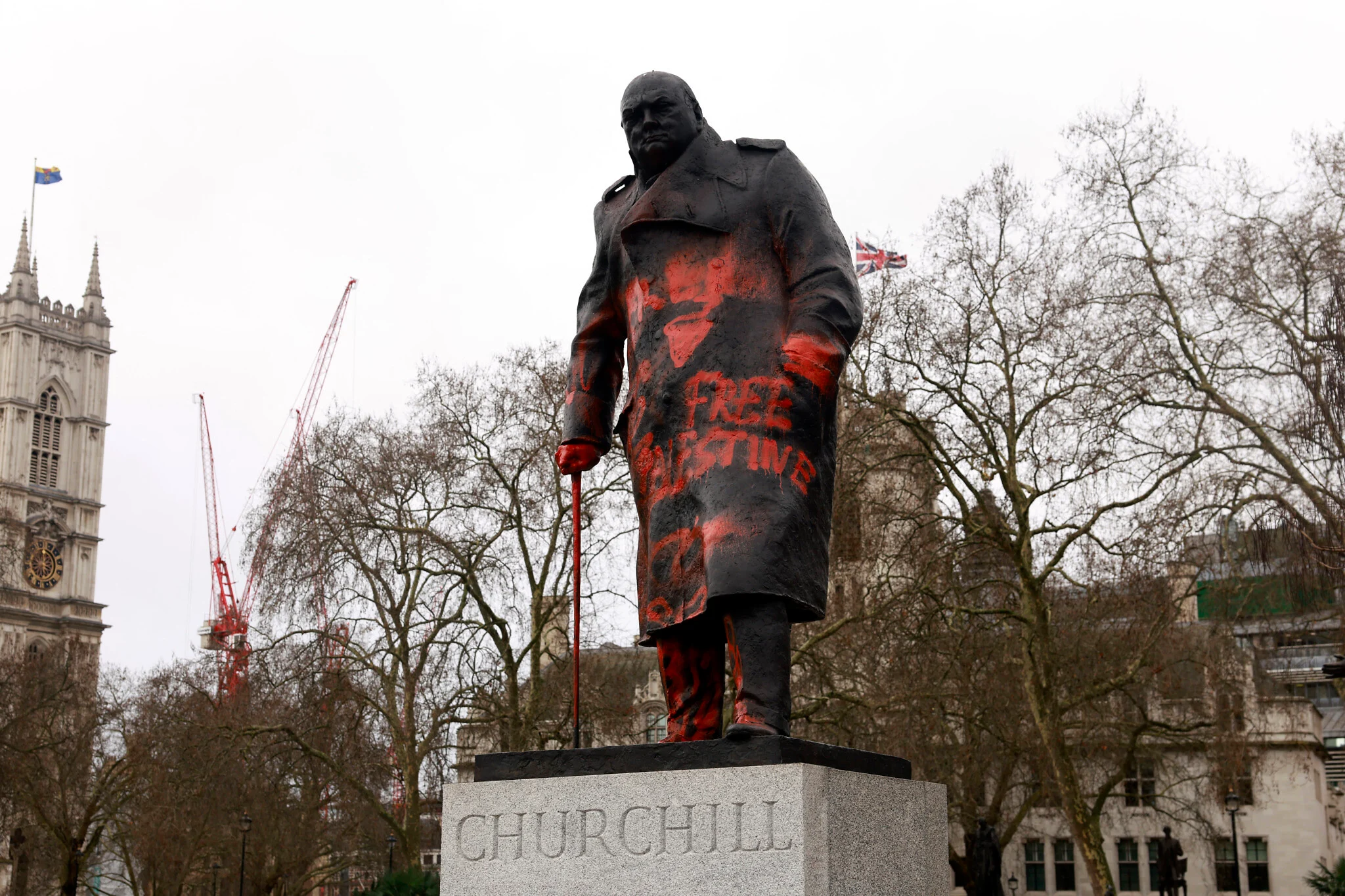
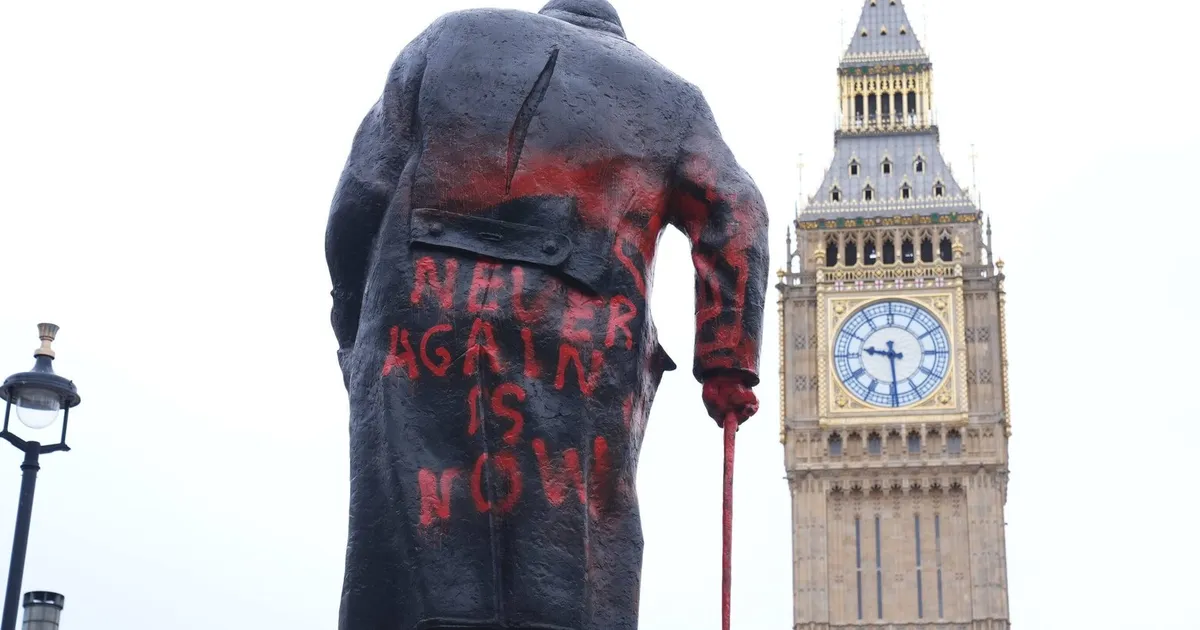
On a day noted for national observance, the Churchill statue in Parliament Square was found vandalized with messages that denounced Israeli policies. The timing and method of this act—a stark contrast to the dignified surroundings of Westminster—were particularly striking, drawing immediate media attention and public discourse on current events in London.
Scope of the Vandalism
This incident involved spray-painted messages, which condemned actions attributed to the Israeli state. The selection of this statue for such an expression was not random; Churchill’s historical role often becomes entangled in the narratives surrounding geopolitical conflict, particularly regarding Israel and Palestine, a topic that requires a deeper look at the Israeli-Palestinian conflict.
Public and Political Responses
Reactions to the defacement ranged from outrage within segments of the public and political sphere to a nuanced understanding from activists who sought to emphasize the importance of raising awareness about the Israeli-Palestinian conflict. Statements from political leaders and community figures underline a mixture of condemnation and calls for dialogue, similar to discussions about community engagement.
Evaluating Reactions: A Comparative Analysis
Responses to the incident show a variety of perspectives drawn from differing socio-political backgrounds. The public discourse reflects ongoing themes in society about activism, censorship, and freedom of expression.
Key Responses from Figures and Organizations
A range of public figures and organizations released statements in response to the incident. Their positions reflect broader ideological divisions:
| Entity | Response Type | Summary |
|---|---|---|
| UK Government Officials | Condemnation | Strongly denounced the act as an attack on British values and historical legacy. |
| Activist Organizations | Support | Expressed solidarity with the messages, calling for awareness about the situation in Palestine. |
| Local Community Leaders | Mixed Responses | Some called for dialogue and others criticized the vandalism as counterproductive. |
The table emphasizes the divergence of perspectives on the issue and allows for a nuanced understanding of public sentiment.
The Impact of the Vandalism on Public Discourse
Acts of vandalism like this one often serve as catalysts for wider societal discussions. The event reinvigorated debates about the ethics of public memorials, colonial histories, and the efficacy of radical protest methods, akin to current events in London.
Analyzing the Sociopolitical Landscape
To grasp the full implications of the defacement, an analytical review of the sociopolitical landscape is required. The act sits at the intersection of various tensions that influence public sentiment and activism.
Current Geopolitical Context
The Israeli-Palestinian conflict remains a focal point of contention, affecting responses in Western nations and shaping activism on multiple fronts. This complexity is mirrored in the public’s reaction to historical figures like Churchill, whose legacy cannot be disentangled from contemporary issues.
Activism versus Vandalism: A Thin Line
In the societal framework, actions taken to express dissent can sometimes tip into vandalism. The effectiveness of such actions in generating genuine dialogue remains a topic of heavy debate.
Assessing the Implications for Community Relations
Community responses to the vandalism have been varied and significant. The nuances surrounding expressions of dissent can play an essential role in community relations and overall social cohesion.
Community Engagement Initiatives
In the wake of the incident, many organizations devoted efforts to establish forums for dialogue. Such initiatives aim to convert the outrage elicited by the vandalism into opportunities for constructive discussion about difficult topics.
The Role of Educational Institutions
Educational entities can also play a critical role in addressing the legacy of figures like Churchill. Programs that provide context concerning historical events and the implications of colonialism can help construct a more informed public perspective.
Methodological Considerations: An Analytical Framework
To thoroughly analyze the implications of the defacement, a structured methodological approach is essential. This not only strengthens the evaluation but also underscores the significance of critical thought in society.
Data Collection Methods
Qualitative data collection through interviews, media analysis, and surveys can facilitate a deeper understanding of public perceptions surrounding the incident and the broader themes it invokes.
Framework for Assessment
Employing frameworks such as the social constructionism theory can contribute to an understanding of how public figures are perceived and represented in contemporary discourse.
Legal and Regulatory Perspectives
Understanding the legal frameworks surrounding acts of vandalism is vital for contextualizing the incident. Legal ramifications can shape societal norms regarding public protests and expressions of dissent.
Legislation Governing Vandalism
The UK has specific laws regarding defacement of public property, which can lead to criminal charges. This context is crucial when evaluating the responses from various social factions.
The Role of Public Sentiment in Legislation
Public sentiment towards figures like Churchill can influence legislative actions and attitudes toward public memorials, further complicating the discussion surrounding vandalism.
Weighing the Risks and Limitations of Protest Strategies
When considering the defacement of the Churchill statue, it is also essential to analyze the potential risks and limitations that come with such protest strategies.
Counterproductive Outcomes
While acts of vandalism may aim to draw attention to a cause, they can also alienate potential supporters and obscure the intended message. The risk of negative backlash can overshadow the motives behind protests.
Strategic Communication in Activism
The effectiveness of communication strategies in activism remains paramount. Employing balanced approaches that avoid provocative methods can yield better long-term engagement and dialogue.
Building Trust and Transparency in Activism
Trust and transparency are crucial factors in any form of activism. The backlash that often accompanies acts of vandalism may stem from perceptions of insincerity or disconnection from community values.
Establishing Clear Objectives
Activists who engage in public dissent should strive for clarity in their objectives. Clearly articulated aims can enhance community support and foster collaboration with diverse groups.
Accountability Measures
Ensuring accountability in activist methodologies is vital. By establishing ground rules, movements can bolster their credibility and encourage meaningful discussions rather than divisive actions.
The incident involving the defacement of Churchill’s statue in London intertwines history, identity, and contemporary political discourse. Ultimately, the complexities of such acts elude simplistic interpretations, reinforcing the importance of fostering dialogue and understanding across both sides of the ideological spectrum.








Leave a Reply